
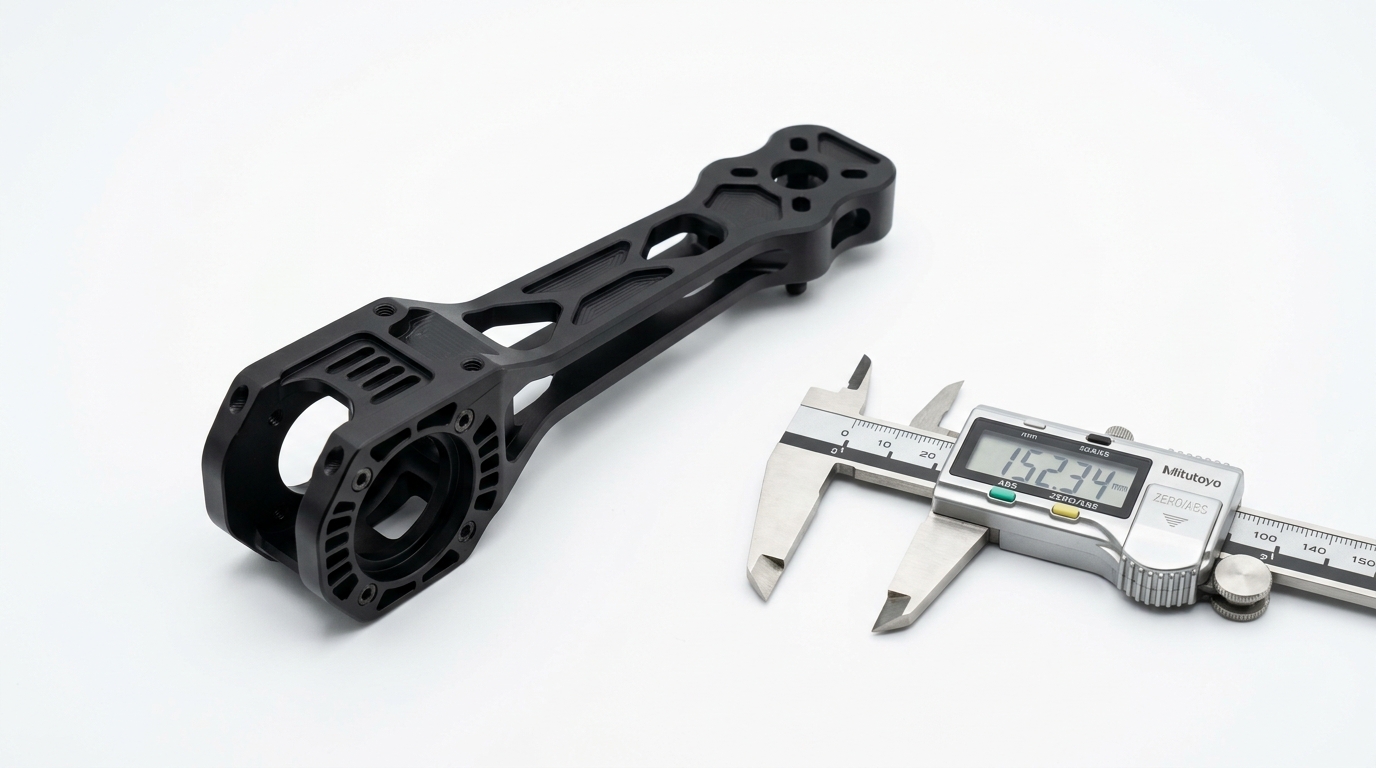
What happened
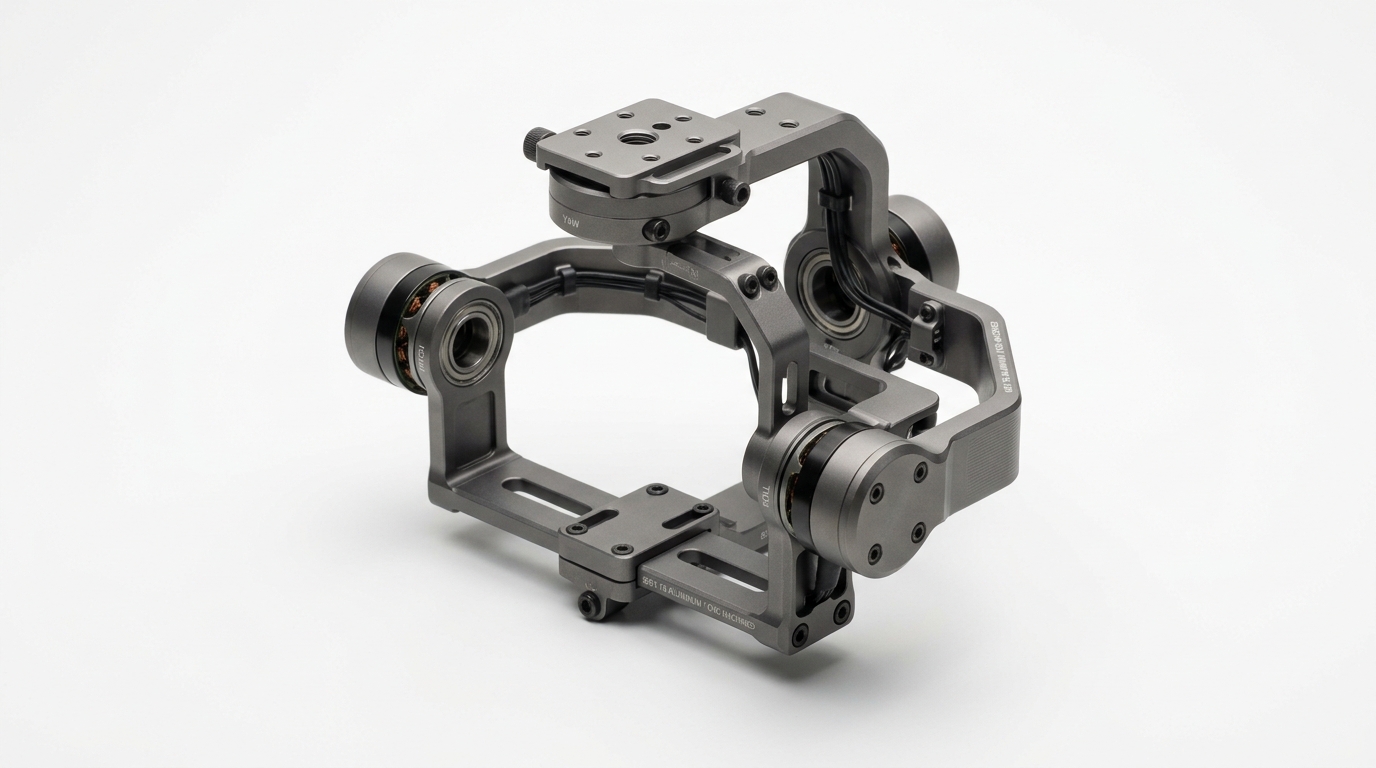
Illustration: RivCut
On August 13, 2026, the White House finalized a trade policy imposing tariffs of up to 100 percent on imported unmanned aerial systems and their critical structural sub-assemblies. As reported by Reuters, the action covers foreign-made drone frames, brushless motor housings, optical gimbal mounts and carbon-composite structural connectors, and takes full effect September 3, 2026.
The three-week runway between announcement and enforcement is short by trade policy standards, and that is by design. A longer implementation window would have given importers time to stockpile foreign inventory ahead of the deadline, blunting the policy's near-term effect on sourcing decisions. A tight window forces the sourcing conversation to happen now, while contracts and production schedules for the fourth quarter are still being set.
The measure closes a classification loophole that had let low-cost structural components enter the country under general machinery codes rather than aerospace-specific ones, which kept tariff exposure minimal for years. It applies to both complete finished drones and knocked-down sub-assembly kits imported for commercial inspection, agriculture, mapping and defense applications. The stated goal is to reduce reliance on overseas drone supply chains that the administration considers a national security risk.
For a domestic hardware startup building a commercial mapping drone, or a defense contractor sourcing airframe components for a reconnaissance platform, the practical effect is the same. The imported parts that used to anchor a bill of materials just got twice as expensive, or close to it.
The closed loophole is worth understanding on its own. Drone frames and structural connectors had been entering under broad machinery tariff classifications that predate the commercial drone industry itself, codes written for generic industrial hardware rather than aerospace-grade structural components. Reclassifying these parts under aerospace-specific codes is what unlocked the higher duty rate, and it closes a gap that importers have used for years to keep landed costs artificially low on parts that, functionally, belong in the same category as other flight hardware already subject to stricter trade controls.
Why it matters for manufacturers
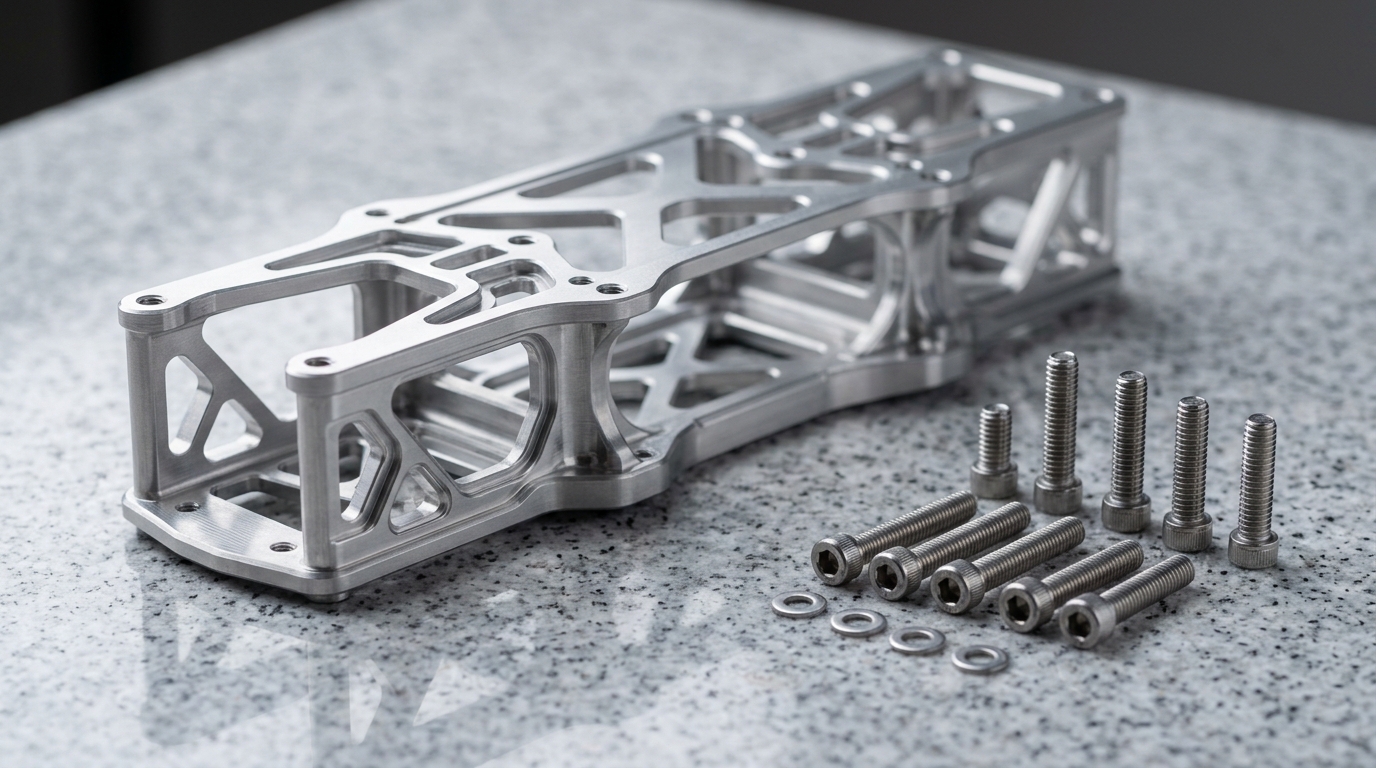
Illustration: RivCut
The unit economics flip overnight
For years, drone developers leaned on imported cast or molded frame parts to hold unit costs down, accepting the tradeoff in weight and finish quality because the price gap was too large to ignore. A 100 percent duty erases that gap in a single policy change. Domestic CNC machining, which was already competitive on quality and turnaround, is now competitive on landed cost too, and for many programs it becomes the cheaper option outright once customs and freight are factored in.
That shift matters more for drones than for most product categories because of how unforgiving the weight budget is. Unmanned aircraft live and die on strength-to-weight ratio. Precision 5-axis CNC machining of 6061-T6 and 7075-T6 aluminum lets engineers pocket out structural arms, motor mounts and payload brackets to remove material everywhere it is not load-bearing, something a molded plastic part cannot do without sacrificing rigidity. A machined frame that weighs 15 percent less than its molded equivalent translates directly into flight time or payload capacity, and that tradeoff now comes without a cost penalty either.
Motor mounts are a good example of where the tariff changes the calculus most directly. A brushless motor mount has to hold true concentricity under vibration loads across thousands of flight cycles, or the propeller balance degrades and efficiency drops. Cast or molded mounts tolerate a wider dimensional variance than a machined part, which was an acceptable compromise when the alternative cost twice as much. With that cost gap gone, there is no longer a reason to accept the looser tolerance, and drone reliability improves as a direct side effect of a trade policy that was not written with reliability in mind at all.
Speed and IP protection become the real prize
The cost story gets the headline, but the operational story is arguably bigger. Prototype iteration cycles that took 6 to 8 weeks when sourced overseas can run in 3 business days through a local CNC shop. For a drone company iterating on a motor mount design across a dozen flight tests, that difference is the entire development schedule. Waiting two months for a revised part from an overseas supplier used to be an accepted cost of doing business. It no longer has to be.
Domestic sourcing also closes an exposure that tariffs alone would not: intellectual property risk. Sending proprietary frame geometry or gimbal stabilization designs to an overseas contract manufacturer means trusting that design with a party outside U.S. jurisdiction and enforcement reach. Sourcing the same part locally under a standard non-disclosure agreement keeps that design where it can actually be protected, and for a defense-adjacent program, that is not a minor detail.
Optical gimbal mounts carry this risk more acutely than almost any other drone component. The mounting geometry and vibration isolation design of a stabilization gimbal is often the single hardest-won piece of engineering in a camera or sensor payload, refined across dozens of flight test iterations. Handing that geometry to an overseas manufacturer for volume production has always meant handing over a blueprint for a competitor to reverse-engineer, whether or not any contract technically prohibited it. A domestic supplier bound by U.S. contract law and physically reachable if a dispute arises changes that risk calculation entirely.
What to watch next
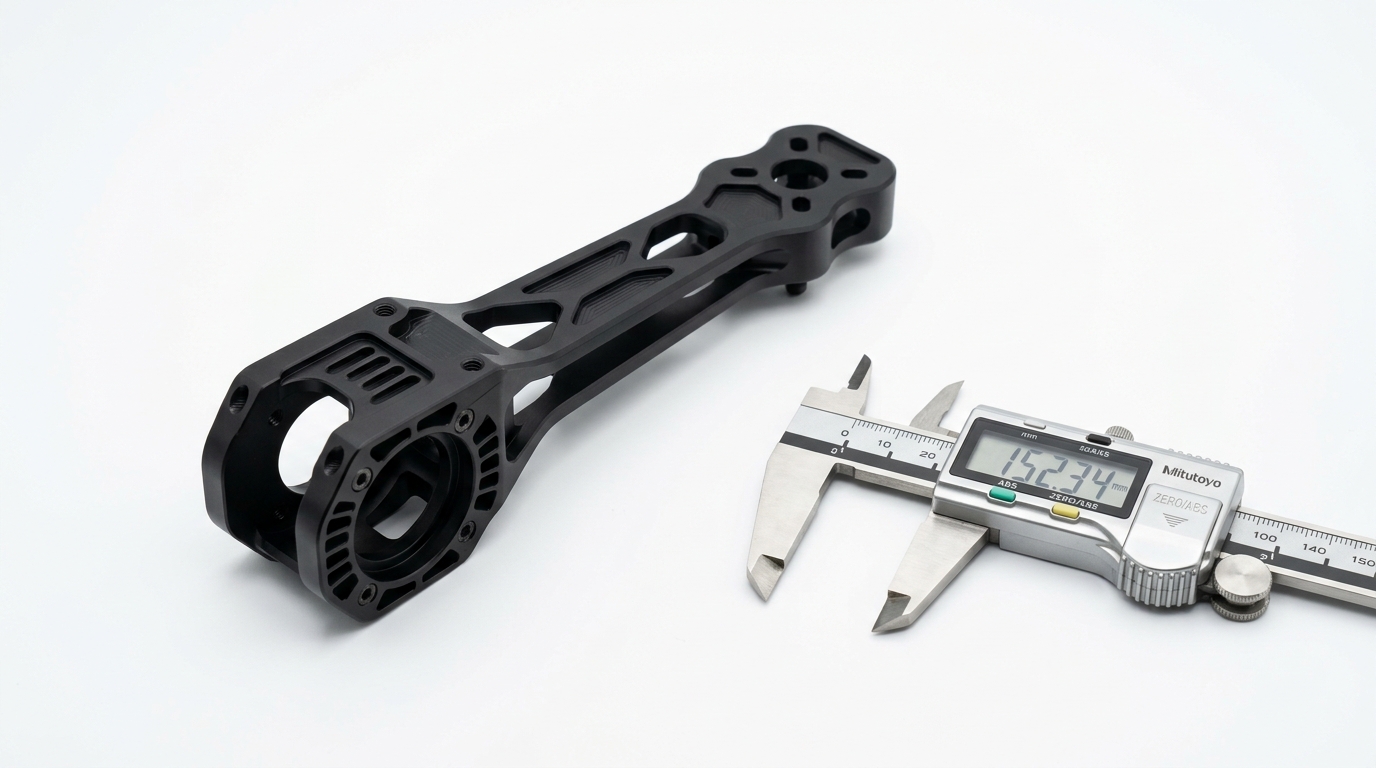
Illustration: RivCut
With the September 3 enforcement date less than a month out, domestic drone OEMs are working to lock in machining capacity for fourth-quarter 2026 and early 2027 production runs before that capacity gets absorbed by competitors making the same move. Shops that can commit to volume now are negotiating from a stronger position than they will have once the tariff is fully in force and demand catches up with supply.
Expect a wave of design-for-manufacturability requests over the next several weeks, as engineering teams that spent years designing around molded or cast components now redesign those same parts for CNC production. Machined and molded parts are not interchangeable drop-in replacements even when they look similar on a drawing. A wall thickness or draft angle chosen for injection molding often needs to change for machining to hit target cycle times economically, and companies that get ahead of that redesign now will hit the September deadline with parts already in production instead of still on an engineer's desk.
Expect demand for secondary finishing to rise alongside the machining volume itself. Type II and Type III anodizing, chemical conversion coating to MIL-DTL-5541 and laser engraving for part identification are the finishing steps that turn a machined frame into a flight-ready assembly. Shops that offer them in-house, rather than farming them out to a third party, will absorb the bulk of this realignment. A drone OEM standing up a new domestic supply chain in six weeks does not have time to coordinate three separate vendors for one part.
It is also worth watching whether the tariff prompts any retaliatory response that affects the raw material side of the equation. Most of the aluminum stock used for drone frame machining is already domestically sourced or comes from tariff-exempt trade partners, so the direct exposure there looks limited for now. But carbon-composite structural connectors draw on a more globalized fiber and resin supply chain, and any secondary trade friction in that material category would be the next thing to watch for companies planning production volumes past the first two quarters of 2027.
Tariff protection makes domestic precision drone machining cost-competitive overnight.