
What happened

Illustration: RivCut
In mid-2026, global supply chain metrics show a decisive pivot among U.S. hardware developers and procurement departments toward domestic sourcing for precision components. While the previous decade was dominated by the simple unit-cost chase—where parts were routinely outsourced to overseas foundries and machining centers—a complex mix of rising logistics costs, extended shipping lead times, quality assurance failures, and new trade tariffs has fundamentally altered the math. Sourcing specialists are no longer just looking at the quote price on a purchase order; instead, they are implementing comprehensive Total Cost of Ownership (TCO) calculators to determine the true cost of bringing metal and plastic parts to their assembly lines.
This shifting cost structure has been accelerated by recent tariff adjustments under Section 301 and Section 232, which have added unpredictable double-digit duties to imported cast, forged, and machined products. Concurrently, shipping lane congestion and fuel surcharges have pushed ocean freight transit times to average 30 to 45 days, causing cash to be locked up in transit inventory for months. For fast-moving industries like medical devices, electric vehicles, robotics, and aerospace, these delays represent a strategic liability that far outweighs any nominal savings on raw part costs. Sourcing managers are discovering that a part quoted at $12.50 offshore can easily end up costing over $15.00 once duties, shipping, quality inspection, and warehousing are factored in—even before accounting for the cost of production delays.
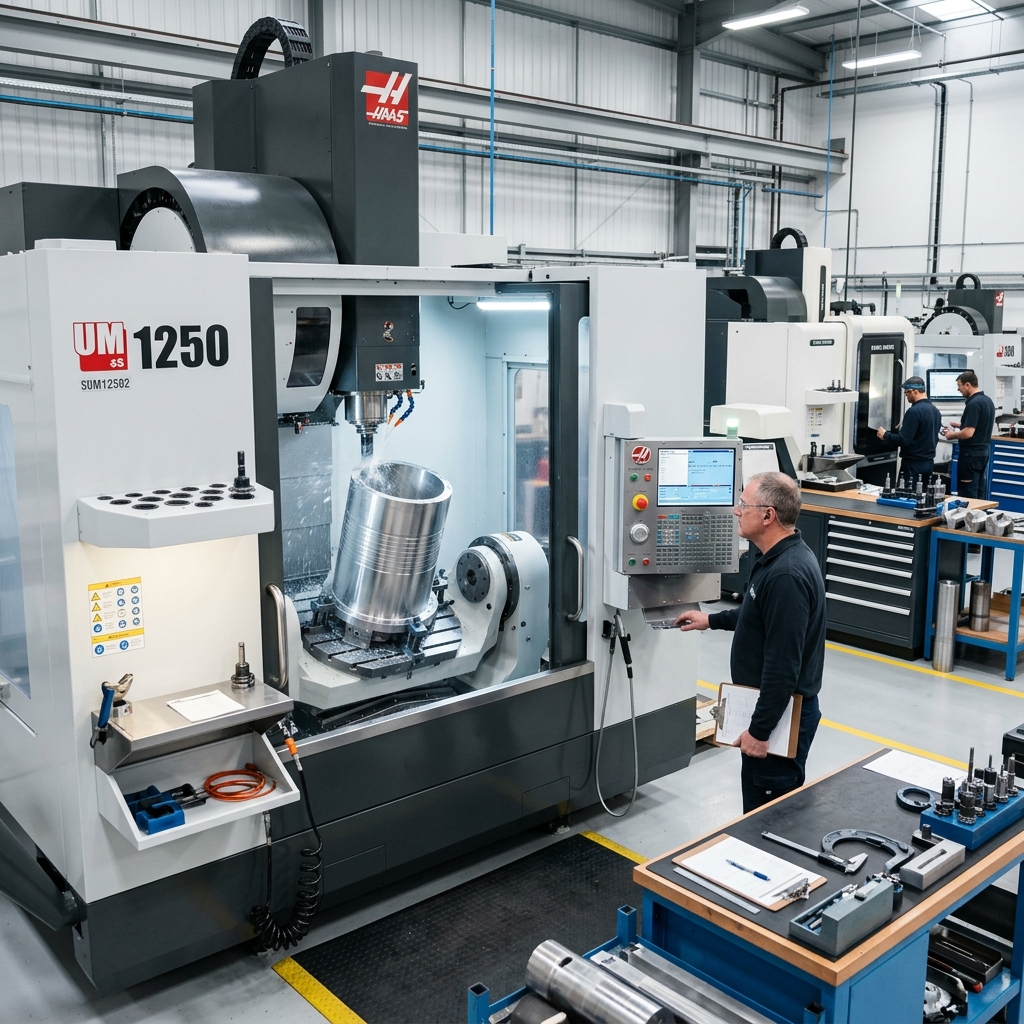
At the same time, the rise of digital-first, domestic manufacturing platforms has stripped the complexity and administrative overhead out of local sourcing. By utilizing automated Design for Manufacturability (DFM) reviews and instant online quoting, U.S. machine shops are narrowing the transaction gap. Procurement teams can now upload a STEP file, receive design feedback in seconds, and have precision parts running on local spindles in a matter of days. This combination of macro-economic pressures and technical innovation has created a perfect storm for reshoring, turning U.S. manufacturing from an idealized goal into a hard economic necessity.
The Hidden Costs of Offshore Sourcing
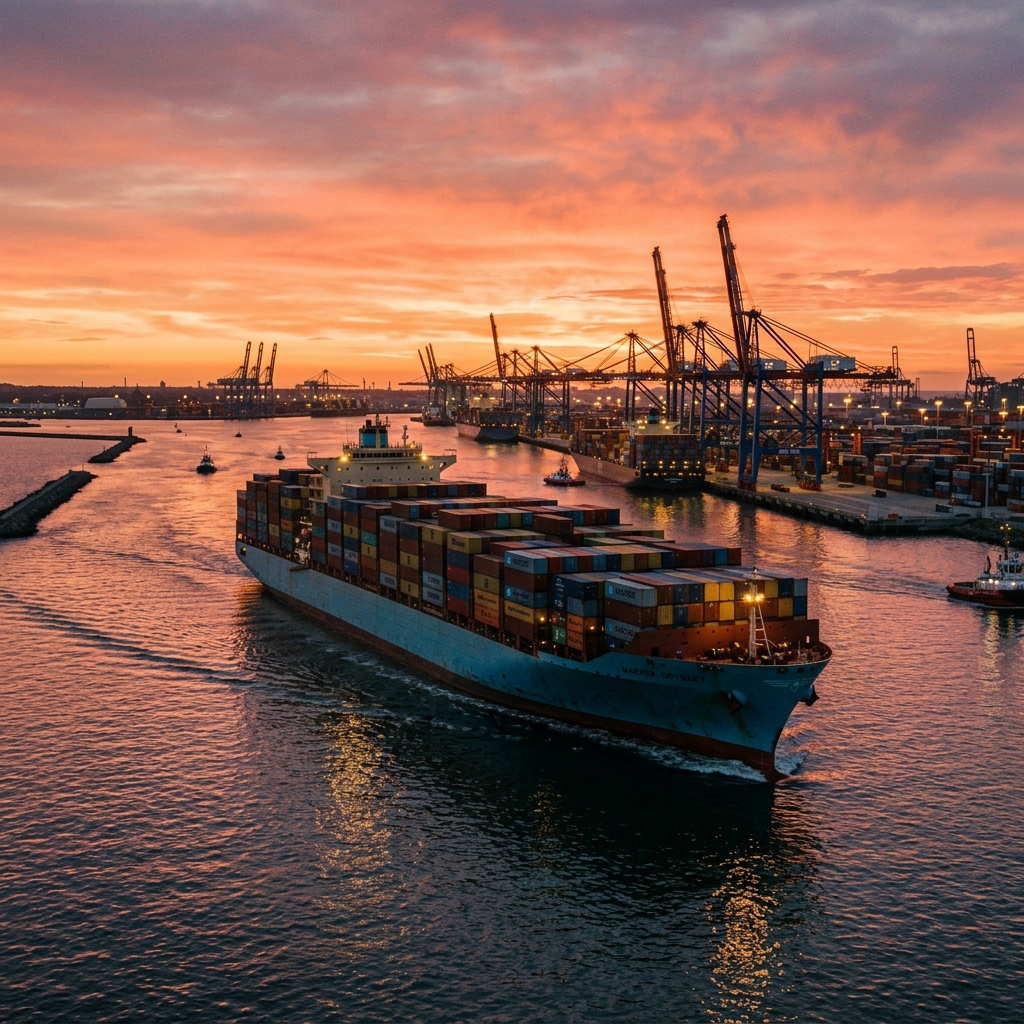
Illustration: RivCut
To understand the resurgence of U.S. manufacturing, one must first dismantle the "Unit Cost Fallacy." When a procurement manager receives a bid from an offshore vendor, the quoted price represents the cost of the part at the factory gate (FOB). However, the journey from that factory gate to a domestic assembly line is filled with hidden expenses that are rarely captured in basic purchasing systems. The first and most obvious of these is international logistics. Air freight is prohibitively expensive for heavy machined components, leaving ocean freight as the only viable option. Yet ocean freight is subject to volatile spot pricing, port congestion fees, customs clearance charges, and domestic drayage. These shipping fees can add anywhere from 10% to 30% to the cost of a shipment, depending on volume and weight.
Tariffs and duties represent another major cost driver. Under current trade policies, imported machined components face duties that can range from 10% to 25% or more. These tariffs are subject to sudden adjustments, making long-term budgeting for offshore projects a high-risk gamble. A contract signed in January can become unprofitable by June if trade policies shift, leaving the buyer to absorb the cost difference or face the complex process of renegotiating supplier agreements. Furthermore, managing customs compliance requires dedicated staff or third-party customs brokers, adding administrative overhead to every invoice.
Inventory carrying costs are also heavily inflated by long lead times. When parts take six to eight weeks to travel from factory to warehouse, companies must hold massive safety stocks to prevent assembly line stoppages. This "capital in transit" represents a significant opportunity cost, locking up cash that could be used for product development or market expansion. It also increases the risk of obsolescence; if an engineering change is made to a component while 10,000 units are on a container ship in the middle of the Pacific, those parts must either be scrapped upon arrival or manually reworked at an enormous expense.
Quality Control and Communication Friction
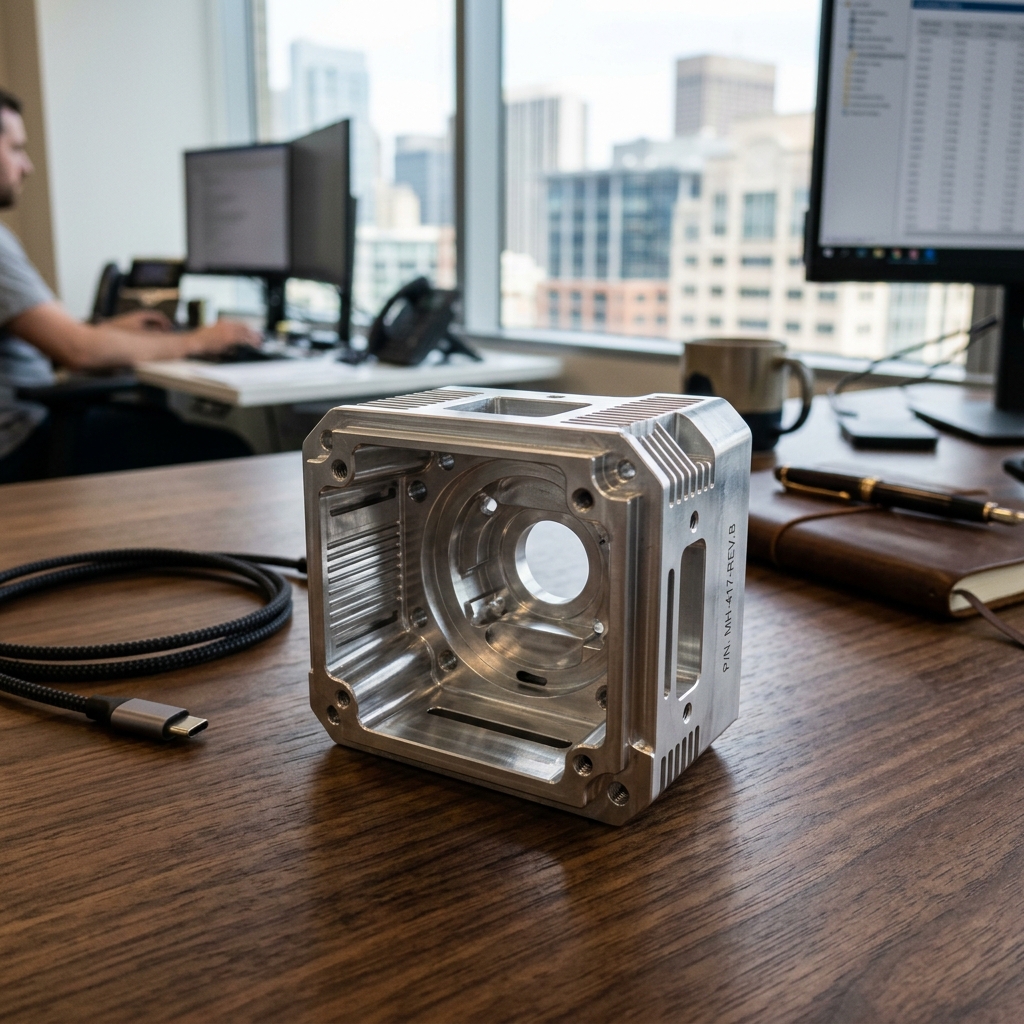
Illustration: RivCut
Beyond the direct financial costs, quality assurance is the most frequent point of failure in offshore manufacturing. When components are machined thousands of miles away, verifying dimensions, surface finishes, and material integrity is extremely difficult. Many offshore suppliers do not provide comprehensive material certifications (MTRs) or CMM inspection reports that meet U.S. aerospace or medical standards. If a batch of parts arrives with dimensional defects or out-of-tolerance features, the options are universally poor. Shipping the parts back for rework is logistically impractical and takes months, while sorting and reworking them locally destroys any initial cost savings.
Communication delays exacerbate these issues. A simple technical question about a CAD drawing can take 24 to 48 hours to resolve due to time-zone differences. This slow feedback loop delays product launches and causes misunderstandings that lead to tooling errors and scrapped parts. For engineering teams working on iterative prototype designs, this friction is a major bottleneck. A design cycle that takes a week in a domestic co-located partnership can stretch to over a month when working with overseas suppliers, slowing down the pace of innovation and time-to-market.
Finally, intellectual property (IP) security remains a persistent concern. While large contract manufacturers have strict security protocols, smaller sub-tier suppliers may lack the IT infrastructure to protect sensitive CAD data. For startups and defense contractors, the risk of design leaks or unauthorized replication is a critical threat. Sourcing parts from ITAR-registered, domestic machine shops ensures that all engineering data is protected by strict federal cybersecurity guidelines, safeguarding the company's core assets.
Case Study: A 10,000-Unit TCO Breakdown
To illustrate the economic difference, let us examine a real-world case study comparing domestic and offshore sourcing for a production run of 10,000 custom aluminum enclosures. In this scenario, the components require high-precision milling, tight tolerances (+/-0.001 inches), and a clean anodized finish. Sourcing managers evaluated bids from a high-quality offshore manufacturer and a domestic precision shop (RivCut) in Union City, California.
The offshore vendor quoted a unit cost of $12.50, resulting in a nominal project cost of $125,000. However, the true cost breakdown tells a different story. Shipping and sea freight logistics added a flat $2,800 to the shipment, while port fees and customs brokerage added another $1,200. Crucially, a 15% import tariff on the metal components added $18,750 to the final bill. Sourcing managers also factored in a historical quality defect rate of 0.5%, adding $625 in scrap and inspection costs. Finally, because of the 8-week lead time, the company had to pay $3,200 in warehousing fees to store safety stock, resulting in a True Total Cost of Ownership of $151,575—an actual unit cost of $15.16 (a 21.2% premium over the quoted gate price).
In contrast, sourcing the parts domestically at RivCut yielded a quoted unit cost of $15.50, totaling $155,000. Because the parts were manufactured in California, shipping was domestic ground freight, costing only $600. There were zero tariffs, customs broker fees, or import duties. Since RivCut offers on-demand manufacturing with parts delivered on a rolling schedule, the company eliminated the need for safety stock, saving $3,200 in warehousing fees. Quality assurance was verified in-house via CMM inspection, resulting in a 0% defect rate at assembly. The final domestic cost was $155,600, with a unit cost of $15.56. While the domestic quote was initially $30,000 higher, the actual cost differential was only $4,025 (less than 2.6%). When factoring in the peace of mind, zero supply chain risk, and the ability to make rapid engineering changes, the domestic option was the clear strategic winner.
Why it matters for U.S. Manufacturers
The narrow cost gap between domestic and offshore sourcing represents a massive opportunity for U.S. manufacturers. By bringing production back home, companies can dramatically reduce their supply chain risk, protect their IP, and improve their operational agility. This is particularly critical for high-reliability sectors like aerospace, medical devices, and defense, where quality is non-negotiable. Sourcing parts from ITAR-compliant, domestic shops ensures that all raw materials are certified and fully traceable from the mill to the finished part, fulfilling strict regulatory guidelines.
Furthermore, domestic sourcing supports the broader U.S. industrial base, fostering a resilient network of local suppliers and skilled machinists. As automation and advanced multi-axis machining continue to improve domestic productivity, the cost gap will only shrink further. For forward-thinking companies, the question is no longer whether they can afford to reshore—it is whether they can afford the risk of remaining offshore.
What to watch next
As the trend toward reshoring intensifies through the remainder of 2026, several key indicators will shape sourcing strategies. First, expect further adjustments to trade tariffs and export controls, which will continue to drive up the cost of imported components. Sourcing managers must monitor policy changes closely and remain agile in their supplier relationships.
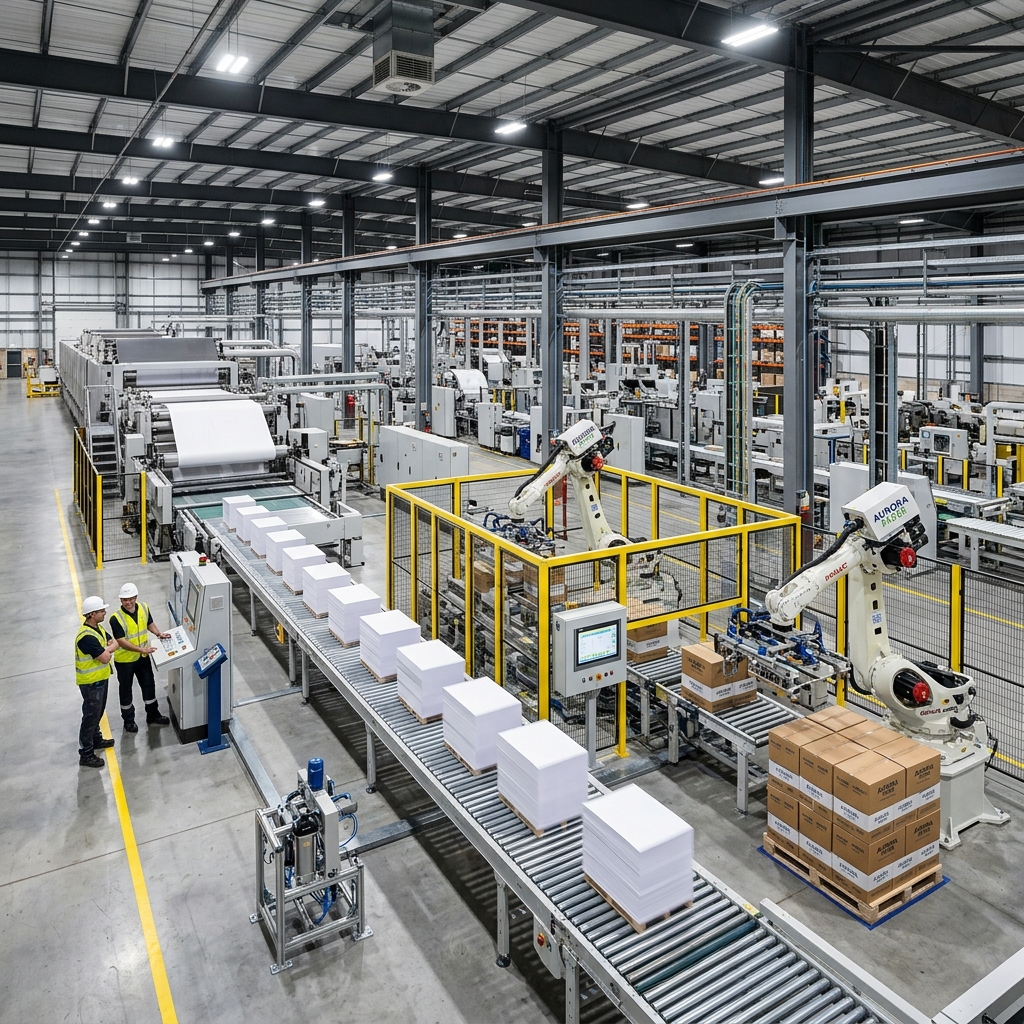
Second, watch the adoption of automation and AI in domestic machine shops. Shops that invest in robotic machine tending, lights-out production, and automated quality control will be able to offer lower prices and faster lead times, further narrowing the gap with offshore competitors. Finally, follow the development of local manufacturing hubs, particularly in regions like the SF Bay Area and Texas, where proximity to engineering teams is a major competitive advantage. For updates on sourcing strategy and CNC machining insights, see our ongoing manufacturing news coverage. If you are ready to evaluate domestic capacity for your next project, upload a CAD file for an instant quote.
A nominal unit cost saving of 20% on paper frequently evaporates into a 2% margin difference once the full logistics and tariff audit is complete.