What happened
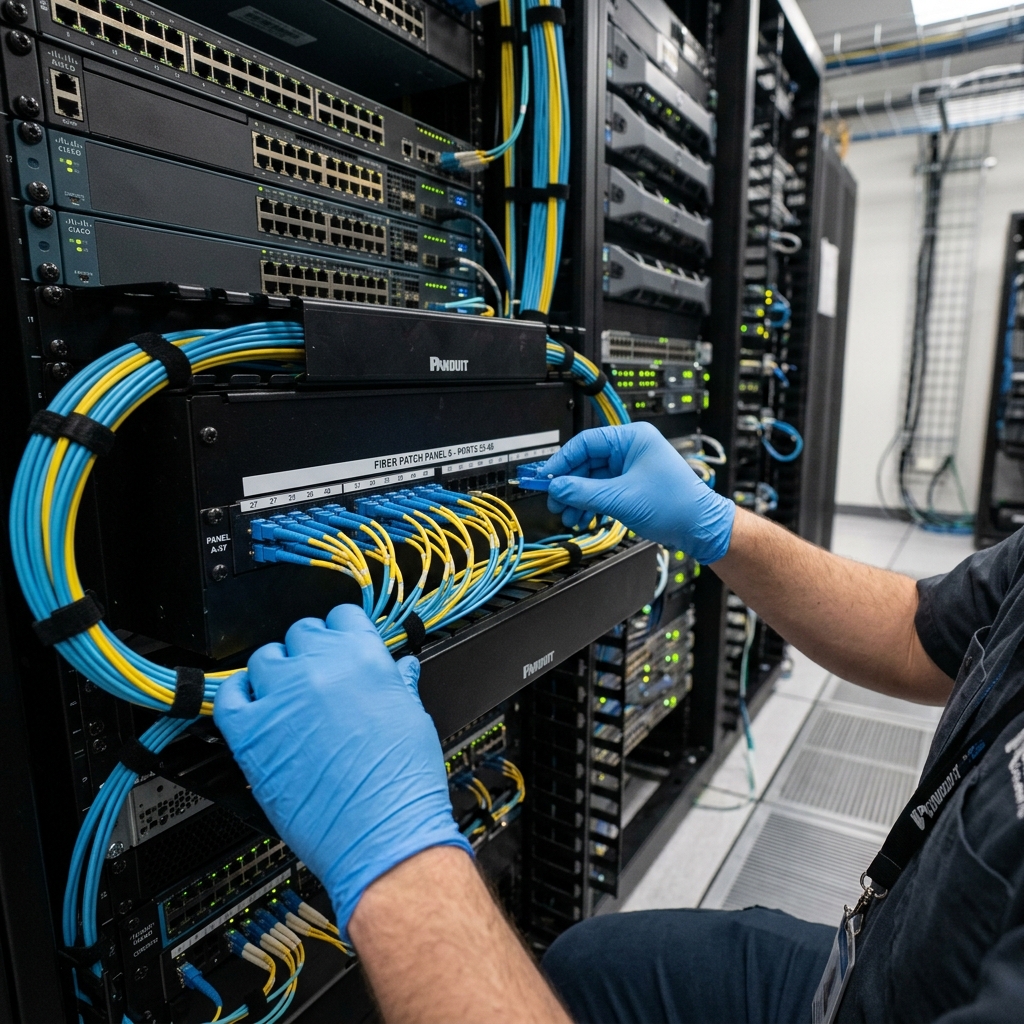
Illustration: RivCut
Amazon Web Services has committed billions of dollars to a long-term supply agreement with Corning, securing domestic production of optical fiber and connectivity hardware for its expanding AI data center network. The partnership, announced June 8, will directly fund manufacturing expansion at Corning facilities in North Carolina, creating approximately 1,000 new high-skilled positions over the next 18 months.
The deal centers on high-purity optical fiber, the ultra-thin glass strands that carry data as pulses of light inside data centers. Amazon needs enormous volumes of this material to wire the dense GPU clusters and high-bandwidth switches that power generative AI training and inference workloads. Traditional hyperscale data centers already consume miles of fiber per facility, but AI infrastructure multiplies that demand by an order of magnitude. Each AI training rack can generate 10 to 15 times the east-west traffic of a conventional server rack, requiring correspondingly thicker bundles of fiber between switches, storage arrays, and compute nodes.
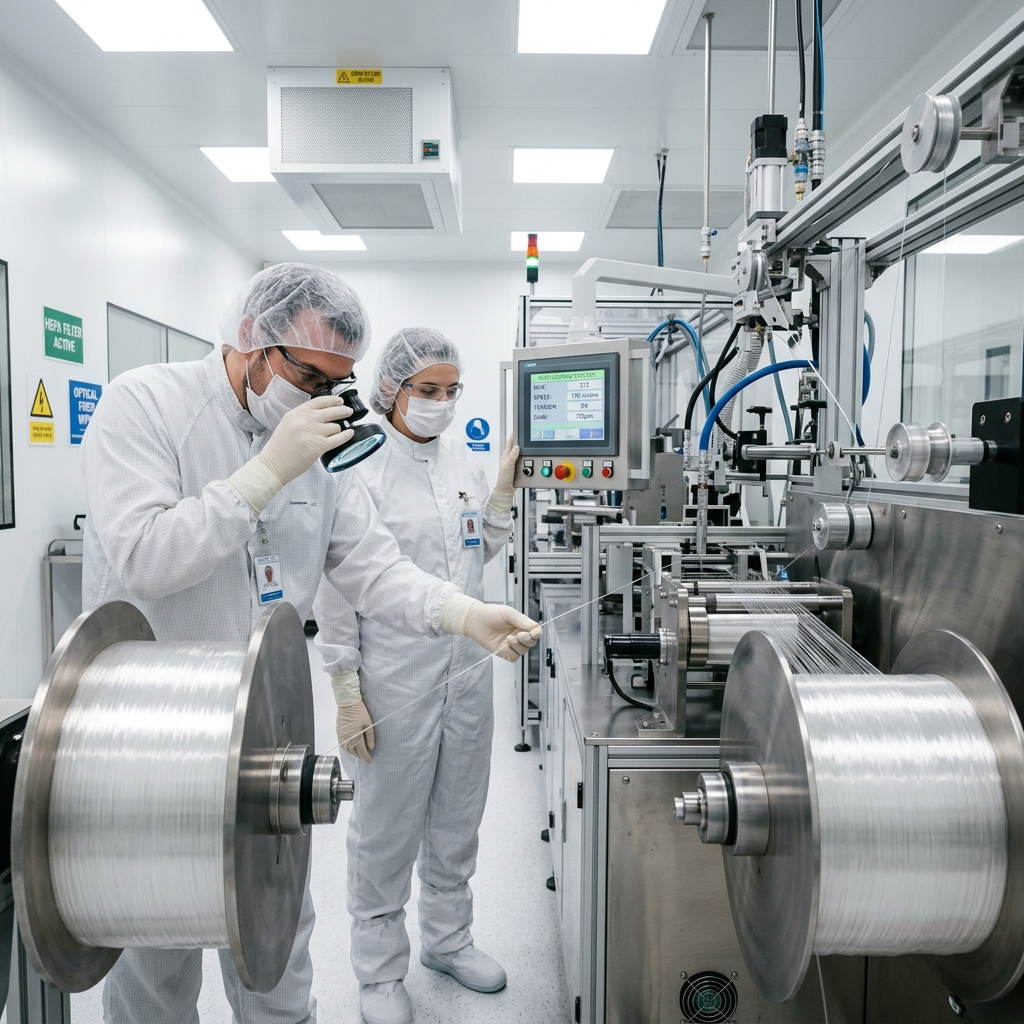
Corning manufactures optical fiber by drawing molten silica glass preforms into strands thinner than a human hair, then coating them with protective polymer layers. The process demands extreme purity: even parts-per-billion contamination can scatter light and degrade signal quality over distance. Corning's North Carolina plants have produced specialty glass since the 1960s, but this AWS agreement represents the single largest capacity expansion commitment the company has received from a hyperscale cloud operator. The new jobs will span process engineering, materials science, precision coating, and quality inspection roles.
Amazon is sourcing domestically to avoid the logistics and geopolitical risks that have plagued Asian electronics supply chains since 2021. Optical fiber itself is lightweight, but shipping vulnerable glass over ocean routes introduces breakage risk, long lead times, and exposure to port congestion. More critically, AWS wants supply assurance independent of Taiwan Strait tensions or South China Sea shipping disruptions. Corning's vertical integration (it manufactures both the glass preforms and the finished fiber in the United States) eliminates foreign chokepoints.
Why it matters for manufacturers
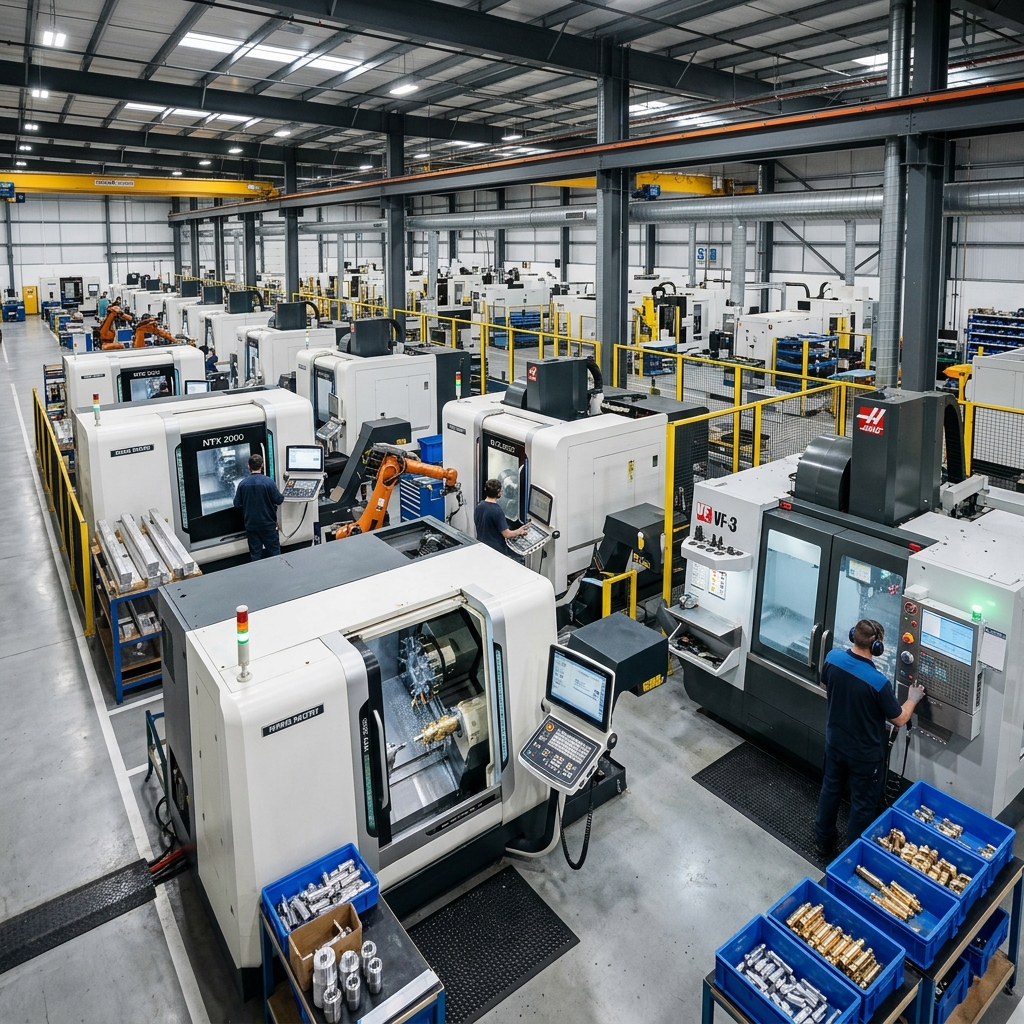
Illustration: RivCut
This deal confirms that optical connectivity has joined semiconductors, batteries, and rare earth magnets on the list of strategic materials where U.S. buyers will pay a premium for domestic sourcing. For contract manufacturers and component suppliers, that shift creates both opportunities and competitive pressure. If your product touches data center infrastructure (precision enclosures, thermal management hardware, power distribution assemblies, semiconductor tooling components), expect your customers to start asking pointed questions about where you source raw materials and how quickly you can scale without relying on imports.
The economics matter too. Corning is adding 1,000 workers not because labor is cheap in North Carolina (it is not), but because Amazon values delivery certainty and technical collaboration enough to absorb higher unit costs. That calculation works when the end product (AI compute capacity) generates revenue measured in dollars per GPU-hour. For lower-margin hardware, the math is tougher. A CNC shop making aluminum server chassis cannot simply double its labor cost and pass it through. The takeaway is that reshoring works best when the buyer captures extraordinary value downstream and when domestic production unlocks engineering iteration speed that offsets the wage differential.
AI infrastructure also has unusual supply chain characteristics that favor vertical partnerships over spot markets. A single AWS data center build might require 50,000 kilometers of fiber, installed over 18 months, with specification changes as new GPU architectures ship. That is not a commodity procurement. It is a co-engineering program. Corning will embed engineers at AWS sites, customize connector designs for specific rack layouts, and hold buffer inventory at regional hubs. For manufacturers, the lesson is that large strategic customers increasingly want suppliers who can hold capacity, absorb demand volatility, and co-develop solutions rather than simply fulfill purchase orders.
There is also a quality control angle. Optical fiber performance degrades with microbends, contamination, or coating defects, and those failures are invisible until the link goes live. AWS cannot afford to discover bad fiber after installing 10,000 cables in a $2 billion facility. Corning's domestic QA labs allow AWS engineers to witness testing in real time and audit process controls without flying to Shenzhen. For shops pursuing high-reliability manufacturing, proximity to the customer's engineering team is a competitive advantage that shows up in lower rejection rates and faster design-for-manufacturability feedback loops.
The job creation figure (1,000 workers) also signals automation limits in high-purity materials processing. Optical fiber drawing is highly automated, but preform fabrication, coating application, and end-of-line inspection still require skilled human judgment. Corning is not building an unstaffed factory. It is hiring process engineers, materials scientists, and metrology technicians, the same skill sets that every precision manufacturer struggles to recruit. If you are competing for those workers in the Carolinas, your wages just got bid up.
What to watch next
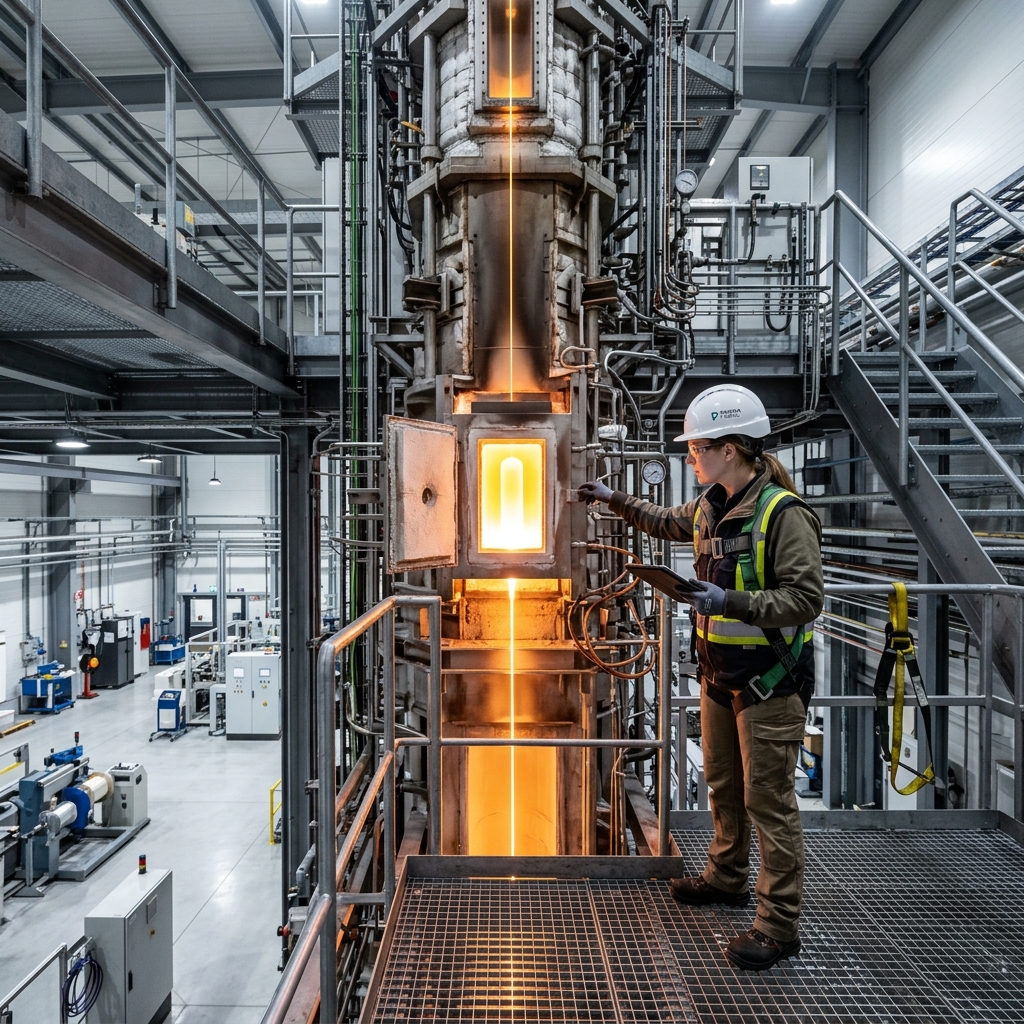
Illustration: RivCut
The immediate ripple effect will hit connector and transceiver suppliers. Optical fiber is useless without the precision-machined ferrules, alignment sleeves, and laser-welded housings that terminate each strand and mate it to a photodiode or laser. Those components have historically come from Japan (Fujikura, Sumitomo) and China (Yangtze Optical Fibre and Cable). If AWS is serious about supply chain security, it will pressure connector makers to follow Corning's lead and expand North American capacity. Watch for similar reshoring announcements from companies like TE Connectivity, Amphenol, and Molex over the next 12 months.
The deal also sets a floor price for domestic optical fiber. If Corning can profitably supply AWS at North Carolina labor rates, smaller competitors (OFS Fitel, Prysmian) will use that as a pricing benchmark when negotiating with Microsoft, Google, and Meta. Expect long-term agreements to become the norm and spot pricing to become less relevant for high-volume hyperscale buyers. That is good for suppliers who can commit capacity, bad for opportunistic brokers.
Geographically, the Carolinas are emerging as the U.S. hub for advanced materials manufacturing. Corning in North Carolina, Wolfspeed's silicon carbide fabs in the Research Triangle, and Qorvo's RF component plants form a cluster that will attract tool makers, chemical suppliers, and precision machining shops. RivCut already serves semiconductor equipment customers on the West Coast; the East Coast buildout creates parallel opportunities for shops willing to invest in precision tolerances and cleanroom-compatible processes.
Longer term, watch how this partnership influences AWS's approach to other bottleneck components. Optical fiber was the easy one: Corning already had domestic capacity and a proven supply chain. Power semiconductors, high-voltage capacitors, and liquid cooling hardware are harder. AWS cannot simply write a check and add 1,000 workers to solve those problems. If the company extends this co-investment model to thermal management or power distribution suppliers, it will validate a broader reshoring template: hyperscale customers funding domestic capacity expansion in exchange for supply priority and technical collaboration.
The final thing to monitor is lead times. Corning's capacity expansion will not go live overnight. The company is hiring workers, qualifying new production lines, and ramping yield. AWS likely secured its supply by committing to take output as soon as lines come online, even if that means accepting higher defect rates in early production. For manufacturers in the ecosystem, that dynamic (customers willing to absorb transition risk to secure future capacity) is a sign of how tight supply has become for critical infrastructure components. If you make anything that goes into a data center, your customers are thinking about where their supply comes from and what happens if it gets cut off. This Corning deal is what that thinking looks like when it turns into a multi-billion-dollar contract.
Frequently Asked Questions
Why is optical fiber critical for AI data centers?
Answer: AI training models require massive datasets to be shared between thousands of GPUs. Optical fiber provides the high-bandwidth and low-latency connections needed to transfer this data without bottlenecks.
How is optical fiber manufactured?
Answer: High-purity glass preforms are heated in a furnace and drawn down into thin fibers. These fibers are then coated with protective polymers and tested for optical clarity.
What does reshoring optical fiber manufacturing accomplish?
Answer: Reshoring secures the supply chain, reduces shipping delays, and ensures compliance with federal trade standards for critical telecom infrastructure.
What tolerances are required for optical connectors?
Answer: Fiber optic connectors must align glass cores with sub-micron precision to prevent signal loss, requiring highly accurate CNC machining and metrology.
Amazon is paying a premium for North Carolina fiber not because labor is cheap, but because delivery certainty is worth more than the wage delta when you are building AI infrastructure.