Executive Summary: Automating the Modern Supply Chain
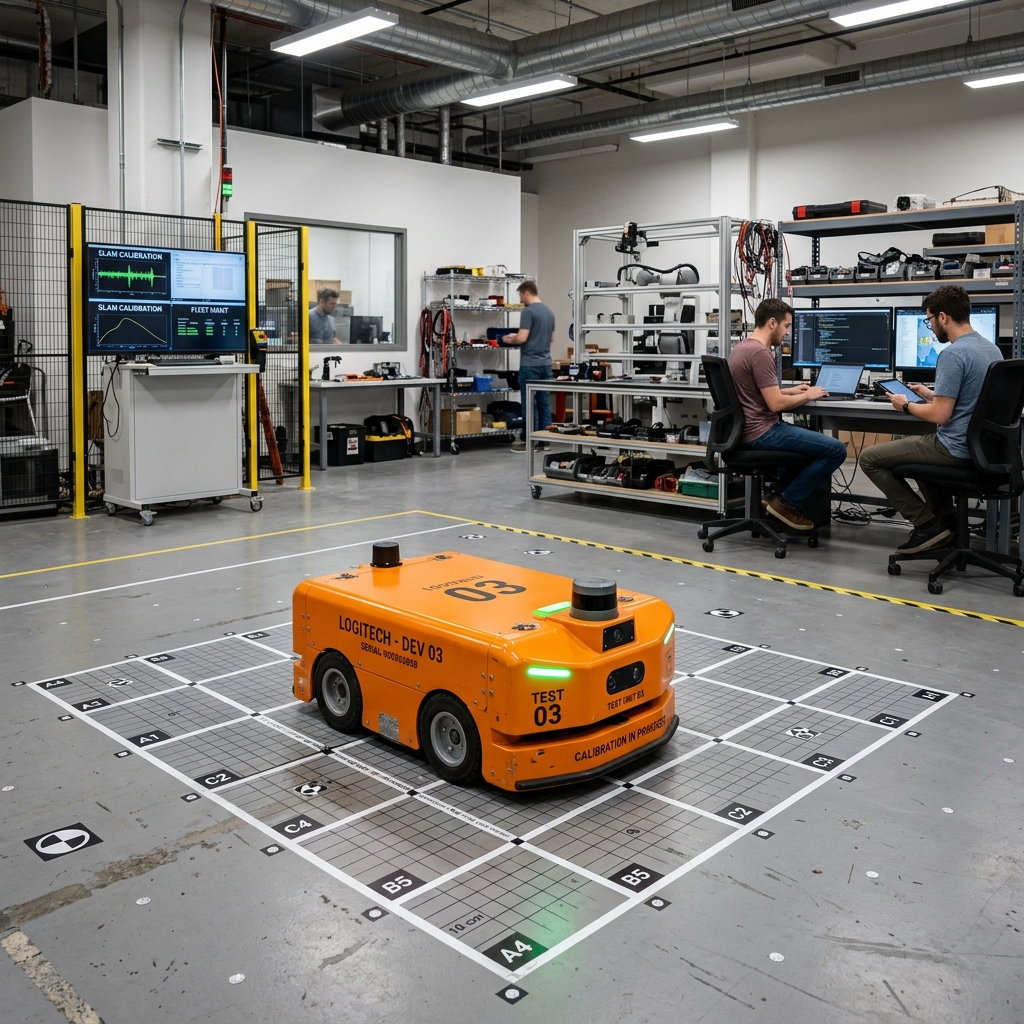
Illustration: RivCut
U.S. Logistics and distribution centers are implementing robotic mobile robot (AMR) control networks to streamline work. Driven by the e-commerce boom and persistent labor shortages, warehouses are turning to robots to increase throughput and reduce bottlenecks. These robot networks automate the movement of goods, bringing shelves directly to picking stations. By combining advanced sensors, SLAM navigation. And cloud-coordinated software, AMR fleets are transforming modern fulfillment centers into smart, quick hubs.
Historically, warehouse workers spent hours walking through long aisles to pick items from shelves. This manual picking method was slow and tiring. It also led to errors, such as picking the wrong item or quantity. AMRs reverse this process. The robots. This look like large flat discs, roll under mobile shelving units, lift them up. And carry them to the worker. This goods-to-person method allows workers to stand in one place and pick items quickly, speeding up order processing.
The tools of robotic Mobile Robots
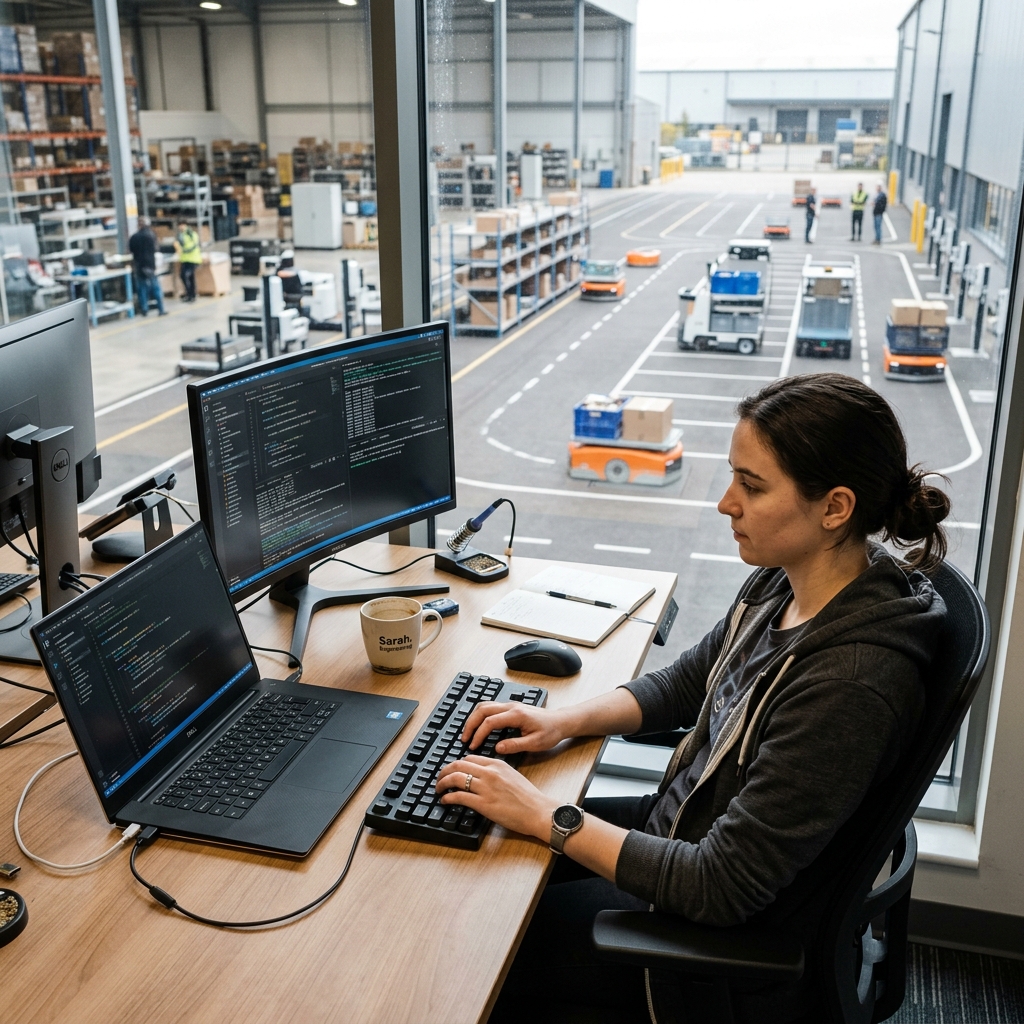
Illustration: RivCut
Unlike older robotic guided vehicles (AGVs). This run on fixed magnetic tape, AMRs are truly robotic. An AMR does not require expensive changes to warehouse floors. Instead, it navigates using onboard sensors and computing tools. The primary sensor used is LiDAR (Light Detection and Ranging). LiDAR shoots laser beams in all directions to measure the distance to walls, pillars. And other obstacles.
AMRs combine LiDAR data with optical cameras to map their room. This process is called Simultaneous Localization and Mapping (SLAM). When a robot is introduced to a warehouse, it drives around to map the area. It stores this digital map in its memory. When operating, the robot compares its real-time sensor data with the map to calculate its exact position. If a box or person blocks its planned path, the robot calculates a new path around the obstacle without stopping.
The mechanical design of AMRs must be robust. They use heavy-duty electric motors and differential drive wheels to rotate in place. This allows them to turn in narrow aisles. They also use electric jacks to lift heavy payloads, often up to 1,000 pounds. These mechanical parts are made to tight tolerances to ensure smooth, quiet work. U.S. Exact machine shops play a key role, milling custom gears, motor housings. And structural brackets for robot makers.
Fleet Management: Coordinating the Robot Swarm
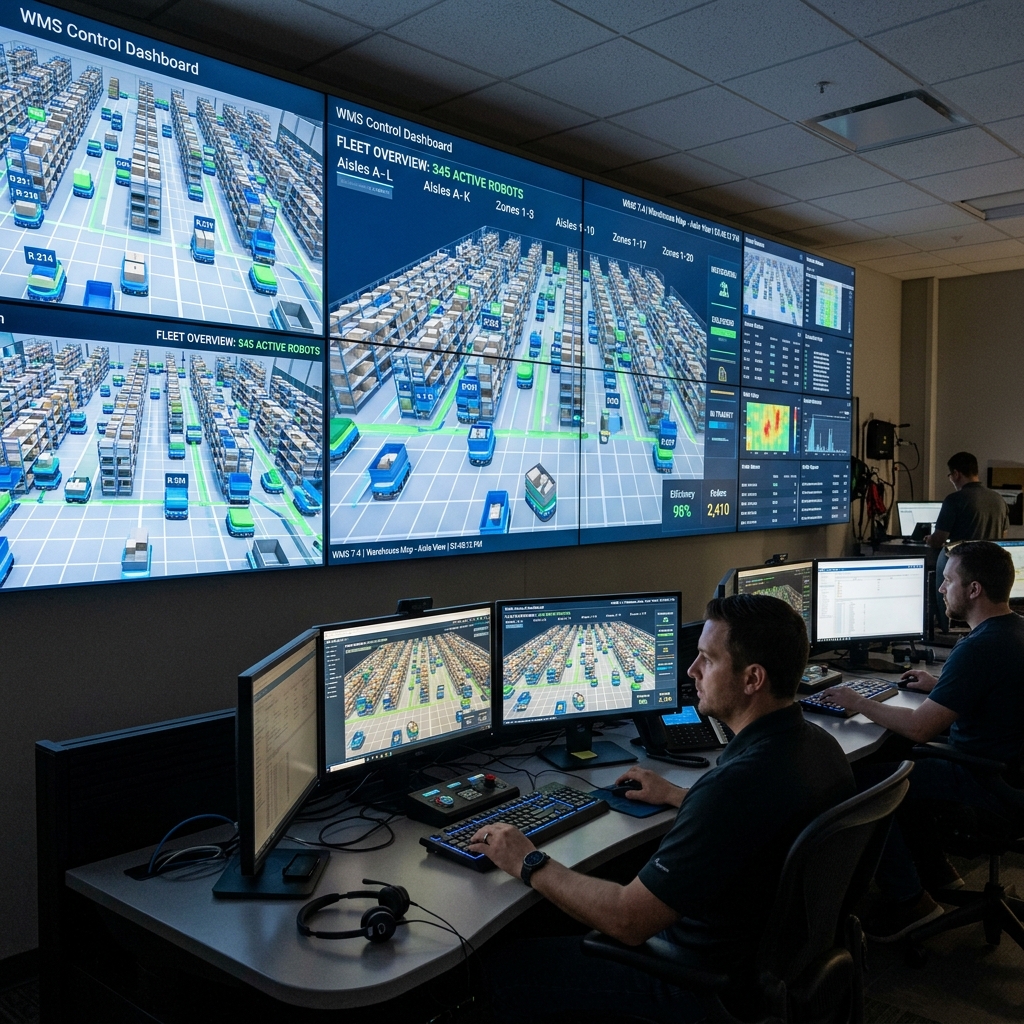
Illustration: RivCut
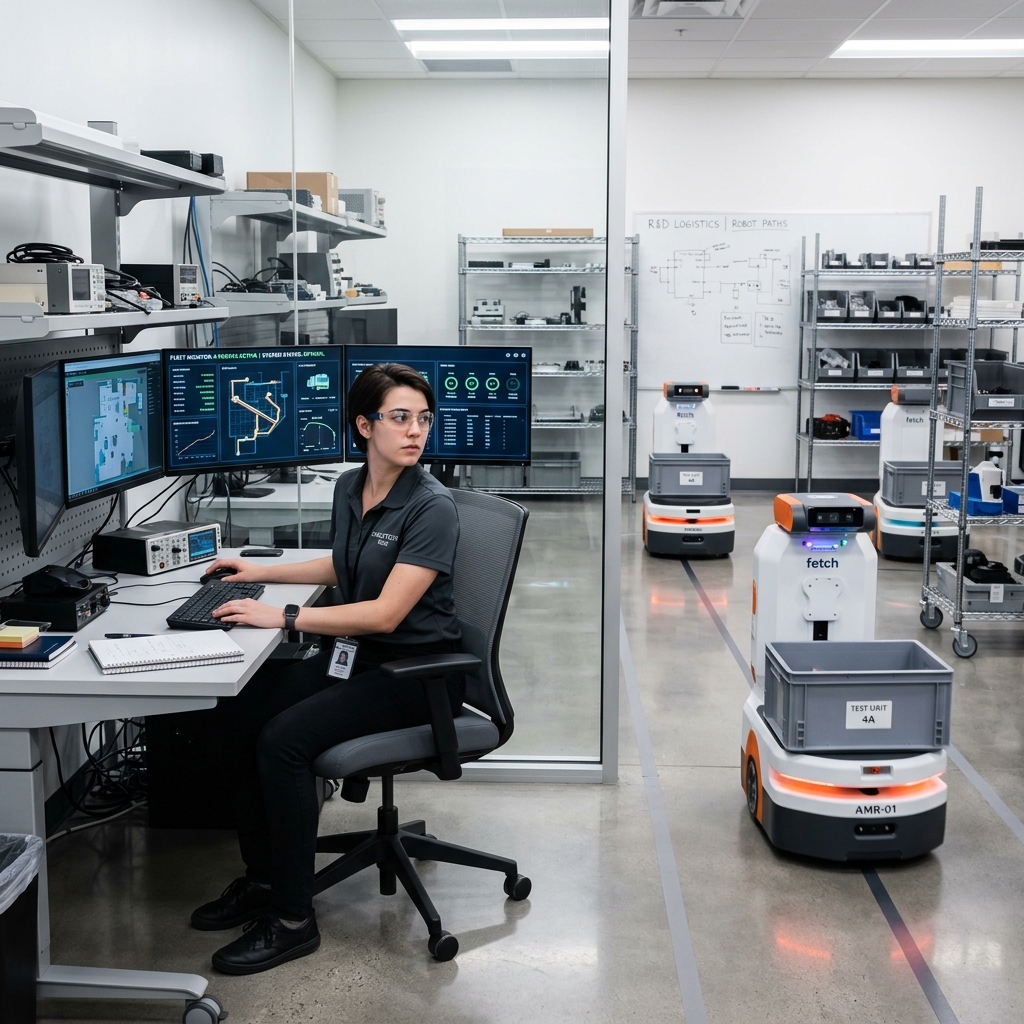
A single warehouse can operate hundreds of AMRs at the same time. Coordinating this fleet requires advanced software called a Fleet Management tool (FMS). The FMS acts as a traffic control tower. It connects to the robots over secure Wi-Fi or local 5G networks, tracking the location, battery status. And task of every robot in real time.
When an order is received, the warehouse control tool assigns tasks to the FMS. The FMS calculates the most quick robot path to complete the task. It uses routing rules to prevent collisions in intersection zones and manage traffic in one-way aisles. If a robot is running low on battery, the FMS simply schedules a charging task, routing the robot to a charging station during a slow period.
This software coordination is key for preventing bottlenecks. If multiple robots try to access the same aisle at the same time, they will block each other. The FMS prevents this by coordinating paths. This ensures a smooth flow of goods. By using cloud computing, the software can run hard path-planning rules in milliseconds. This allows the fleet to adapt instantly to changes in the warehouse floor.
Why AMR Networks Matter for U.S. Makers
For U.S. Makers and retailers, AMR networks are essential for staying competitive. E-commerce has changed customer expectations. Today, buyers expect fast shipping, often next-day or same-day. Meeting this demand requires quick warehouse work. AMR networks allow fulfillment centers to process orders faster. This reduces the time from order placement to shipping.
robots also helps companies manage labor shortages. The logistics sector has struggled to hire enough warehouse workers. Work in a manual warehouse is physically demanding, involving lifting heavy boxes and walking miles every day. This leads to high employee turnover. AMR networks reduce the physical demands of the job. This allows companies to run their plants with fewer workers while improving safety.
Furthermore, AMR fleets improve space speed. In a manual warehouse, aisles must be wide enough for forklifts and workers to pass safely. OHT and AMR networks can operate in narrower aisles. This allows shelves to be packed closer together. This increases storage density. This allows companies to store more inventory in the same building footprint and reducing the need to build expensive new warehouses.
Conformal Coating, Cleaning. And checking
Building reliable AMRs requires high-quality making and check. Because warehouses are often dusty, robot devices must be protected. Makers apply conformal coatings to circuit boards. Conformal coatings are protective plastic layers that seal the devices against dust and moisture. This prevents short circuits during work.
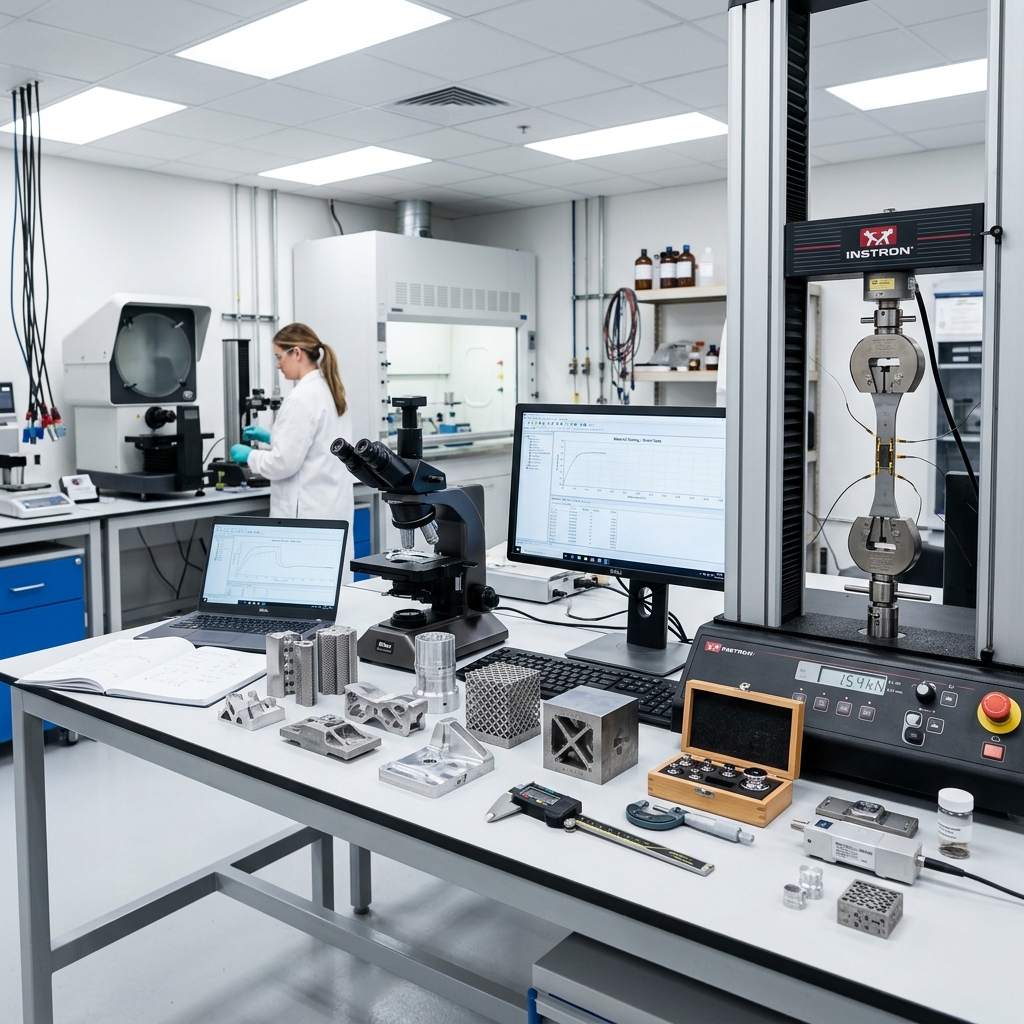
The mechanical parts of the robot, such as the wheels and lift jacks, must be checked for dimensional accuracy. Workers use coordinate measuring machines (CMM) to verify the tolerances of made gearboxes and drive shafts. This ensures that the gears mesh smoothly. This reduces wear and energy consumption. Proper oiling of these moving parts is also key, using high-speed synthetic oils to extend their lifespan.
Following build, the robots undergo tuning and testing. They are placed on test tracks to verify their navigation sensors and braking speed. Workers test the robot's ability to navigate around obstacles and load heavy payloads. Only robots that pass all checks checks are shipped to customers. This ensures that the fleet operates reliably on the warehouse floor.
Future Outlook: AI-Driven Fleet Autonomy
Looking ahead, AMR control networks will become more robotic. Researchers are developing deep reinforcement learning rules for robot path planning. This will allow robots to learn how to navigate hard rooms on their own, adapting to changes in the warehouse layout without requiring updates to their digital maps.
We will also see the expansion of cooperative robot swarms. In these tools, robots communicate directly with each other to coordinate tasks. This reduces reliance on a central fleet management server. For example, if two robots approach an intersection, they will negotiate who goes first directly over local wireless connections. This decentralized approach will make robot fleets more resilient, as the failure of a single server will not shut down the entire warehouse.
For U.S. Tools companies and machine shops, the robotics boom offers exciting opportunities. The demand for robotic hardware is driving investments in domestic design and build plants. Suppliers that offer high-exact making, advanced PCB build. And robust quality control will be well-positioned to support this growing trade. This ensures the U.S. Remains a leader in robots tools.
Frequently Asked Questions (FAQ)
What is the difference between an AMR and an AGV?
Answer: An robotic Mobile Robot (AMR) navigates using onboard sensors and cameras to build a map of its area. If an obstacle blocks its path, it simply steers around it. An robotic Guided Vehicle (AGV) runs on fixed paths, like magnetic tape on the floor. If an obstacle blocks an AGV, it stops and waits.
How do AMRs navigate without floor markings?
Answer: AMRs navigate using LiDAR (laser scanners) and cameras. As the robot moves, its sensors measure distances to walls and columns. It uses this data to build a digital map of the warehouse. A software technique called SLAM allows the robot to find its location on the map in real time.
What is a Fleet Management tool (FMS) in robotics?
Answer: A Fleet Management tool (FMS) is software that coordinates a group of robots. It schedules robot tasks, plans paths to prevent collisions. And manages traffic flow in narrow warehouse aisles. It also monitors robot battery levels and sends them to charging stations when needed.
How do robot networks improve warehouse throughput?
Answer: Robot networks improve throughput by automating the movement of goods. Instead of workers walking miles to pick items from shelves, robots carry shelves directly to picking stations. This reduces worker fatigue, eliminates errors. And accelerates order fulfillment.
Managing a fleet of robots is about network coordination; software optimization allows us to maximize logistics flow without collisions.