Executive Summary: Automating the Silicon Heartland
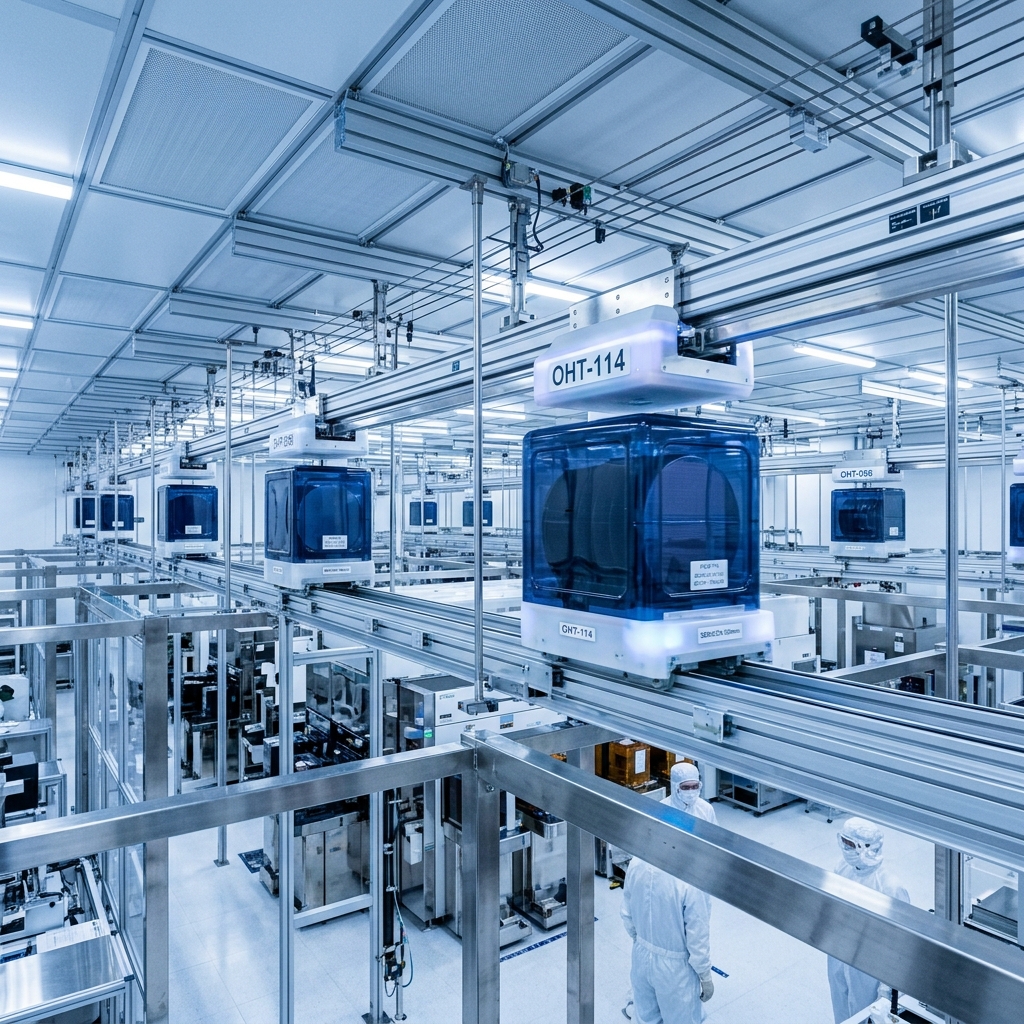
Illustration: RivCut
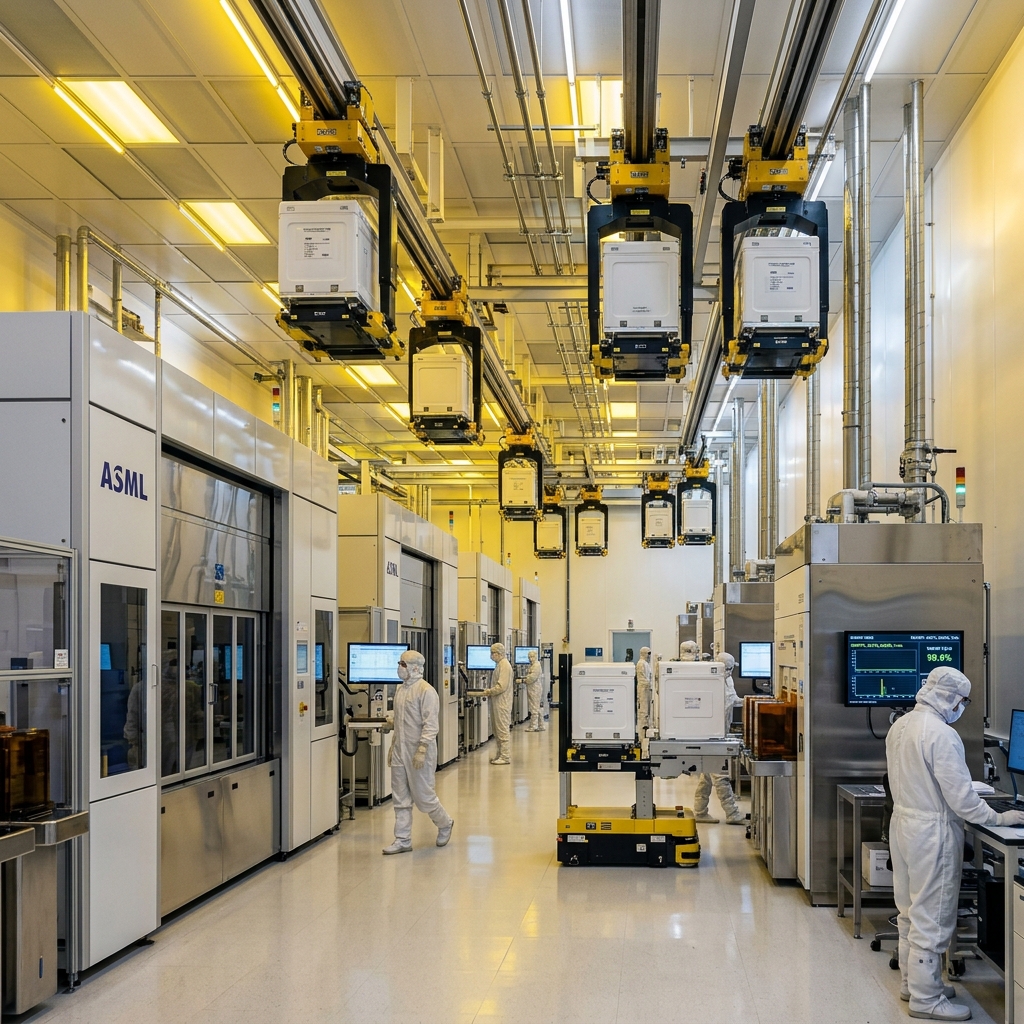
The construction of new chip making plants, or fabs, is transforming the U.S. Midwest. In Ohio, massive clean room plant expansions are hitting major milestones. Fabs are now installing advanced robotic wafer transport tools. These ceiling-mounted networks carry delicate silicon wafers between processing stations. By automating wafer movement, fabs can eliminate human contamination and maximize production yields. This multi-billion-dollar investment is establishing the region as a high-tech center for advanced chip making.
Silicon wafers are the circular discs used to make chips. A single wafer can contain hundreds of individual computer chips. During the making process, wafers travel through hundreds of steps, including etching, baking. And metal deposition. Moving these wafers by hand is risky. Wafers are extremely thin and fragile. Dropping a single wafer carrier can destroy hundreds of thousands of dollars worth of chips. Robots solves this problem by using robotic vehicles to transport wafers safely and cleanly.
The key Role of clean room rules
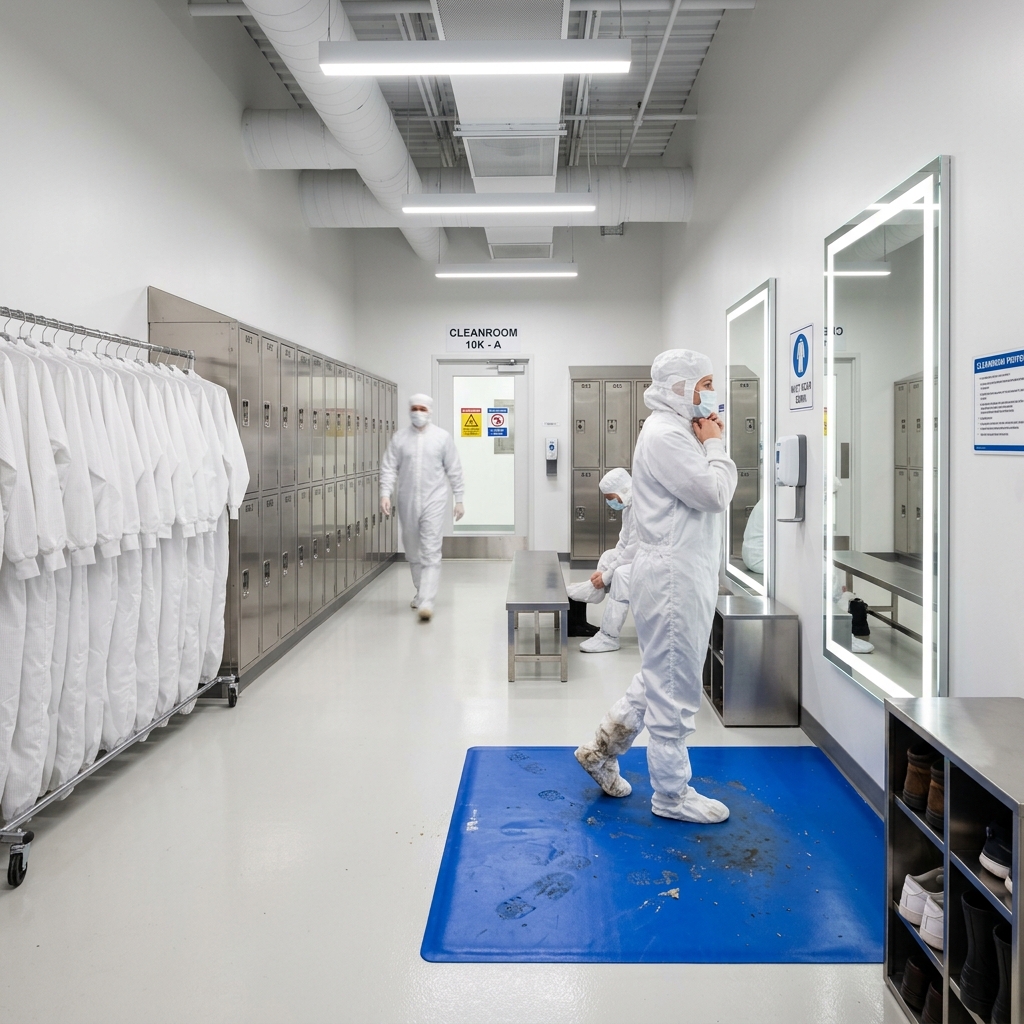
Illustration: RivCut
chip making must take place in clean room rooms. A clean room is classified by the number of particles allowed in the air. Rule indoor air contains millions of tiny dust particles, skin cells. And clothing fibers. In a chip fab, even a single microscopic particle can ruin a chip. If a speck of dust lands on a wafer during lithography, it can block the light and create a broken circuit. This renders the entire chip useless.
To prevent this, wafer fabs use ISO Class 1 to Class 4 clean rooms. An ISO Class 1 clean room is the cleanest rating. It allows no more than 10 particles of size 0.1 microns per cubic meter of air. For comparison, a human hair is about 75 microns wide. These clean rooms use massive fan tools and High-speed Particulate Air (HEPA) filters to replace the air constantly. The air flows straight down from the ceiling to the floor, pushing any particles out of the room immediately.
Humans are the biggest source of dust and hair in a clean room. When people move, they shed thousands of skin cells and clothing fibers. Even when wearing full clean room suits, or bunny suits, humans still release particles. Robotic transport tools solve this problem by replacing human workers with robots. The robotic vehicles move along ceiling tracks, carrying wafers inside sealed plastic pods. This keeps the wafers completely isolated from the clean room air.
How Overhead Hoist Transport (OHT) tools Work
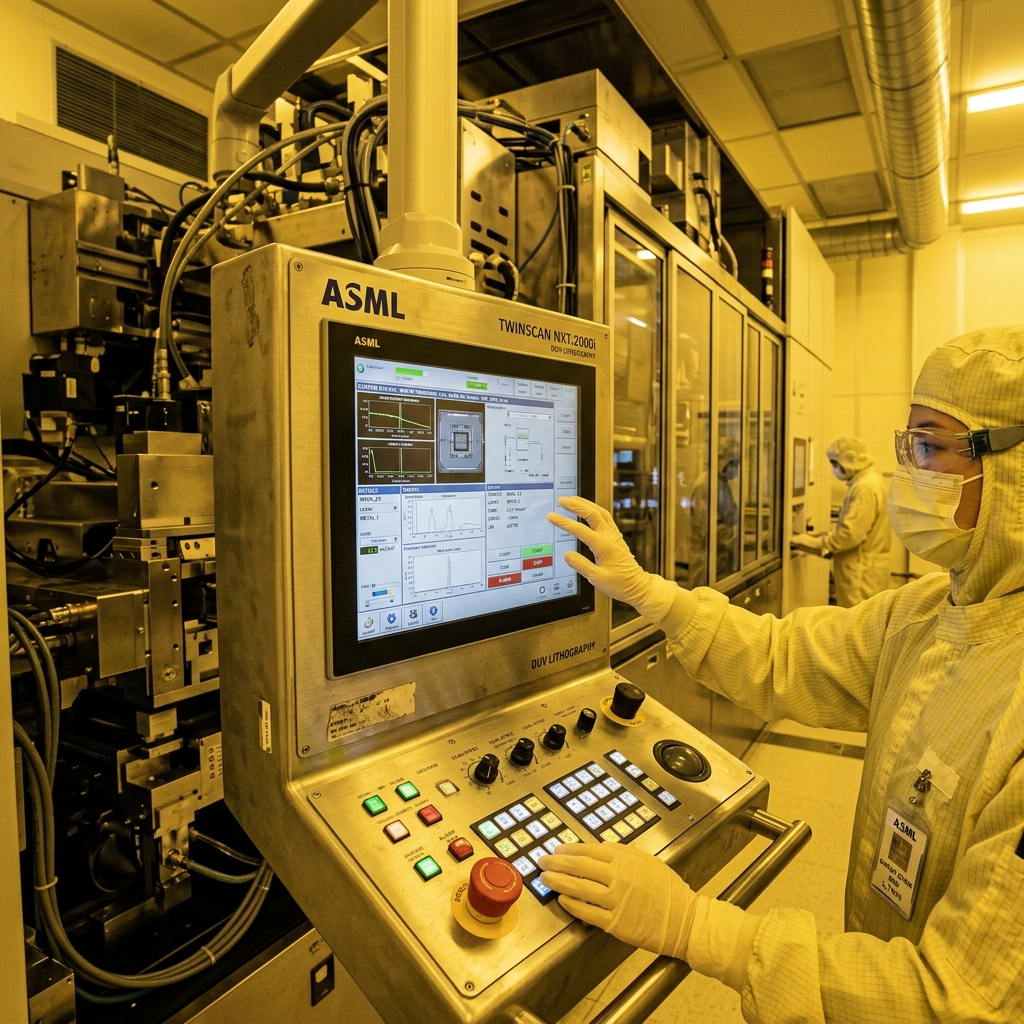
Illustration: RivCut
The primary robotic tool used in chip fabs is the Overhead Hoist Transport (OHT) tool. The OHT tool consists of a network of aluminum tracks mounted to the clean room ceiling. Robotic vehicles run along these tracks. Each vehicle has a mechanical hoist that can lower a gripper to pick up a wafer pod. The pods, called Front Opening Unified Pods (FOUPs), hold up to 25 silicon wafers in slots.
The FOUPs are sealed airtight. They are filled with clean nitrogen gas to prevent the silicon from reacting with oxygen or moisture in the air. When an OHT vehicle needs to move a FOUP, it positions itself above the tool, lowers its hoist. And grabs the FOUP. It then lifts the FOUP to the ceiling and travels along the track network to the next tool. Once there, the vehicle lowers the FOUP onto the tool's load port. The tool opens the FOUP simply, processes the wafers. And seals them back inside when finished.
Managing this network requires advanced software. Fabs use Fleet Management tools (FMS) to coordinate hundreds of OHT vehicles at the same time. The software schedules vehicle paths to prevent traffic jams on the tracks. It also tracks the location of every wafer in the factory. This real-time tracking ensures that wafers move through the production line in the correct order, maximizing speed.
Active Vibration Isolation: Protecting Microscopic Circuits
One of the biggest design challenges in designing OHT tools is vibration. Silicon wafers are fragile. During transport, any bumps or shaking from the tracks can cause the wafers to slide in their slots. This can scratch the wafer surface or cause microscopic cracks. More importantly, shaking can misalign the delicate circuits being printed on the silicon. Today's chips have features that are only a few nanometers wide. Even a tiny vibration can cause circuit layers to print out of alignment, ruining the chip.
To prevent this, OHT tracks must be perfectly level and smooth. Makers use high-exact aluminum extrusions for the track rails. The joints between track sections are aligned to tolerances of less than a millimeter. The OHT vehicles also use active vibration isolation tools. These tools use sensors to detect shaking in real time. Electromagnetic actuators then adjust the vehicle's wheels or hoist to cancel out the shaking, keeping the wafers completely still during transport.
Additionally, fabs design the building structure to minimize ground shaking. Heavy machinery, such as pumps and HVAC tools, is mounted on separate concrete slabs. The clean room floor is built on thick concrete pillars anchored deep into the ground. This isolates the clean room from shaking caused by nearby traffic or factory equipment. This ensures a stable room for wafer processing.
The U.S. Chip making Expansion
The installation of robotic transport tools in Ohio is part of a larger push to expand U.S. Chip making. Historically, most advanced chip making shifted to Asia. This created supply chain risks for U.S. Trades. If a shipping delay or factory shutdown occurs overseas, U.S. Car makers, defense firms. And tech companies cannot get the chips they need. The U.S. CHIPS Act is addressing this by providing $52 billion in federal subsidies to build domestic fabs.
Building fabs in the U.S. Secures the supply chain for key tools. Fabs in Ohio, Arizona. And Oregon will produce advanced chips for automotive, space. And computing sectors. This reduces reliance on foreign suppliers and creates high-tech jobs. For local suppliers, the fab build-out drives demand for clean room equipment, high-purity piping. And exact making services. Shops that can meet the strict cleanliness and quality rules of the chip trade will find massive opportunities in this growing market.
Furthermore, domestic chip making supports national security. The U.S. Military relies on advanced devices for communications, radar. And guidance tools. These defense chips must be secure and free from foreign tampering. Making them in secure U.S. Fabs ensures that they are built under strict quality controls and are completely trustworthy.
Future Outlook: AI-Driven Smart Fabs
Looking ahead, wafer transport tools will become even smarter. Fabs are beginning to integrate computer smarts (AI) into their fleet management software. AI can predict traffic bottlenecks on the OHT tracks and reroute vehicles before jams occur. It can also schedule preventative maintenance for OHT vehicles, predicting when a wheel or motor is about to fail and sending the vehicle to a repair station during slow periods.
We will also see the expansion of robotic mobile robots (AMRs) on the clean room floor. While OHT tools handle ceiling-mounted transport, AMRs can move materials on the ground. These robots navigate using LiDAR and cameras, carrying reticles (photolithography masks) and liquid supplies between stations. By combining OHT and AMR networks, chip fabs will achieve near-100% robots, eliminating human contamination entirely and driving chip yields to record highs.
For the U.S. Workforce, this shift will change the types of skills needed. Fabs will require fewer manual operators and more robots workers, software designers. And maintenance specialists. Programs at local community colleges and universities are training students in clean room rules, robotics. And computer model programming. This ensures that the U.S. Has the skilled talent needed to run the smart fabs of the future.
Frequently Asked Questions (FAQ)
What is an robotic Wafer Transport tool (OHT)?
Answer: An robotic Wafer Transport tool, or Overhead Hoist Transport (OHT), is a network of ceiling-mounted tracks and robotic vehicles. These vehicles carry silicon wafers inside sealed pods between different tools in a chip factory. This robots prevents humans from touching or contaminating the wafers.
Why is vibration isolation key in wafer transport?
Answer: Vibration isolation is key. This is because silicon wafers are extremely fragile. During making, wafers are printed with microscopic circuits. Even tiny shaking from transport tracks can cause the silicon to crack or damage the print layers, ruining the chips and lowering factory yields.
What is the ISO clean room rule for chip fabs?
Answer: chip wafer fabs require ISO Class 1 to Class 4 clean rooms. These rooms are up to 10,000 times cleaner than a rule hospital operating room. The air is constantly filtered to remove microscopic dust particles that could ruin the chips.
How does robotic clean room transport improve chip yields?
Answer: robotic transport improves yields by removing human error and contamination. Humans are the biggest source of dust and hair in clean rooms. By using robots to carry wafers in sealed pods, the factory keeps the wafers perfectly clean, resulting in more working chips per wafer.
Modern semiconductor fabs rely on seamless, vibration-free transport; even the slightest physical shock can ruin an entire wafer batch.