Executive Summary: Strengthening National Security through Quality
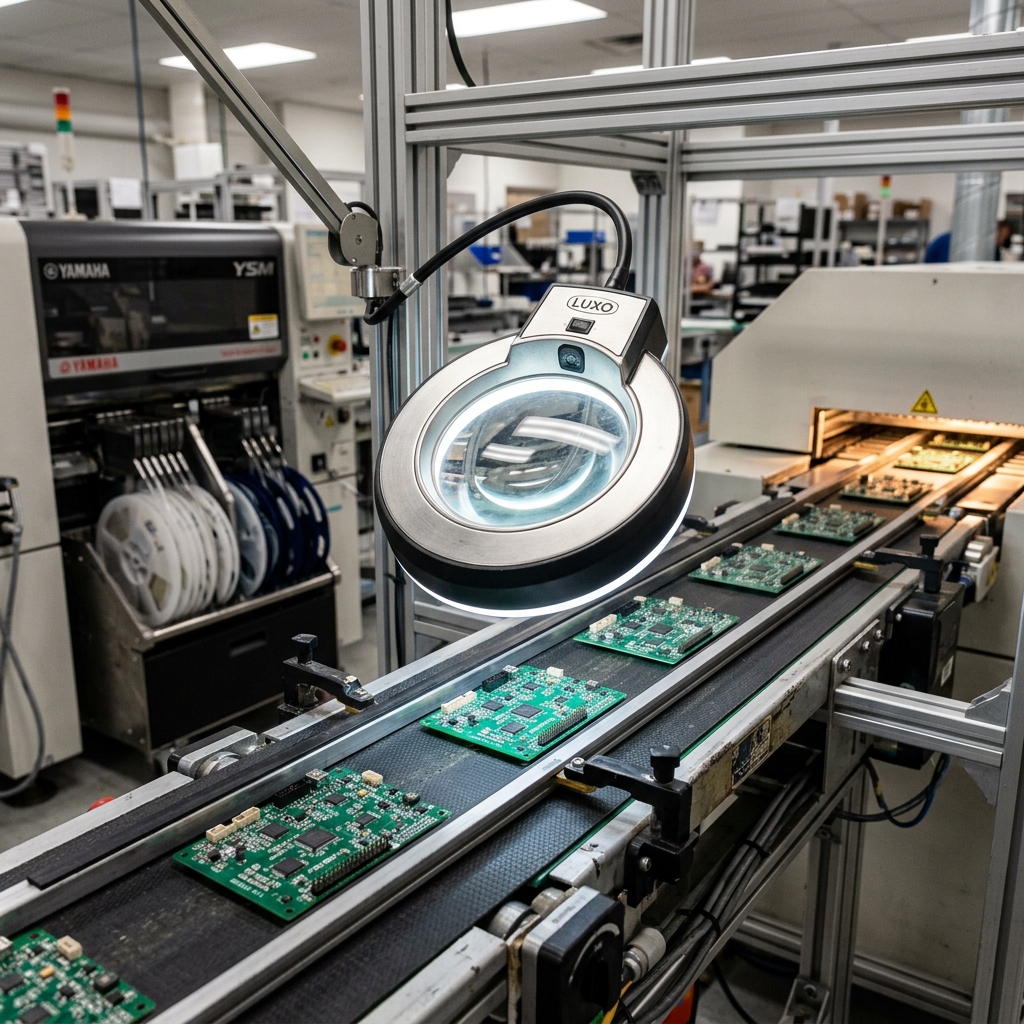
Illustration: RivCut
U.S. Defense devices makers are scaling up clean room testing of advanced micro-circuitry. Driven by federal funding under the Defense Production Act (DPA), companies are investing in clean room plants, thermal shock chambers. And radio frequency (RF) testing tools. These testing rules ensure that military-grade printed circuit boards (PCBs) can survive extreme conditions in the field. By verifying quality and electrical speed in clean, controlled rooms, defense suppliers are preventing failures in key avionics, communication tools. And missile guidance platforms.
Military-grade devices are different from consumer devices. If a smartphone fails, it is an inconvenience. If a fighter jet's communication board fails, it can be a national security disaster. Therefore, defense devices must meet strict quality rules. They must operate in extreme heat levels, withstand heavy G-forces. And resist electromagnetic interference. Achieving this level of safety requires advanced making methods and rigorous clean room testing.
The SMT build Process for Defense devices
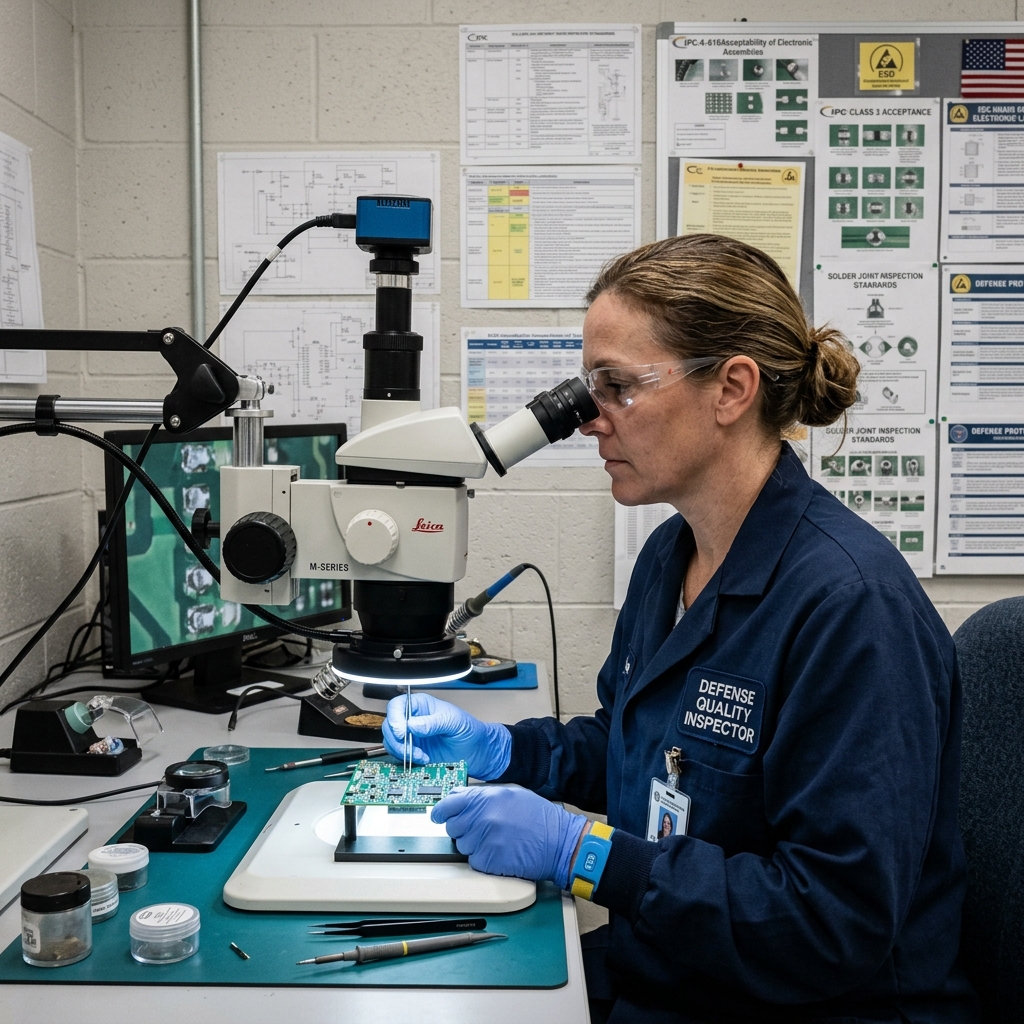
Illustration: RivCut
Modern circuit boards are built using Surface Mount tools (SMT). The SMT process allows makers to place tiny device parts directly onto the surface of a circuit board. This replaces older pin-through-hole methods. This allows for smaller, lighter. And more hard designs. On a defense SMT line, stencil printers apply solder paste to the board. Then, robotic pick-and-place machines position resistors, capacitors. And chips onto the paste at high speeds.
Once the parts are positioned, the board travels through a reflow soldering oven. The oven heats the solder paste until it melts, creating solid electrical connections. Because defense devices require high safety, the reflow process is monitored closely. Workers use thermal profiling tools to ensure the oven's heat curve is perfect. If the oven heats up too quickly or cools down too slowly, it can stress the parts or create weak solder joints that fail during work.
Following reflow, the boards undergo robotic optical check (AOI). AOI tools use high-speed cameras and image processing software to check every solder joint. The software looks for missing parts, misaligned parts. And solder bridges. Any board with a defect is flagged and sent to a repair station. This robotic check is the first line of defense against making errors. This ensures that only perfect boards proceed to the testing phase.
The Importance of clean room Testing rooms
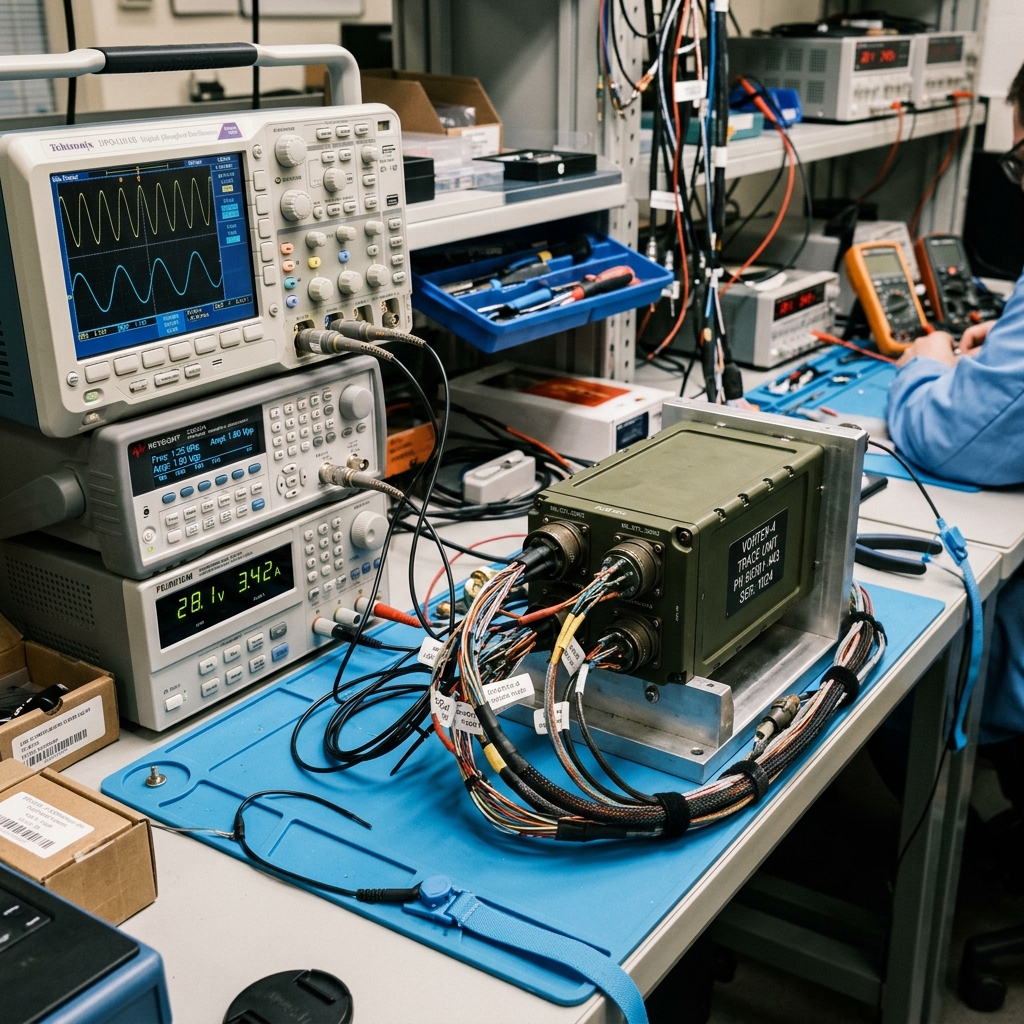
Illustration: RivCut
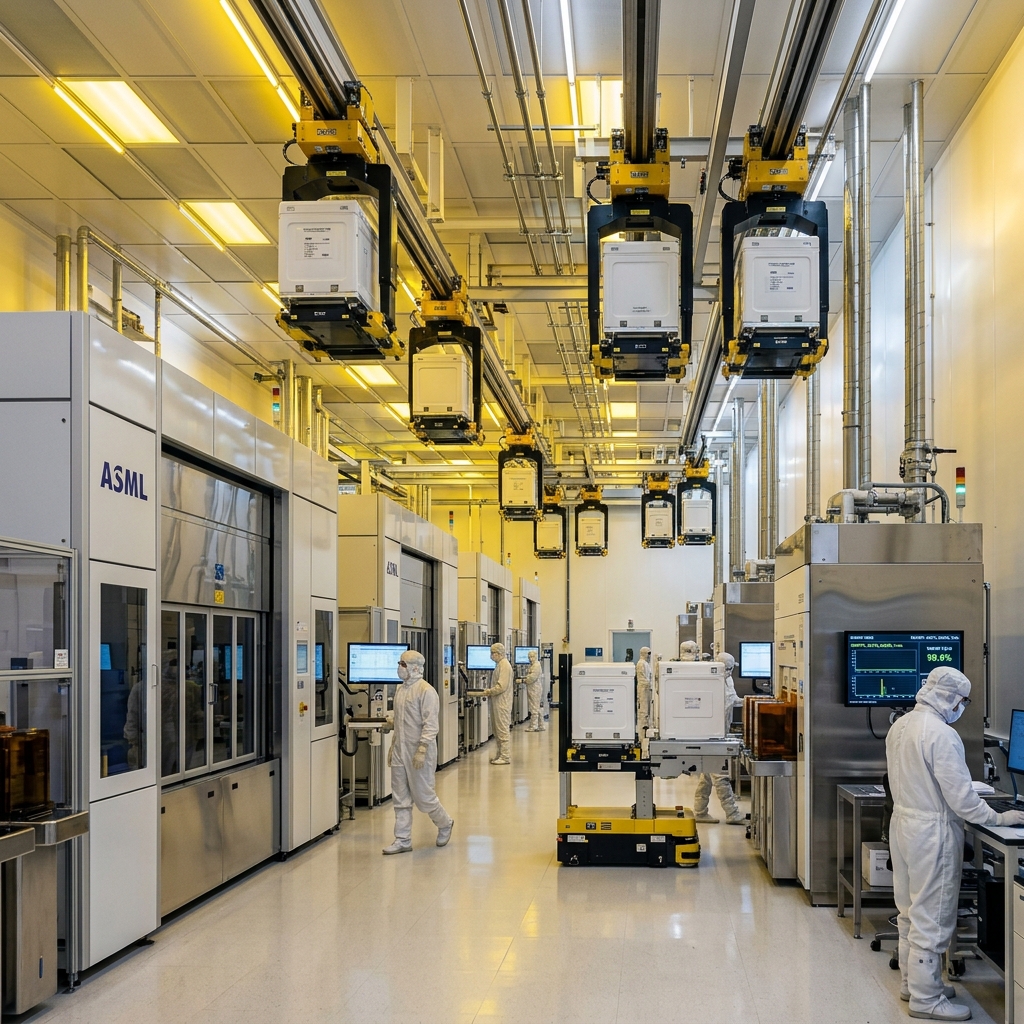
After build, the boards move to the testing phase. For defense devices, this testing must take place in clean room rooms. A clean room is a controlled space where the air is filtered to remove dust, moisture. And liquid vapors. For devices testing, Class 10,000 (ISO Class 7) or Class 100,000 (ISO Class 8) clean rooms are rule. This ensures that no contaminants settle on the boards during electrical testing.
Dust and moisture are major enemies of micro-circuitry. If a dust particle lands on a high-density board, it can trap moisture from the air. In the field, this moisture can cause electromigration. This is a process where metal atoms travel along the moisture path, creating a microscopic short circuit. By testing boards in a clean room, makers prevent dust and moisture from getting trapped under conformal coatings. Conformal coatings are protective plastic layers applied to the boards after testing to seal them against the room.
clean room testing also protects sensitive radio frequency (RF) circuits. Many defense boards carry high-frequency radars and communication tools. These RF circuits are highly sensitive to electrical noise. Clean rooms are often built with electromagnetic shielding to block external radio waves. This allows workers to measure the board's signals without interference. This ensures highly accurate test results.
green Stress Screening (ESS) rules
The core of defense devices testing is green Stress Screening (ESS). ESS is a process that exposes circuit boards to thermal and mechanical stresses to force weak parts to fail. This is called infant mortality screening. The goal is to identify and replace defective parts in the factory rather than having them fail in the field. ESS rules include thermal cycling, thermal shock. And vibration testing.
Thermal cycling involves placing the boards inside a chamber and rapidly changing the heat between hot and cold. Rapid heat swings cause different materials on the board to expand and contract at different rates. This puts stress on solder joints and part casings. If a joint is weak, the thermal stress will crack it, breaking the circuit. Thermal shock testing is even more extreme, transferring the board between hot and cold zones in seconds to create maximum thermal stress.
Vibration testing exposes the boards to random shaking that mimic the G-forces of a missile launch or aircraft flight. The boards are mounted to electrodynamic shaker tables that shake them at different frequencies. This checks if the parts are soldered securely and if the board's structural layers can withstand continuous vibration. Only boards that survive these extreme stress tests are approved for deployment, guaranteeing high safety.
Strict Quality Tracking and AS9100 rules
In addition to physical testing, defense makers must maintain strict quality tracking. The primary rule for this is AS9100. AS9100 is a quality management tool designed specifically for the space and defense trades. It requires complete traceability for every material and part used on a circuit board. Makers must document the source, part number. And batch code of every resistor, capacitor. And chip.
Traceability is key for preventing counterfeit parts. Fake chips are a major concern for the military. Counterfeiters often repackage cheap or recycled chips and sell them as military-grade parts. These fake chips may fail prematurely or contain security backdoors. Under AS9100, suppliers must source parts only from authorized distributors. They must verify the parts' authenticity using electrical testing and visual check under microscopes.
If a part fails in the field, traceability allows the military to identify the failure's root cause. They can trace the failed part back to its specific batch. This allows them to inspect other boards built with the same batch. This prevents widespread failures across the fleet. It ensures that the military supply chain remains secure and reliable.
Future Outlook: AI and robotic Testing
Looking ahead, defense devices testing will become more robotic. Fabs are beginning to integrate computer smarts (AI) into their testing software. AI can analyze test data in real time to identify patterns. For example, if a series of boards show slightly degraded RF signals, the AI can alert workers that a pick-and-place machine is misaligning a part by a few microns. This allows the factory to fix the issue before it produces defective boards.
We will also see the expansion of hardware-in-the-loop (HIL) testing. HIL testing connects the circuit board to a computer that simulates the entire weapon tool or aircraft in real time. This allows workers to test how the board behaves under realistic mission conditions. By combining physical stress testing with digital mission test, defense makers will ensure that U.S. Forces always have the most reliable tools available.
For U.S. Exact machine shops and SMT suppliers, the defense expansion offers long-term growth. The federal government is committed to moving back key devices making to secure national security. Suppliers that invest in clean rooms, SMT robots. And AS9100 quality seals will be well-positioned to win these valuable contracts. They will play a vital role in strengthening the nation's defense factory base.
Frequently Asked Questions (FAQ)
What is green Stress Screening (ESS) in defense devices?
Answer: green Stress Screening (ESS) is a testing process that exposes military-grade circuit boards to extreme conditions. The testing includes rapid heat changes and strong shaking. This process forces weak parts to fail in the factory rather than in the field. This ensures that only high-quality devices reach the military.
Why do military-grade circuit boards require clean room testing?
Answer: Military-grade circuit boards require clean room testing. This is because dust and moisture can cause microscopic short circuits. If a circuit board is tested in a dusty room, tiny particles can get trapped under chips. In the field, these particles can absorb moisture and cause a failure during key work.
What is AS9100 rules in defense making?
Answer: AS9100 is a strict quality management rule for the space and defense trades. It requires makers to trace every material and part back to its original source. This ensures that no counterfeit or defective parts enter the military supply chain.
How do SMT build lines ensure anti-counterfeiting?
Answer: SMT build lines use barcode tracking and optical check to verify the identity of every part. Before a chip is soldered onto a board, its barcode is scanned and matched against an approved database. Robotic tools also scan for marking inconsistencies that might indicate a fake chip.
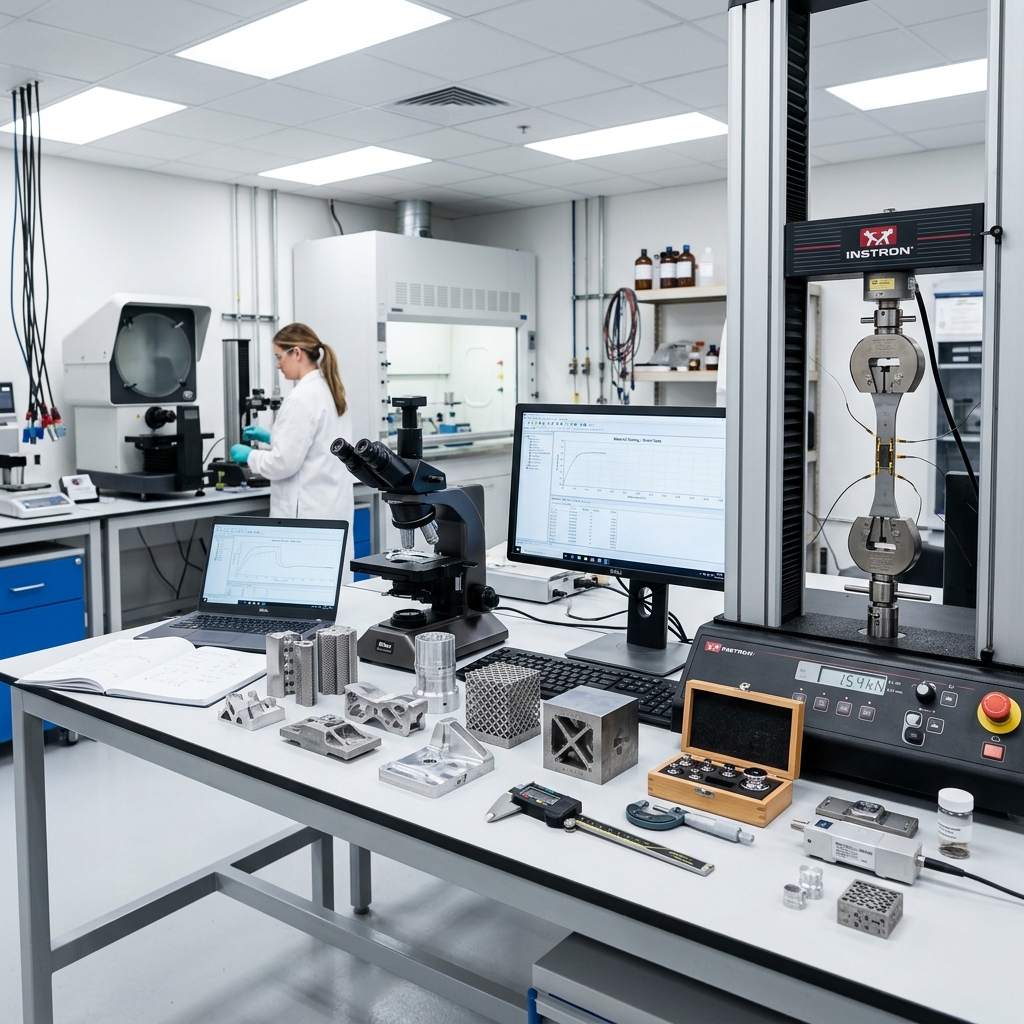
Military-grade electronics must perform flawlessly in the harshest environments; extensive laboratory testing is our primary defense against field failures.