What happened
Illustration: RivCut
The U.S. Department of Commerce closed a $30 million direct funding agreement with Powerex on June 4 to expand its power semiconductor packaging facility in Youngwood, Pennsylvania, according to Semiconductor Digest. The investment, part of the CHIPS and Science Act, will modernize assembly lines for high-power modules built on silicon and silicon carbide substrates—devices that regulate voltage in fighter jets, utility substations, and factory motor drives.
Powerex manufactures discrete power semiconductors and packaged modules rated from hundreds of volts to several kilovolts. The Youngwood site currently performs die attachment, wire bonding, and final module assembly for insulated gate bipolar transistors (IGBTs) and silicon carbide MOSFETs. The expansion adds tooling for larger die formats and higher-temperature processes required by next-generation wide-bandgap materials. The company did not disclose a construction timeline, but Commerce Department awards under the CHIPS program typically trigger groundbreaking within twelve months of finalization.
Defense applications account for a significant portion of Powerex's order book. Military aerospace platforms—including the F-35 Lightning II and future electric-vertical-takeoff-and-landing aircraft—rely on compact, high-efficiency power conversion modules that operate reliably at temperatures above 150°C. Until now, much of the advanced packaging for these components happened in Malaysia and Taiwan, creating a supply chain bottleneck flagged repeatedly in Pentagon readiness assessments.
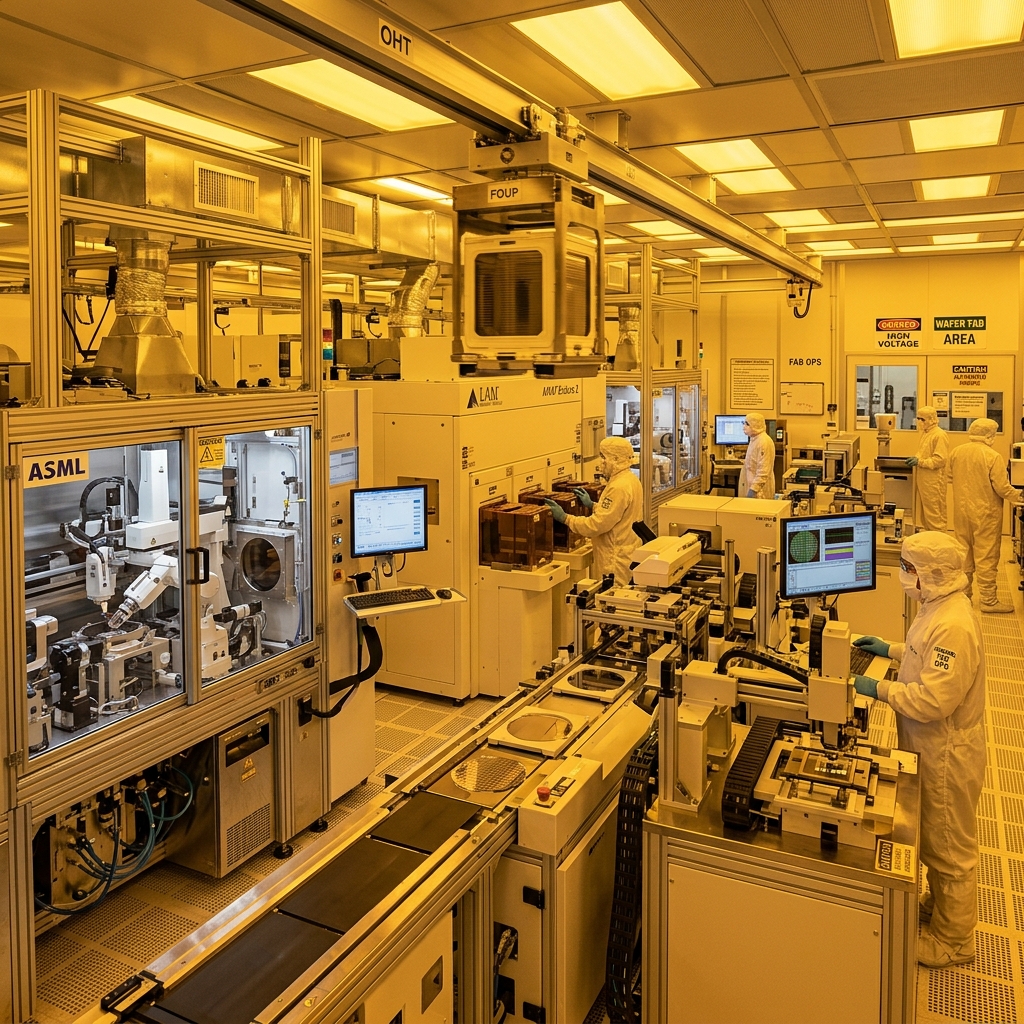
To fix this bottleneck, the federal government is spending billions of dollars. The $30 million award to Powerex is a key step. The money will help Powerex buy advanced machines. These machines will attach dies to circuit boards with high precision. They will also bond wires with extreme accuracy. This automation is important. It ensures the chips do not fail when they are used in military jets or power grids. Powerex will also build new cleanrooms. Cleanrooms keep dust and dirt out of the air. This is crucial because even a tiny speck of dust can ruin a power module during assembly.
The history of the Youngwood facility is also notable. This site has been a center for power electronics for decades. It was first built to support major industrial projects. Over the years, engineers at Youngwood have developed many new packaging methods. Now, they will focus on wide-bandgap materials. Wide-bandgap semiconductors are chips that can operate at much higher voltages. They can also switch on and off much faster. This makes them much more efficient than standard silicon chips. Packaging these chips requires special materials that can handle intense heat. The new funding will make sure the Youngwood plant has the latest tools to do this work.
Why it matters for manufacturers
Illustration: RivCut
This is the kind of onshoring that changes lead times. Power modules sit upstream of thousands of industrial and aerospace assemblies. When a motor drive manufacturer in Ohio waits sixteen weeks for SiC modules from Southeast Asia, the entire project schedule slides—and every tier-two supplier downstream absorbs the delay. Domestic packaging capacity won't eliminate long lead times overnight, but it does remove one variable outside your control: transcontinental logistics and the geopolitical risk that comes with it.
The technical detail worth noting is silicon carbide. SiC devices switch faster and run hotter than silicon IGBTs, which means smaller heatsinks, lighter enclosures, and lower system cost at the board level. That efficiency gain matters in aerospace, where every kilogram of mass costs fuel, and in renewable energy inverters, where even a two-percent efficiency improvement justifies the higher substrate cost. Semiconductor component machining for these systems—heat spreaders, mounting plates, pressure-contact housings—requires tighter flatness tolerances and better thermal conductivity than standard aluminum work, and RivCut machines those parts daily for power electronics OEMs.
But onshoring advanced packaging doesn't mean all your problems go away. The CHIPS Act funds factory construction; it doesn't fund the six-month qualification cycle your customer requires before accepting a new supply source. It doesn't fund the inventory buffer you'll need while Powerex ramps volume. And it definitely doesn't fund the conversations you'll have with your own customers about why delivery dates just shifted again because your module supplier is commissioning new wire bonders in Pennsylvania instead of shipping from an established line in Penang. Onshoring has a transition cost, and someone always pays it.
Furthermore, manufacturers must understand that packaging is only one step. A chip starts as raw silicon or silicon carbide. This material is grown into an ingot. The ingot is sliced into wafers. Then, circuits are printed on the wafers. This printing is done in a wafer fabrication plant, or fab. After that, the wafers are cut into individual dies. Finally, these dies are packaged. If the wafer fab is still in another country, the supply chain is still vulnerable. True security requires reshoring every step of the process, from growing the raw crystals to final testing.
Despite these challenges, having packaging in Pennsylvania is a big win. It means U.S. engineers can collaborate more easily. If a manufacturer has a quality issue, they do not have to fly to Asia to inspect the packaging line. They can visit the Youngwood facility. They can work with Powerex engineers to solve the problem quickly. This close contact can speed up product development. It can also help manufacturers custom-design packages for their specific needs. Custom packages can make products smaller and more reliable, giving U.S. manufacturers a competitive edge in the global market.
What to watch next
Illustration: RivCut
Track whether Powerex announces a second-source partnership or capacity-sharing agreement with other domestic packagers. Wolfspeed operates a SiC substrate fab in upstate New York; onsemi has a packaging facility in Montana. If CHIPS Act recipients start coordinating on common qualification standards or shared test protocols, that's a signal the ecosystem is maturing beyond one-off expansions. Right now, every supplier runs its own process, which means every new source triggers a new qual program—expensive and slow.
Also watch for aerospace primes to adjust their approved vendor lists. Lockheed Martin, Northrop Grumman, and Boeing all maintain multi-tier supplier rosters with strict domestic-content requirements for certain programs. If Powerex earns a slot on those AVLs within eighteen months of the expansion going live, other packaging houses will follow the same playbook. That changes the competitive landscape for component manufacturers who support those primes.
Finally, pay attention to whether the Commerce Department ties future CHIPS funding to domestic content thresholds for substrates and metallization materials. Powerex can assemble modules in Pennsylvania, but if the silicon carbide wafers still come from Europe and the gold bonding wire ships from Japan, the supply chain remains partially offshore. The next round of awards may include stricter material sourcing rules—and that will determine whether this $30 million creates a self-sufficient domestic supply base or just moves the final assembly step across an ocean. For more intelligence on how these shifts affect your sourcing decisions, check our semiconductor news coverage.
Another area to watch is the workforce. Expanding a semiconductor packaging plant requires many skilled workers. These workers must know how to operate complex machines. They must understand quality control. Powerex must hire and train dozens of new technicians. This is not easy in today's tight labor market. The company is working with local trade schools and colleges. They want to create special programs to train workers. If these programs succeed, they could serve as a model for other manufacturers. If they fail, Powerex may struggle to run its new lines at full capacity.
We should also watch for new technology standards. As silicon carbide becomes more popular, industry groups are trying to set standards for power modules. Standard modules would make it easier for manufacturers to switch suppliers. It would also reduce costs. But standardizing is hard because every company wants its own design to become the standard. Watch if Powerex works with other U.S. companies to push for common standards. If they do, it could accelerate the adoption of silicon carbide across many industries. It could also make the entire U.S. supply chain more resilient against future disruptions.
Frequently Asked Questions
What is semiconductor packaging?
Semiconductor packaging is the process of putting a chip in a protective case. The case protects the chip from dust, moisture, and heat. It also provides the electrical connections that let the chip talk to a circuit board. For power chips, the package must handle very high voltages and help cool the system.
Why did the government give Powerex $30 million?
The U.S. government awarded Powerex $30 million through the CHIPS Act. The goal is to build more chip factories in the United States. Right now, most chip packaging happens in Asia. This creates a risk for the U.S. military. The money will help Powerex expand its facility in Pennsylvania to package defense-grade chips locally.
What is the difference between silicon and silicon carbide?
Standard chips are made of silicon. Silicon carbide is a newer material that combines silicon and carbon. Silicon carbide chips can handle higher temperatures, higher voltages, and switch faster than standard silicon chips. This makes them ideal for electric vehicles, military jets, and power grids.
How does this award affect lead times for manufacturers?
In the long run, domestic packaging can shorten lead times. It removes the need to ship parts across the ocean. However, it will not happen overnight. Powerex must build the new lines and install the equipment. After that, manufacturers must test and qualify the new modules, which can take several months.
Onshoring advanced packaging doesn't eliminate long lead times—it just removes one variable you can't control.