Executive Summary: Powering the Electric Future
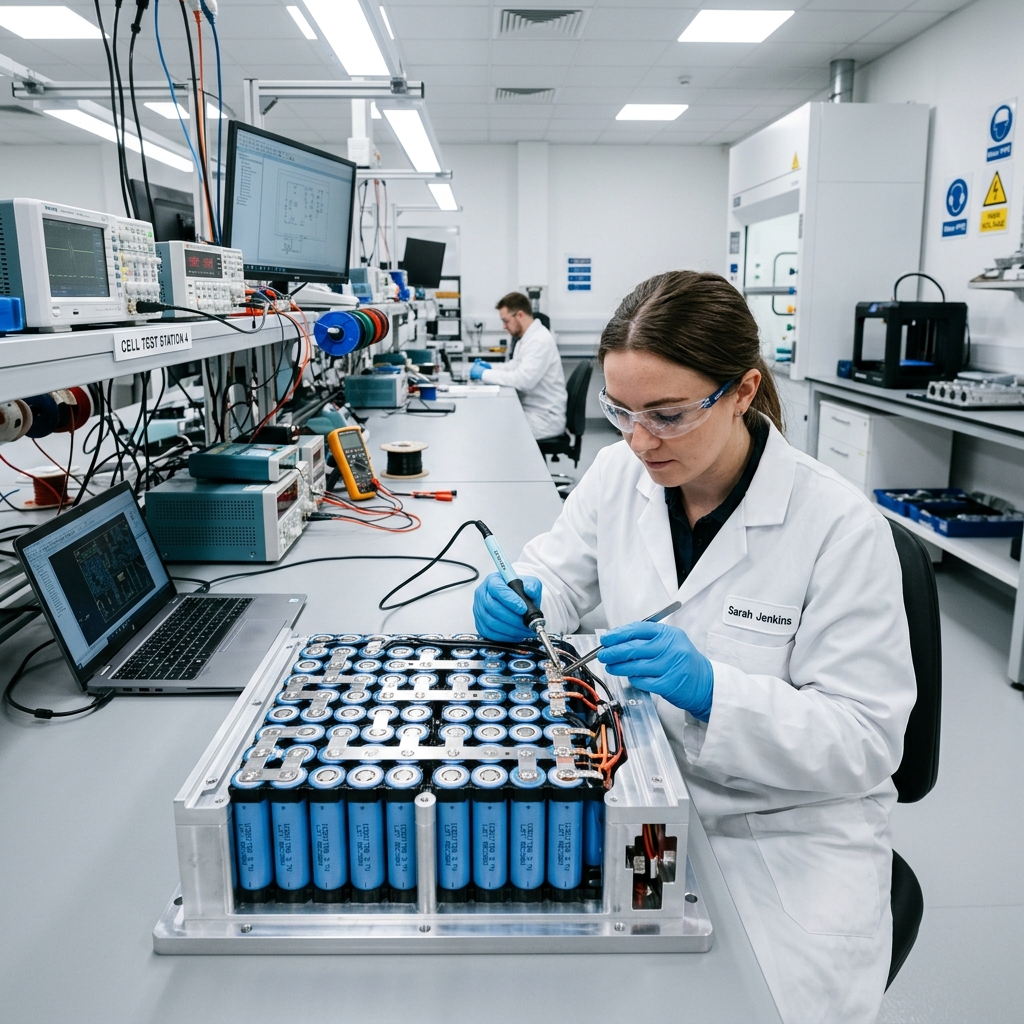
Illustration: RivCut
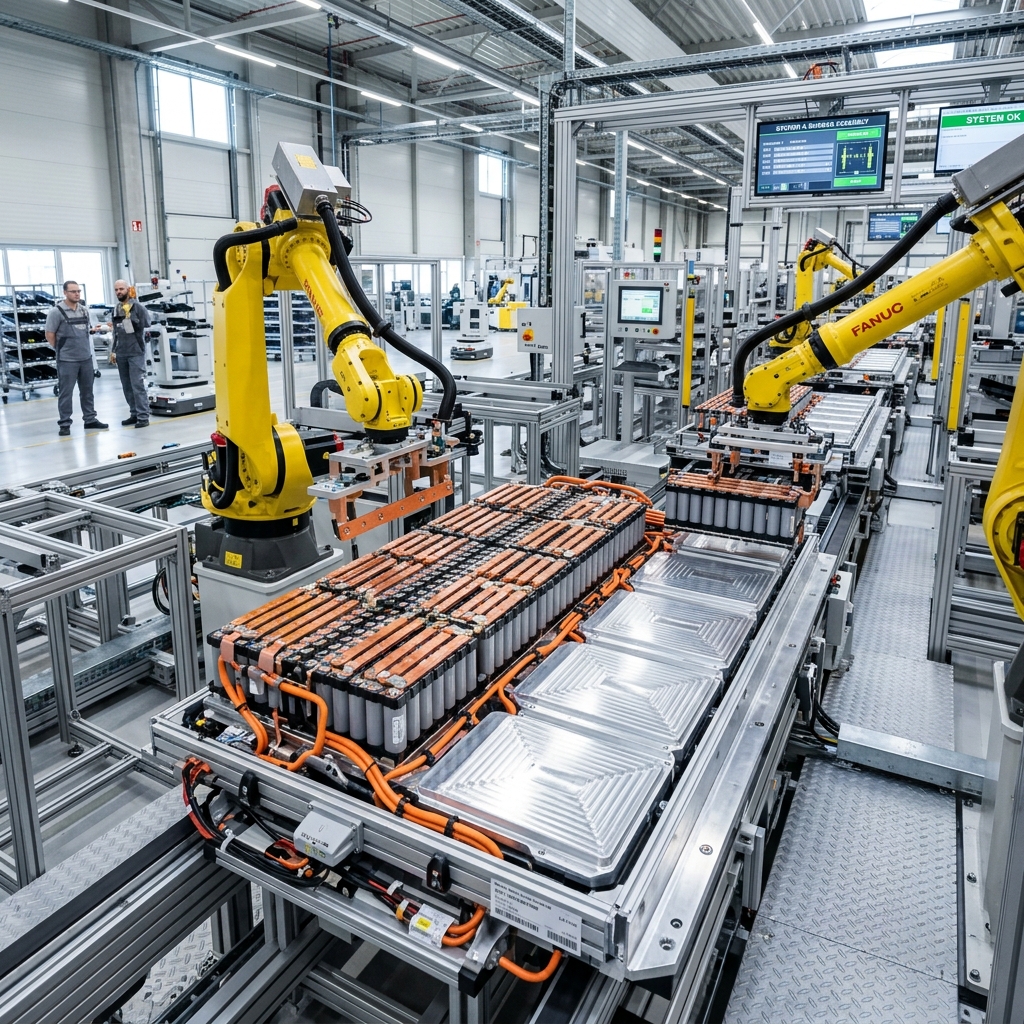
U.S. Electric vehicle (EV) factories are rolling out robotic robotic lines to accelerate battery pack build and setup. With the growing demand for longer-range EVs, makers must build battery packs faster, cheaper. And with higher exact. Robotic robotic tools handle cell check, module build, thermal adhesive dispensing, laser welding. And pack testing. By replacing manual work with high-speed robots, EV factories are improving quality control, increasing throughput. And ensuring build safety.
An EV battery pack is a hard build. It starts with individual battery cells. This look like rule AA batteries. Thousands of these cells are grouped together to form modules. The modules are then placed inside a structural metal enclosure, connected with copper busbars. And wired to the battery management tool (BMS). The entire pack is sealed and mounted to the bottom of the vehicle. Automating this setup is a major design challenge that requires high-exact robotics and advanced quality control tools.
The Cellular Foundation: check and Sorting
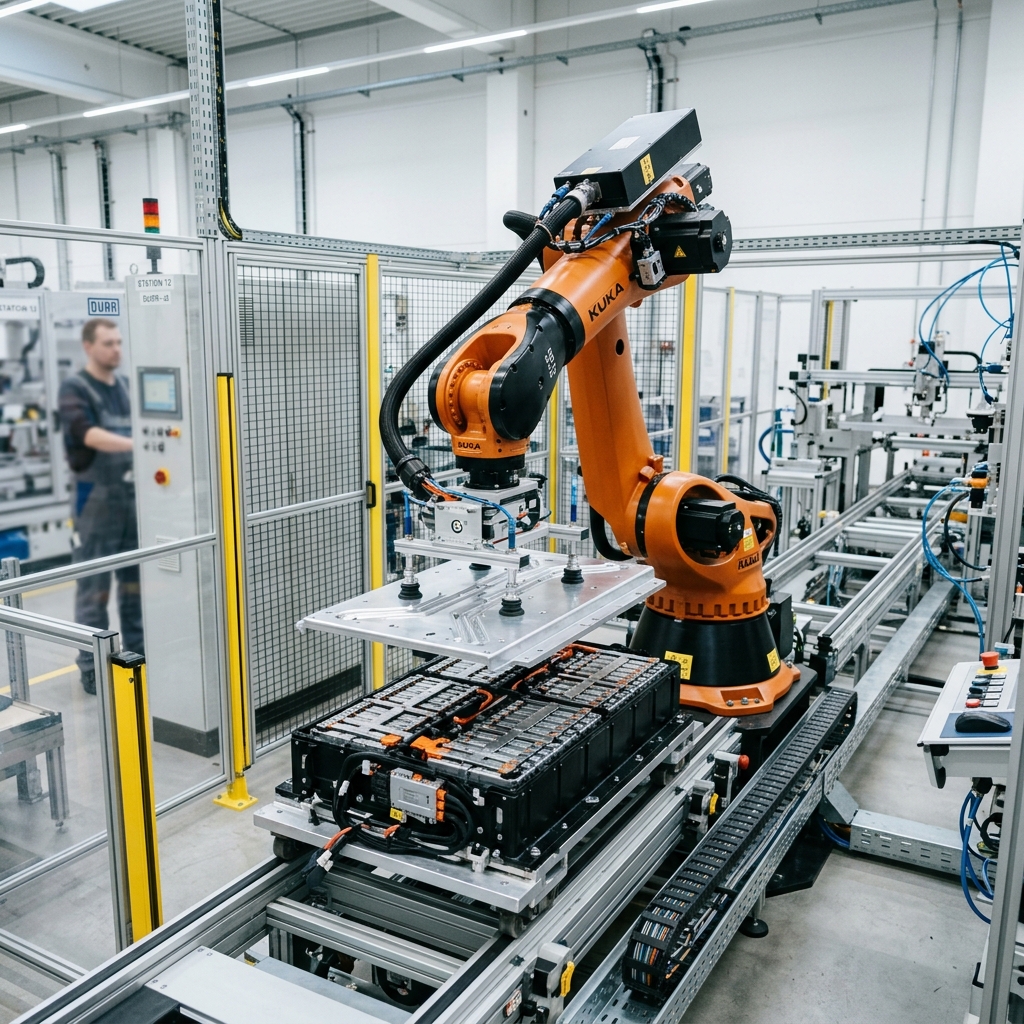
Illustration: RivCut
The battery build process begins with individual cell check. Factories receive millions of cells from suppliers. Before these cells can be assembled into a pack, they must be verified for quality. Even a single defective cell can ruin an entire battery pack or, worse, cause a fire. Robotic pick-and-place arms unload cells from shipping pallets and place them onto high-speed conveyor belts.
As the cells move along the conveyor, robotic optical check (AOI) tools scan them for physical defects. The tools look for dents, scratches. And leaks on the cell casing. Next, the cells pass through electrical testing stations. High-exact probes measure the open-circuit voltage and internal resistance of each cell. Cells that do not meet strict rules are rejected simply.
Cells that pass check are sorted by their voltage and resistance values. This is called binning. Wafers and cells are grouped with matching values to build modules. If cells with different capacities are mixed in the same module, the pack will charge and discharge unevenly. This reduces battery life and can cause hot spots. Robotic binning ensures that every module is built with perfectly matched cells, maximizing battery life and safety.
Robotic Module build and Adhesive Dispensing
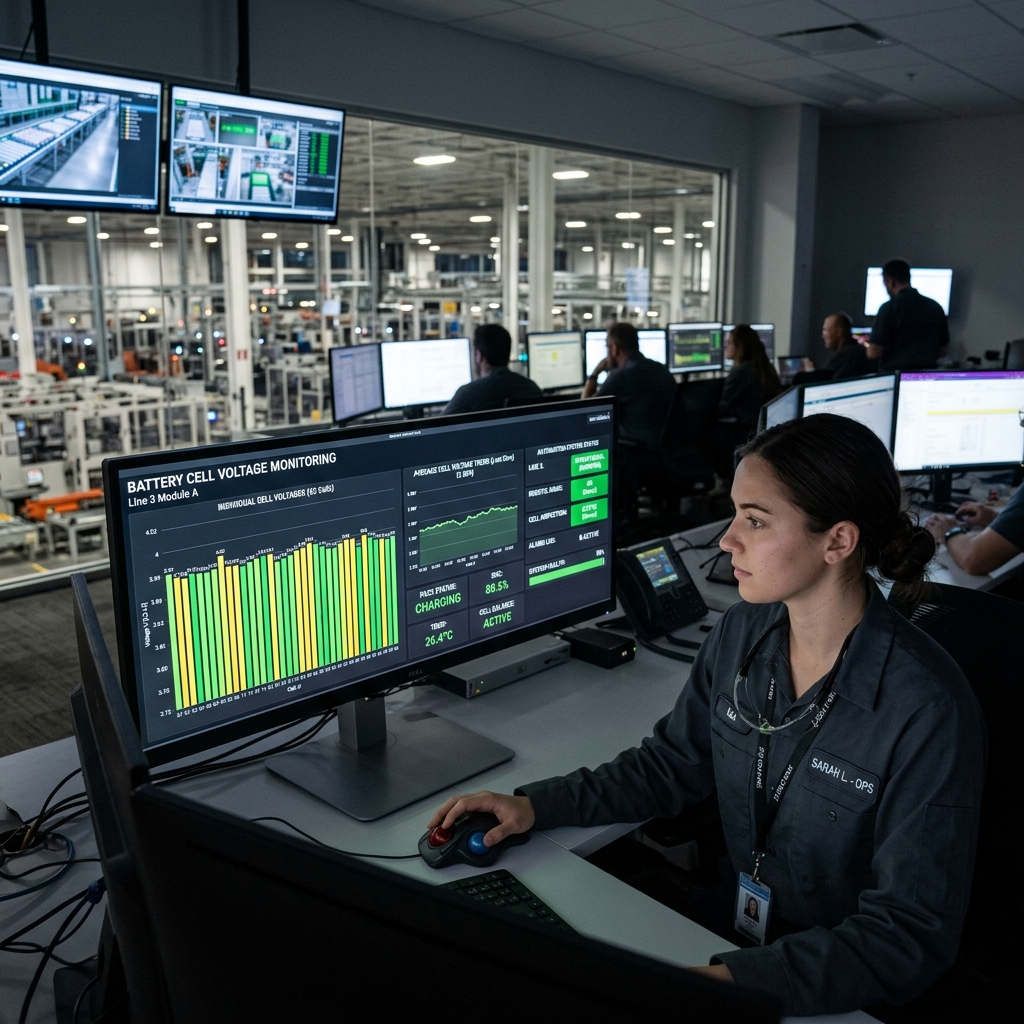
Illustration: RivCut
Once sorted, the cells are assembled into modules. Robotic arms pick up groups of cells and arrange them into arrays. During this step, robots apply structural and thermal adhesives. Structural adhesives bond the cells together, creating a solid block that can withstand road shaking and crash impacts. These adhesives must be dispensed with high accuracy. If too little adhesive is applied, the cells can shake loose. If too much is applied, it can overflow and interfere with electrical connections.
Thermal interface materials (TIMs), such as gap fillers, are also applied. TIMs are highly conductive materials that sit between the cells and the liquid cooling plates. They transfer heat away from the cells during rapid charging and discharging, keeping them within a safe heat range. Dispensing TIMs requires precise control of flow rate and pattern. Robotic dispensing tools use volumetric pumps and vision sensors to apply the material in a uniform thickness. This prevents air pockets that block heat flow.
After the cells and adhesives are positioned, the robot presses the array together. The build is then held in a fixture while the adhesive cures. Some factories use ultraviolet (UV) light to cure the adhesive in seconds, speeding up the line. This robotic module build creates a strong, thermally optimized block ready for electrical connection.
Laser Welding: Connecting Thousands of Cells
The next key step is electrical connection. To connect the cells in series and parallel, conductive metal tabs, or busbars, are placed over the cell terminals. These busbars are usually made of copper or aluminum. To create reliable electrical connections, the busbars must be welded to each cell terminal. In a typical EV battery pack, this requires making thousands of individual welds. Makers use robotic laser welding tools to handle this task.
Laser welding is preferred. This is because it is fast and precise. The laser tool uses a high-power beam of light to melt the busbar and cell terminal instantly, creating a strong weld. The process takes only a few milliseconds per weld. Because the laser focuses energy on a tiny spot, it creates low heat. This prevents the heat from traveling into the cell's internal chemistry. This could damage the separator and cause a fire. Robotic cameras align the laser beam to within microns. This ensures perfect weld placement.
Following welding, the electrical resistance of each joint is measured. Workers use laser scanning or electrical resistance probes to check the quality of the welds. If a weld is weak or has high resistance, it can overheat during vehicle work. Flagging and reworking defective welds in the factory ensures that only perfect battery modules are installed in vehicles. This prevents electrical failures on the road.
Enclosure setup, Cooling. And Final Testing
After module build is complete, the modules are loaded into the battery enclosure. The enclosure is a large, protective tray, usually made or cast from lightweight aluminum. The tray protects the battery from road debris and water. Before loading the modules, robots install liquid cooling plates at the bottom of the tray. These plates have internal channels that circulate coolant (water and glycol) to manage battery heat.
Robotic gantries lift the heavy modules and lower them into the enclosure tray. Workers then secure the modules to the tray using fasteners. Next, the battery management tool (BMS) is installed. The BMS is the device brain that monitors cell voltage, heat. And current. Wiring harnesses are connected from the BMS to each module. Automating this wiring is a major focus for factories, using robotic routing arms to position and plug in the connectors securely.
Once fully assembled, the enclosure cover is bolted on and sealed with silicone adhesives to make it waterproof. The pack then undergoes final testing. First, a leak test verifies that the enclosure is airtight. This ensures no water can enter the high-voltage interior. Second, high-voltage insulation testing checks for short circuits. Finally, the pack is charged and discharged to verify total capacity. Only packs that pass all tests are shipped to the vehicle build line.
Future Outlook: Solid-State Battery build
Looking ahead, EV battery making will continue to evolve. Researchers are developing solid-state batteries. This replace the liquid electrolyte in current cells with a solid ceramic or polymer material. Solid-state batteries promise higher energy density, faster charging. And improved safety. However, making them requires new robots methods, as the solid materials are brittle and require high pressure during build.
We will also see the expansion of cell-to-pack (CTP) tools. CTP eliminates the module phase, gluing cells directly into the vehicle enclosure. This reduces weight and cost. However, requires even higher exact during build, as there are no module structures to align the cells. Robotic robotic lines with advanced vision tools will be key for handling this direct setup safely and efficiently.
For U.S. Factories, robots is the key to competing globally. By investing in advanced SMT lines, laser welding, robotic build. And robotic check, the U.S. Is building a robust, high-volume domestic supply chain for EVs. This reduces reliance on foreign battery makers and supports the transition to green transportation. This ensures the U.S. Automotive trade remains a global leader.
Frequently Asked Questions (FAQ)
What are the main steps in an robotic EV battery build line?
Answer: An robotic EV battery build line includes several key steps. First, robotic arms inspect and test individual battery cells. Second, cells are grouped into modules and bonded with adhesives. Third, modules are placed inside a protective metal enclosure. Finally, robots connect the battery management tool (BMS) wiring and liquid cooling lines.
Why is laser welding used for battery cell connections?
Answer: Laser welding is used. This is because it is fast, precise. And creates low heat. Connecting battery cells requires making thousands of welds to attach conductive tabs. Laser welding focuses light to melt the metal instantly, creating strong electrical joints without heating up the delicate battery cells.
How do battery build lines prevent thermal runaway?
Answer: build lines prevent thermal runaway by monitoring cell quality and heat at every step. Robots inspect cells for defects and test their voltage before build. If a cell is damaged, it is rejected immediately. Lines also install thermal barriers between cells and modules to prevent heat from spreading if a failure occurs.
What is the role of structural adhesives in battery packs?
Answer: Structural adhesives bond cells and modules together, adding strength to the pack. They also act as thermal conductors, transferring heat from the cells to the liquid cooling plates. Some adhesives also provide electrical insulation. This prevents short circuits within the pack.
Battery module assembly is a game of precision and environment; automation ensures that thousands of cells are connected perfectly without defect.