What happened
Illustration: RivCut
Honeywell Aerospace revealed its growth roadmap at an investor day on June 3, according to Aviation Week, three weeks before it begins trading independently on the Nasdaq as HONA. The company set a target of $6.5 billion in segment operating income by 2030, driven by three priorities: expanding U.S. manufacturing capacity, increasing commercial aviation retrofit volume, and scaling its defense electronics business.
The spinoff takes effect June 29, 2026, separating Honeywell Aerospace from its parent conglomerate and forming what the company describes as one of the nation's largest standalone aerospace manufacturers. The move follows a broader industry trend toward focused aerospace entities — GE Aerospace completed a similar split in April 2024, and Collins Aerospace has operated as a Raytheon Technologies unit since 2020 before its own spinoff plans.
Honeywell did not disclose specific facility locations for the domestic expansion, but the company emphasized that increasing onshore production would reduce reliance on overseas aerospace machining suppliers. The retrofit segment targets airlines upgrading cockpit avionics and fuel efficiency systems on existing fleets, a market analysts estimate at $18 billion annually through 2030.
The logistics of the spinoff are complex. Honeywell stockholders will receive shares of the new HONA company in a tax-free distribution. This creates a new standalone corporate structure. The aerospace division has a long history. It includes famous brand names like Sperry, Bendix, and Garrett. These names represent decades of innovation in aviation. Operating as a separate company will free the division from the parent company's strict capital rules. They will be able to spend money directly on new tooling, research, and factory expansions.
Honeywell's product range is vast. They manufacture jet engines, auxiliary power units, environmental systems, and flight decks. They also make wheels and brakes for commercial airliners. Separating these business units from the main Honeywell conglomerate requires a lot of work. The company must split up IT systems, HR departments, and physical facilities. But executives believe that the benefits of being a pure aerospace company will far outweigh the transition costs. It will allow them to focus all their resources on winning new aircraft contracts.
Why it matters for manufacturers
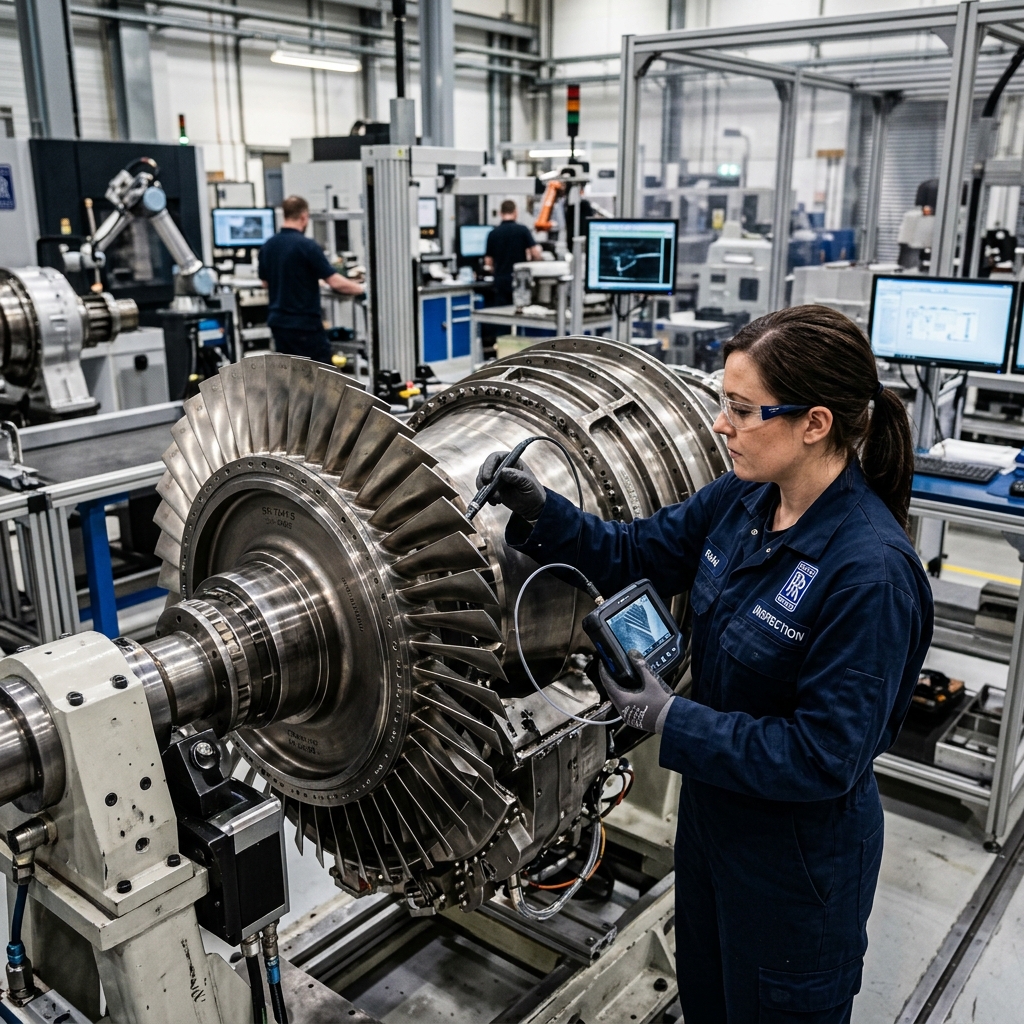
Illustration: RivCut
A $6.5 billion operating income target signals aggressive volume growth, which means supply chain pressure. Honeywell's tier-two and tier-three suppliers — the machine shops producing brackets, housings, and sensor components — should expect requests for capacity commitments well before firm purchase orders arrive. That pattern played out during Boeing's 737 MAX ramp in 2018, when suppliers locked into agreements months ahead of actual demand, then faced cancellations when the program stalled.
The domestic manufacturing push is the detail procurement teams should watch. If Honeywell builds new U.S. capacity for parts currently sourced from Mexico or Eastern Europe, existing suppliers in those regions face displacement. Shops with 5-axis CNC milling capabilities and AS9100 certification have an opening here, but only if they can demonstrate lead times under six weeks and stable material costs. Honeywell's investor presentation mentioned "domestic resilience" three times — that's code for nearshoring, and it will reshape bid lists.
The defense electronics expansion creates a different kind of opportunity. Military avionics require tighter tolerances and full traceability, which means more CMM inspection and QA documentation than commercial work. Shops that can handle ITAR compliance and first-article inspections will see RFQs, but the payment terms tend to be longer and the design changes more frequent. It is not easier money; it is different money.
One risk: Honeywell's timeline assumes no major disruptions to commercial aviation demand between now and 2030. If another supply chain shock or fuel price spike hits airlines, retrofit projects get delayed and Honeywell's volume assumptions break. Suppliers should avoid overcommitting to single-customer tooling until they see firm six-month forecasts, not just annual projections.
Manufacturers should understand the strict standards required for aerospace parts. AS9100 is a quality standard that builds on general manufacturing rules. It requires shops to document every step of their process. You must be able to trace a finished part back to the specific batch of metal used to make it. This is called material traceability. Machine shops must also run First Article Inspections (FAI) on the first parts produced to prove their process is stable. RivCut maintains these quality systems and regularly works with aerospace customers to meet these tough requirements.
The push for domestic manufacturing will also create competition for skilled technicians. Machine tool operators, CMM programmers, and quality inspectors are already in short supply. As Honeywell and other giants expand U.S. plants, they will compete with local job shops for talent. This could drive up wages across the manufacturing sector. Independent shops must focus on building highly automated workflows. Using robots to load parts can help you keep production high even when you cannot hire more workers.
What to watch next
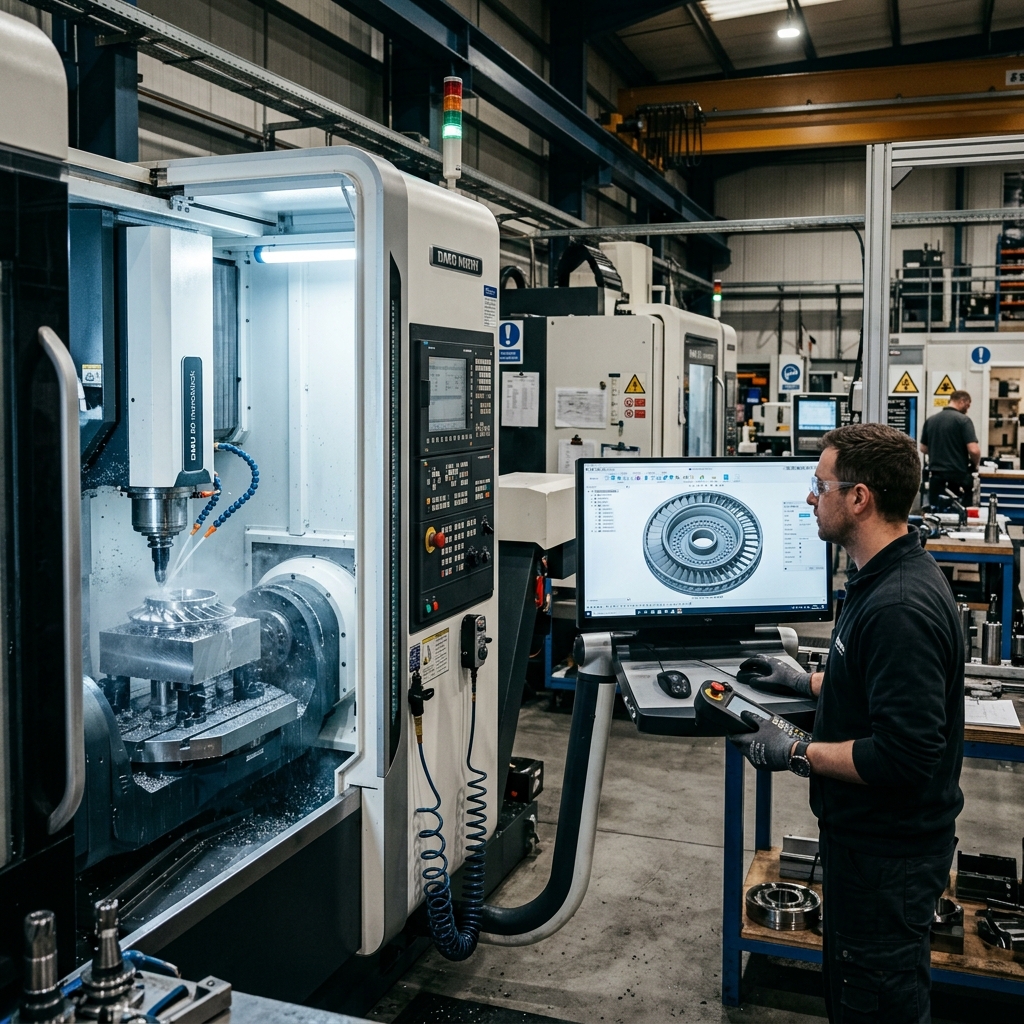
Illustration: RivCut
The HONA ticker starts trading June 29. The first earnings call after that — likely in late July — will reveal whether Honeywell executives provide facility location details or supplier qualification timelines. If they announce a new U.S. manufacturing site before August, expect RFQs to hit inboxes by September for 2027 production.
Watch how Collins Aerospace and GE Aerospace respond. Both companies compete directly with Honeywell in avionics and auxiliary power units. If they match the domestic expansion or undercut on retrofit pricing, Honeywell's margin assumptions tighten and cost pressure flows downhill to suppliers.
The defense electronics segment deserves separate attention. The Pentagon's budget request for fiscal 2027, expected in early 2027, will show whether Honeywell's defense growth plan aligns with actual program funding. If funding lags, the company will lean harder on commercial revenue to hit that $6.5 billion target, which means more aggressive pricing on the commercial side.
For suppliers, the clearest signal will be lead time requests in the next 90 days. If Honeywell buyers start asking for 12-week or 16-week commitments on parts that historically ran 8 weeks, that confirms they are building buffer for the volume ramp. It also confirms they expect supply constraints, which means negotiating power shifts back toward the machine shop — at least until the next recession.
We should also watch auxiliary power units (APUs). Honeywell is a world leader in APUs. These are small gas turbine engines placed in the tail of aircraft. They provide electrical power and air conditioning when the main engines are off. As airlines try to cut fuel burn on the ground, upgrading APUs is a popular retrofit choice. Watch if Honeywell wins major APU upgrade contracts with large airlines. This would drive steady orders for components like turbine housings, brackets, and ducts.
Finally, track Honeywell's software business. Modern airplanes rely heavily on software for navigation, communication, and maintenance tracking. Honeywell has a suite of aviation software tools. If they integrate these tools more closely with their hardware, it could create a very sticky ecosystem. Airlines that use Honeywell software will be more likely to buy Honeywell hardware. This would provide a highly predictable revenue stream for the new standalone company.
Frequently Asked Questions
Why is Honeywell Aerospace spinning off into a standalone company?
Honeywell is spinning off its aerospace division to create a focused, independent public company called HONA. This separation allows the new company to pursue its own growth strategy, invest directly in its manufacturing capacity, and react more quickly to market demands.
What is the financial goal of the new HONA entity?
HONA has set a target to reach $6.5 billion in segment operating income by the year 2030. The company plans to achieve this goal by expanding its U.S. manufacturing facilities, increasing aircraft retrofits, and growing its defense electronics business.
What are commercial aviation retrofits?
Commercial retrofits involve upgrading existing airplanes with newer technology. This includes installing advanced cockpit avionics, passenger Wi-Fi systems, and more fuel-efficient auxiliary power units to help airlines reduce operating costs and meet new environmental rules.
How will this spinoff affect the aerospace supply chain?
The spinoff will increase demand for domestic manufacturing. Honeywell's focus on "domestic resilience" means they will look to source more precision parts from U.S.-based machine shops, providing new opportunities for suppliers with high-end CNC capabilities.
Domestic expansion talk is fine, but watch whether Honeywell's buyers ask for longer lead times — that tells you if the volume ramp is real.