What happened
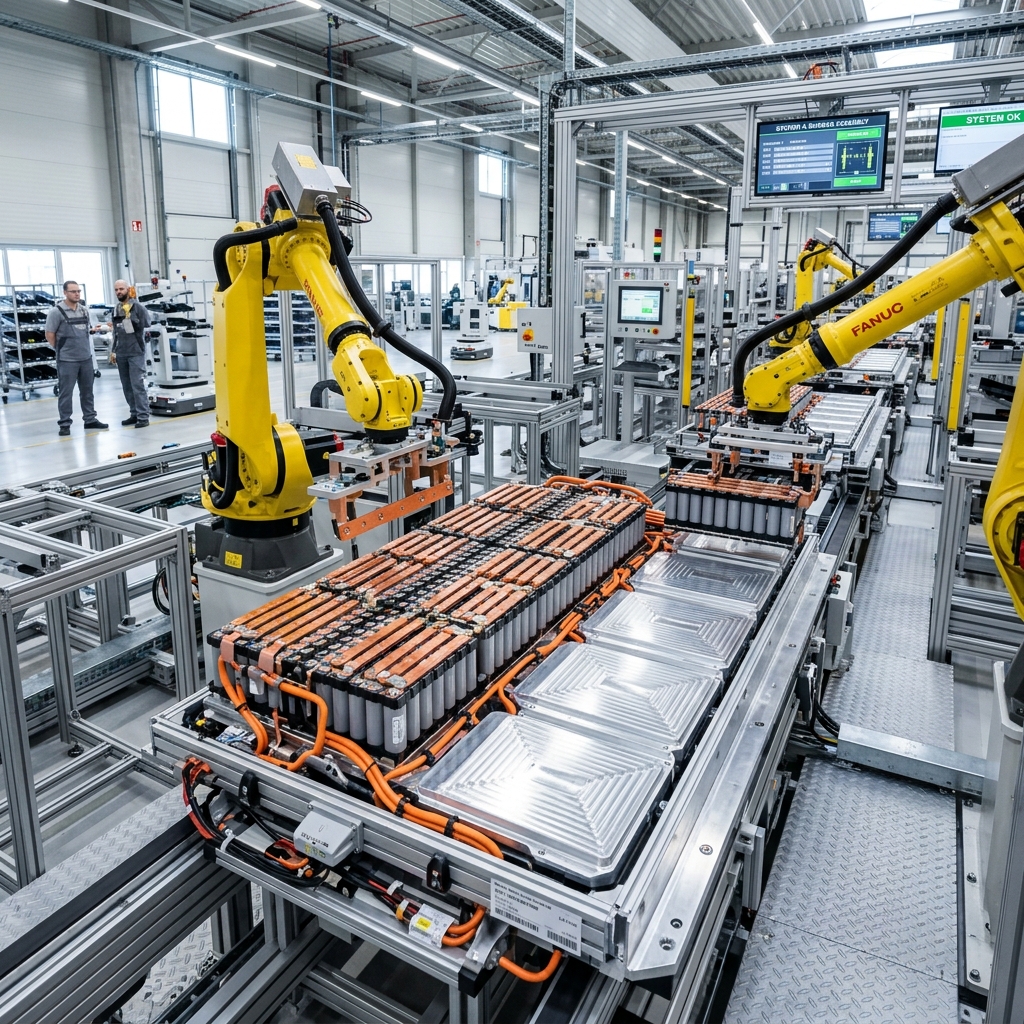
Illustration: RivCut
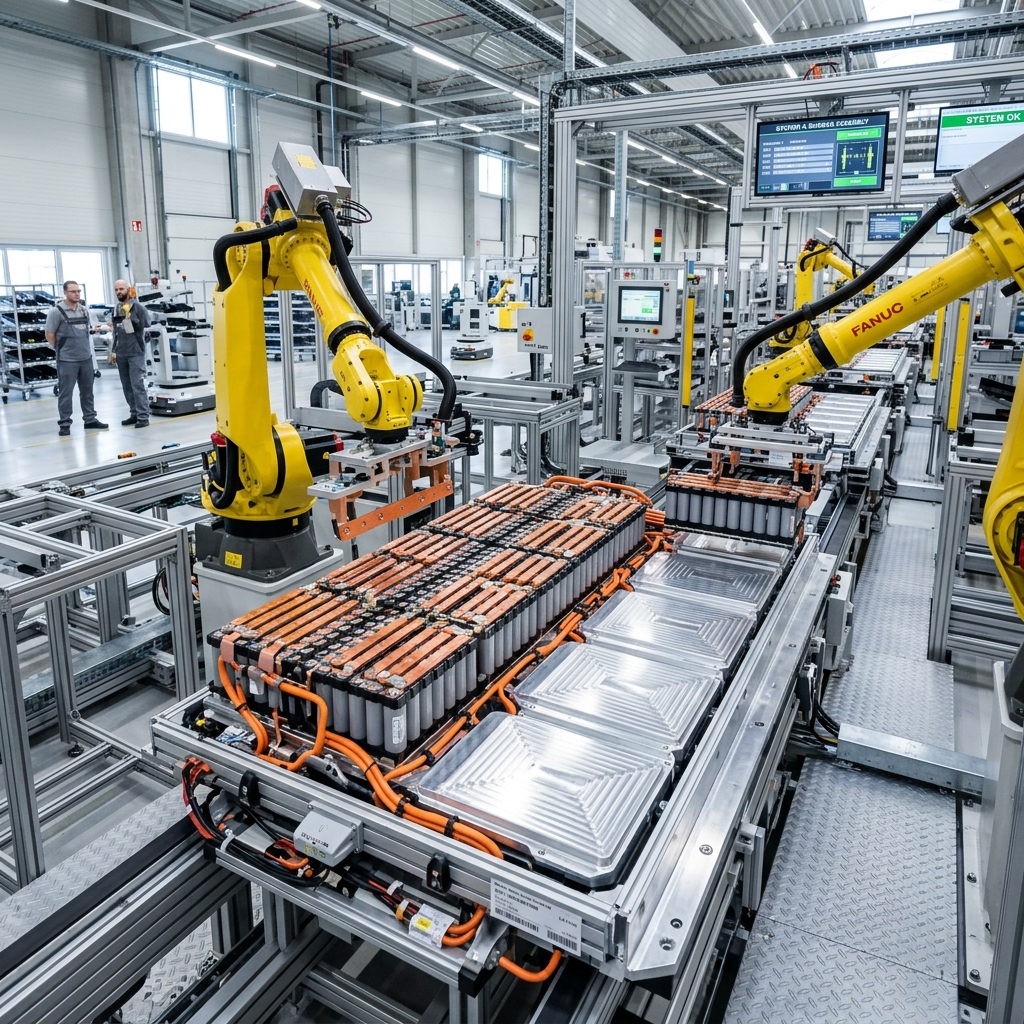
Toyota Motor North America announced a $340 million investment at its Georgetown, Kentucky plant to expand hybrid vehicle production capacity by 30 percent. The Georgetown facility — Toyota's largest outside Japan — currently produces the Camry and RAV4 hybrids, two of the best-selling hybrid vehicles in the United States. The expansion will add a third production shift and install new hybrid-specific powertrain assembly tooling, with output increases targeted for late 2026. This expansion will help Toyota meet the growing demand for hybrid vehicles.
The investment is a direct response to demand that has outpaced every internal forecast Toyota filed with its investors over the past three years. US hybrid sales climbed 41 percent in 2025 while pure battery-electric vehicle adoption plateaued below 8 percent of new vehicle sales. Consumers who want fuel efficiency without range anxiety are buying hybrids in volume, and dealers are reporting Camry Hybrid and RAV4 Hybrid inventory turns of under two weeks — essentially sold before delivery. Toyota's hybrid allocation to US dealers was already stretched; Georgetown is the fastest path to more supply.
The timing is notable. Several automakers — including Ford and General Motors — have pulled back on BEV investment timelines over the past 18 months, citing demand shortfalls and charging infrastructure gaps. Toyota's approach, which the company has consistently described as a technology-neutral multi-pathway strategy, has been vindicated by market data. The Georgetown announcement is Toyota doubling down on a bet that is clearly paying off. It shows that hybrids remain a key part of the automotive market.
Why it matters for manufacturers
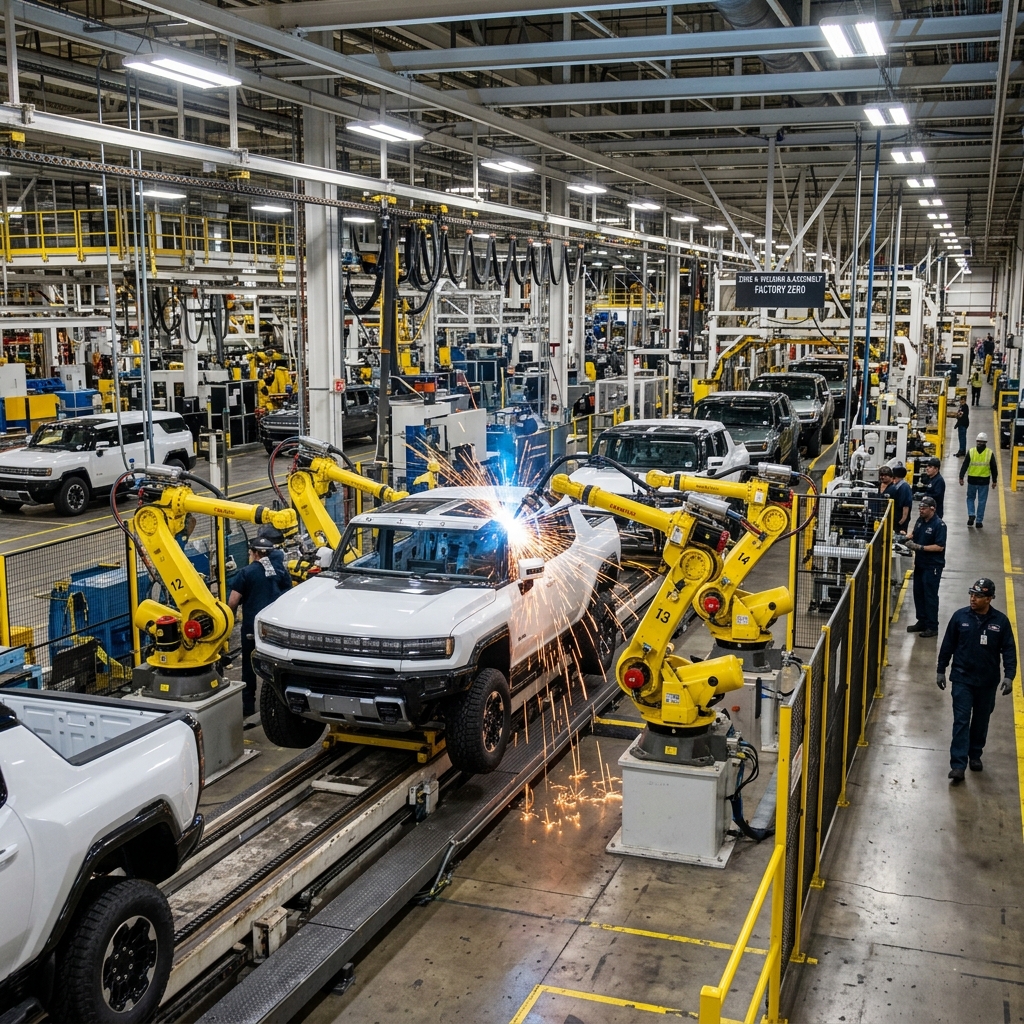
Illustration: RivCut
Hybrid powertrains are significantly more machining-intensive than either pure internal combustion or pure battery-electric drivetrains. A full hybrid system — the kind Toyota runs in the Camry THS II — includes a gasoline engine block and cylinder head (standard machined castings), a planetary power-split gearset with precision-machined ring, sun, and planet gears, two motor-generator units with precision-bored housings, an inverter housing, and a transmission casing. Each of these assemblies requires tight-tolerance CNC work. By contrast, a battery-electric drivetrain replaces most of that with a single-speed reduction gear and a motor — far less machined content per vehicle.
For automotive CNC suppliers, a Toyota hybrid expansion at scale is meaningful new demand. Georgetown sources components from a dense Tier 1 and Tier 2 network across Kentucky, Ohio, and Indiana. Machine shops with existing Toyota supplier codes and production part approval process (PPAP) documentation will be first in line as Georgetown increases its pull schedules. Shops that have been running excess capacity since Ford and GM dialed back EV component orders may find that hybrid demand fills that gap — but they will need to move quickly on capacity commitments.
The specific machined components that see the highest demand lift from a hybrid expansion are transmission housings, motor end-bells, inverter housings, and the planetary gearset components. All of these require precision CNC turning and milling in aluminum or cast iron, with geometric tolerances typically in the range of ±0.001" to ±0.0005" on bearing seats and gear mesh surfaces. Surface finish on gear meshes runs Ra 0.4–0.8 μm. This is not job-shop work; it requires dedicated fixtures, tight process control, and SPC documentation that Toyota's quality system requires at every tier.
The Shift in Domestic Production
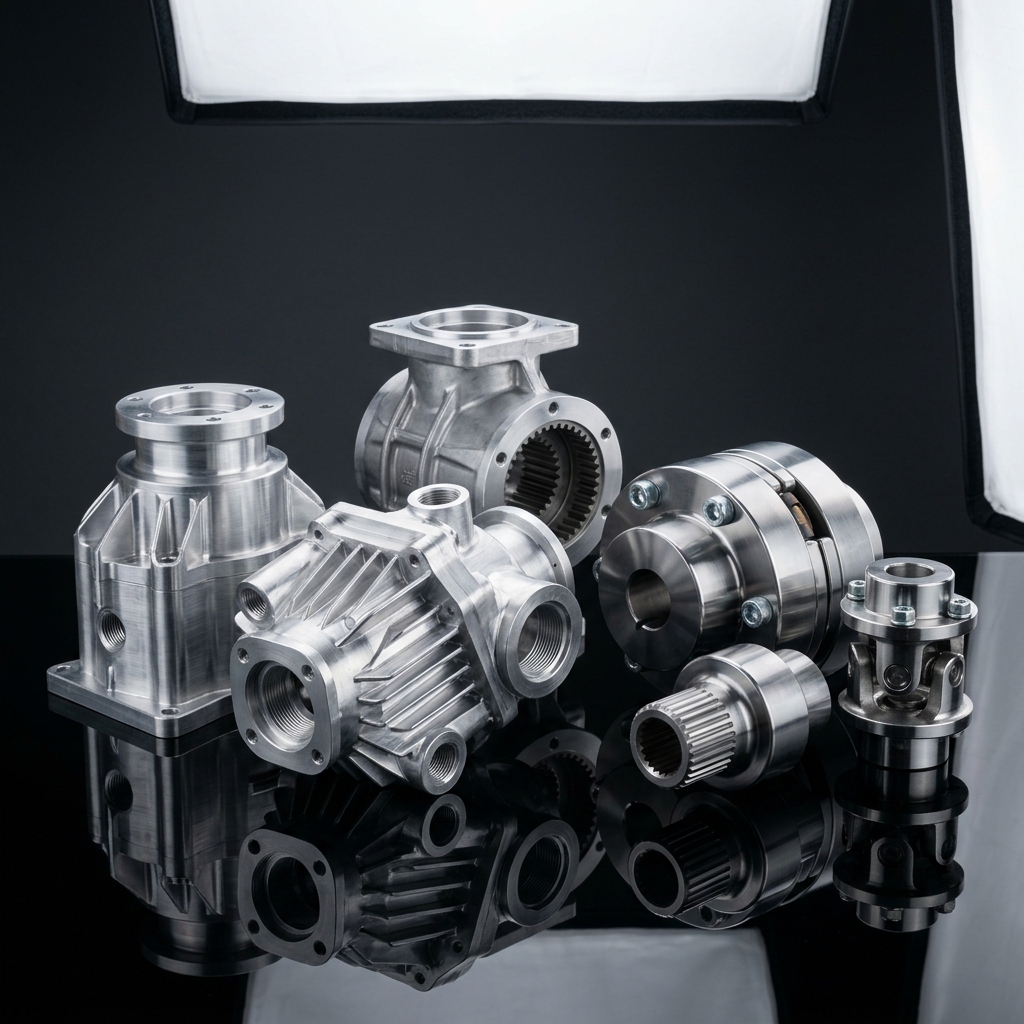
Illustration: RivCut
Automotive manufacturers are shifting their focus to local suppliers. For many years, companies bought parts from all over the world to get the lowest price. But global supply chains are easily disrupted by shipping delays and trade conflicts. When factories cannot get parts, they have to stop their production lines. By sourcing components from nearby machine shops, automakers can secure their supplies. This reshoring effort makes the entire industry more reliable.
For local suppliers, this trend creates new business opportunities. A large assembly plant like Georgetown needs many local suppliers to provide custom tools, brackets, and raw materials. To win these contracts, local shops must invest in advanced CNC machines and quality control systems. They must prove they can produce parts that meet Toyota's strict specifications. This local expansion helps build a strong and stable manufacturing community.
Local production also improves collaboration between engineers. When suppliers are nearby, engineers can quickly meet to solve design issues or check parts. This face-to-face communication reduces errors and keeps production moving. It also allows shops to react quickly when automakers change their schedules. Sourcing parts locally is a win-win for both car companies and domestic machine shops.
Advancements in Manufacturing Technology
New technologies are helping auto parts manufacturers work faster and with higher quality. One key advancement is multi-axis CNC machining. These advanced machines can cut a metal part from several directions at once. This allows shops to make complex motor housings and transmission parts in a single setup. It reduces the time needed to move parts and eliminates alignment errors, ensuring high accuracy.
Another important technology is digital inspection. Coordinated measuring machines check the dimensions of a part using touch probes or lasers. The machine compares the physical part to the digital design file to verify that it is perfect. This is crucial for hybrid parts, where bearing seats and gears must mesh with extreme precision. The digital system creates a complete record of measurements, proving the parts are safe and correct.
Additionally, smart software is helping managers track production in real time. They can see exactly where a job is on the factory floor and predict when it will be finished. This helps them find bottlenecks and improve their delivery schedules. As these technologies become more affordable, even small shops can improve their efficiency. Technology is the key to building the complex drivetrains of the future.
What to watch next
The big question for automotive suppliers is whether the hybrid demand surge is a transition moment or a permanent shift. Toyota's internal scenario planning suggests that hybrids will represent over 50 percent of their US sales mix through at least 2030. If that holds, the Georgetown expansion is not a one-time event but the first of several capacity additions. Toyota has additional US manufacturing capacity in Texas (Tundra and Sequoia) and Alabama (Engines) that could be converted or supplemented for hybrid component production.
The tariff environment adds a wrinkle. Import duties on auto parts from Canada and Mexico have been a running concern through 2026; components that previously moved freely across the border for finishing operations now carry cost penalties. Shops that can offer complete in-boundary machining — starting from cast blanks sourced domestically and delivering finished assemblies — are more attractive to Toyota's procurement team than before. Read more manufacturing news to track how the automotive supply chain continues to shift.
Frequently Asked Questions (FAQ)
Why is Toyota expanding hybrid production in Kentucky?
Answer: Toyota is expanding production because U.S. demand for hybrids has outpaced all forecasts. Consumers want fuel efficiency without the range anxiety of pure electric cars.
How does hybrid production differ from electric vehicle production?
Answer: Hybrids are much more complex. They have both a gasoline engine and electric motors, which means they require many more precision-machined metal parts.
What machining tolerances are needed for hybrid components?
Answer: Hybrid parts like motor housings and gearsets require extremely tight tolerances, often between ±0.001 and ±0.0005 inches, to ensure they run quietly and reliably.
What does this expansion mean for local suppliers?
Answer: Toyota's local supply network in Kentucky, Ohio, and Indiana will see higher order volumes for powertrain castings, brackets, and machined gears.
Hybrid drivetrains need a machined transmission housing, three motor housings, and an inverter casting — all tolerance-critical. Pure EVs need one. Toyota is winning on complexity.