What happened
Illustration: RivCut
Amsterdam-based Nebius agreed to acquire California startup Eigen AI for approximately $643 million, according to The Economic Times. The deal, expected to close within weeks, integrates Eigen's inference optimization technology into Nebius' Token Factory platform. Nebius positions itself as an AI infrastructure provider focused on production-grade deployments rather than model training. The acquisition expands Nebius' physical presence in the United States, where Eigen operates its engineering and commercial teams.
Inference refers to running trained AI models to generate outputs. This is the production phase after model development is complete. Eigen specializes in reducing compute costs and latency for companies deploying large language models and computer vision systems at scale. Nebius has raised over $700 million since spinning out from Russian technology group Yandex in 2023. The company operates data centers in Europe and plans GPU clusters in North America. This marks one of the larger AI infrastructure deals this year.
The acquisition is a clear indicator that the market for AI hardware and software is changing rapidly. As companies move from testing AI to deploying it in daily operations, the cost of running these models becomes a major concern. Eigen's technology helps companies run AI models faster and with less energy. This is a key requirement for manufacturing applications that need real-time data processing.
Nebius plans to integrate Eigen's engineering team into its own organization. This will allow the combined company to develop new products faster. By establishing a stronger foothold in the U.S., Nebius hopes to compete more effectively with major cloud providers like Amazon Web Services and Microsoft Azure.
Nebius was formed after a complex corporate split. The founders wanted to build an independent cloud company in Europe. They saw a gap in the market for specialized AI hosting. Most big cloud providers serve general workloads. They do not optimize their servers just for AI. Nebius built custom data centers from the ground up to support high-density GPU servers. This focus makes them attractive to AI startups.
The purchase of Eigen AI shows that software is becoming just as important as hardware. Having thousands of GPUs is not enough. You also need software that can schedule and run jobs efficiently. Eigen's technology acts as a bridge between the physical chips and the AI software. This bridge helps extract the maximum performance from expensive silicon.
What is AI inference and why does it cost so much
Illustration: RivCut
AI inference is different from AI training. Training is the process of teaching a model using massive amounts of data. This requires huge GPU clusters and can take weeks or months. Once the model is trained, it is ready for inference. Inference is when the model is actually used to answer questions or analyze images. This happens every time a user types a prompt or a camera scans a part.
While training is a one-time cost, inference is an ongoing expense. If a factory uses AI to check for defects, the system must run inference on every single part that passes by on the conveyor belt. If the factory produces millions of parts, the cost of running those GPU calculations can quickly add up. This is why optimization is so important for manufacturers.
Eigen's software helps reduce these costs by compressing AI models so they run more efficiently. It also optimizes how data is sent to the GPU, reducing latency. This means a factory can get results in milliseconds instead of seconds. This speed is critical for preventing defects from moving down the assembly line.
Running large models requires a lot of memory bandwidth. GPUs are very fast at math, but they often have to wait for data to load from memory. This is called a memory bottleneck. Eigen's engineers developed algorithms that group calculations together. This reduces the number of times the GPU has to read from memory, which speeds up the entire process.
Another technique is quantization. This process simplifies the numbers used in the model. Instead of using complex decimal numbers, the model uses simpler integers. This reduces the size of the model by half or more. It allows the model to run on cheaper, less powerful hardware. Eigen is a pioneer in making quantization work without losing accuracy.
Why it matters for manufacturers
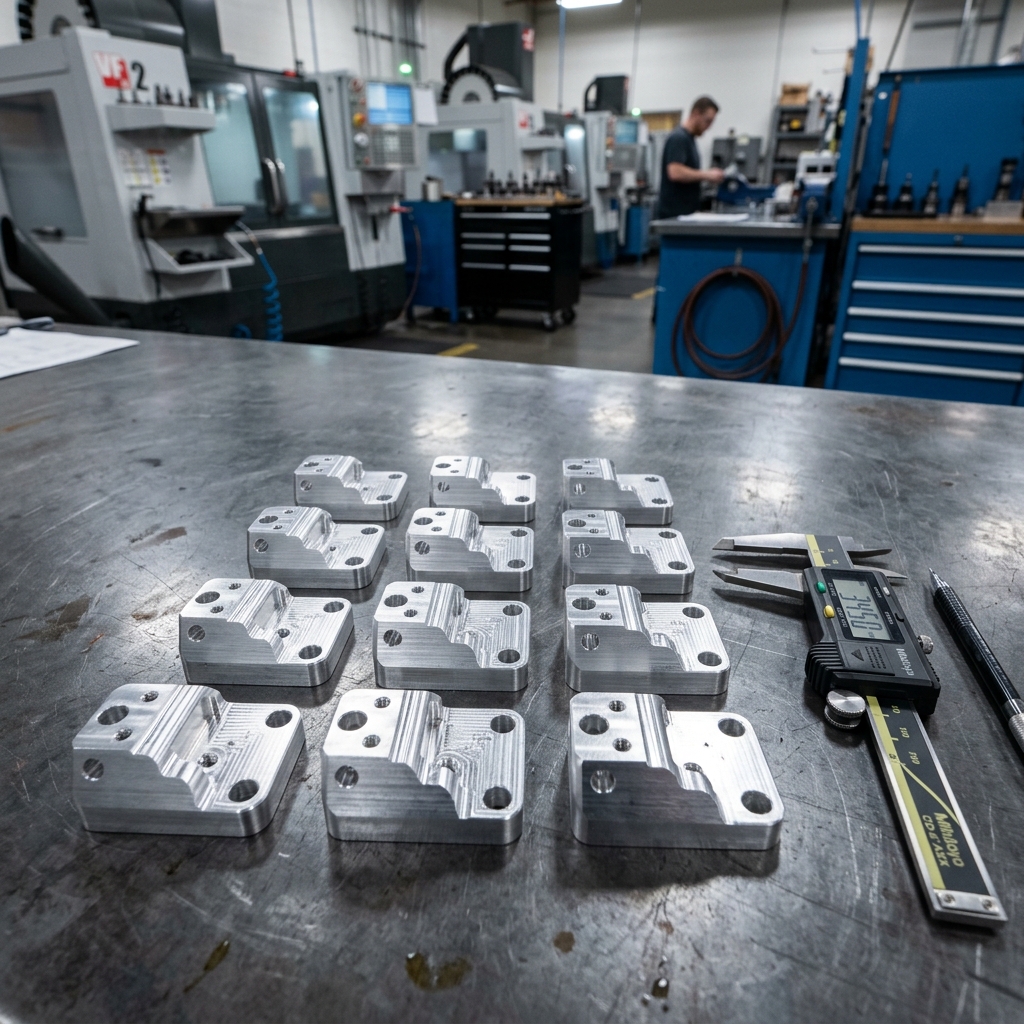
Illustration: RivCut
The price tag highlights how much capital is chasing production AI infrastructure. For procurement teams evaluating CMM inspection automation or vision systems on the shop floor, this matters because inference costs determine total cost of ownership. A vision system analyzing defects on 10,000 parts per shift burns GPU hours whether you run it in-house or subscribe to a cloud service. Eigen's optimization stack promises to cut those costs, but the $643 million valuation tells you vendors will eventually pass infrastructure expenses downstream.
Nebius' focus on production-grade infrastructure also signals a shift. Early AI adopters in manufacturing often piloted systems using general-purpose cloud GPUs. That works for training a defect classifier on 5,000 images. It falls apart when you need sub-100ms inference on a live production line running three shifts. Eigen built tools specifically for low-latency, high-throughput deployments. The acquisition suggests the market now values operational AI over experimental AI. Shops running aerospace machining with tight tolerances already understand this distinction—prototyping a tool path is different from validating it at production speed under full load.
The US expansion component deserves attention. Nebius operates European data centers but needs American infrastructure to serve US manufacturers concerned about data sovereignty and latency. A machine shop in Ohio evaluating real-time process monitoring does not want sensor data routing through Amsterdam before returning recommended spindle adjustments. On-premise edge deployments avoid that problem, but many smaller manufacturers lack IT staff to manage GPU servers. Regional inference providers could fill that gap. Whether Nebius executes remains to be seen, but the strategic intent reflects real operational constraints manufacturers face when deploying AI beyond the pilot phase.
In modern CNC machining, AI can monitor spindle vibrations to predict tool wear. If the system detects a tiny change, it stops the machine before the tool breaks. This prevents damage to the workpiece. But to do this, the system must process sensor data in real time. Even a delay of half a second is too long. The tool would already be broken. This is why low-latency inference is so important for the shop floor.
AI can also help with factory scheduling. A custom fabrication shop handles many different jobs each week. Each job needs different tools, materials, and setup times. A scheduling AI can analyze thousands of variables to find the most efficient path. This reduces idle time and increases throughput. But the schedule must update instantly when a machine breaks down. This requires fast, on-demand compute power.
What to watch next
GPU availability remains the limiting factor. Nebius can acquire optimization software, but it still needs physical hardware to run inference workloads. NVIDIA's H100 and upcoming Blackwell chips face lead times measured in quarters, not weeks. If Nebius secured early allocations, the Eigen integration could reach market faster. If not, the technology sits idle while competitors with existing GPU clusters move forward. Manufacturing customers should ask vendors direct questions about hardware access and deployment timelines before committing to long-term contracts.
Pricing models will clarify over the next six months. Inference costs dropped roughly 70% between 2023 and 2025 as model efficiency improved and GPU supply increased. But that trend may flatten if demand outpaces new data center capacity. Manufacturers evaluating build-versus-buy decisions for AI infrastructure need current cost-per-inference benchmarks, not projections from 2024 vendor decks. The Eigen acquisition could drive prices down if Nebius uses the technology to compete aggressively on cost. It could also consolidate pricing power if the combined entity dominates specific vertical markets.
Finally, watch for on-premise deployment options. Larger manufacturers with existing IT infrastructure may prefer owning inference hardware rather than subscribing to cloud services, especially for mission-critical production systems. If Nebius packages Eigen's optimization software for self-hosted deployments, that creates an alternative to cloud vendor lock-in. Smaller shops will likely continue relying on cloud inference, but the economics shift as hardware costs decline and software licensing becomes the primary expense. For more on how AI and automation trends affect US manufacturing, see our manufacturing news coverage.
We should also watch the development of new chips designed only for inference. NVIDIA makes great general-purpose GPUs, but other companies are building specialized application-specific integrated circuits. These chips are designed to do just one thing: run models very fast and with very little power. If these chips gain market share, it could disrupt Nebius' GPU-centric business model.
Finally, watch the open-source software community. Projects like vLLM and Triton are developing free tools that do many of the same things as Eigen's software. If these free tools match the performance of proprietary software, it will erode Nebius' competitive edge. Manufacturers should evaluate open-source options before signing long-term proprietary contracts.
Frequently Asked Questions (FAQ)
What is AI inference?
Answer: AI inference is the process of running a trained artificial intelligence model to make predictions or decisions on new data, such as finding parts defects.
Why did Nebius buy Eigen AI?
Answer: Nebius bought Eigen AI for $643 million to acquire its inference optimization software and to expand its business presence in the United States.
How does AI inference optimization help manufacturers?
Answer: Optimization reduces the computing power and time needed to run AI models, which lowers energy and cloud service costs for factory vision systems.
What is data sovereignty and why is it important for U.S. factories?
Answer: Data sovereignty is the rule that digital data must stay within the country it was created. It ensures that sensitive factory designs and metrics do not go overseas.
A $643 million bet on production AI tells you the experimental phase is ending and someone will pay for all those GPU hours.