What happened

Illustration: RivCut
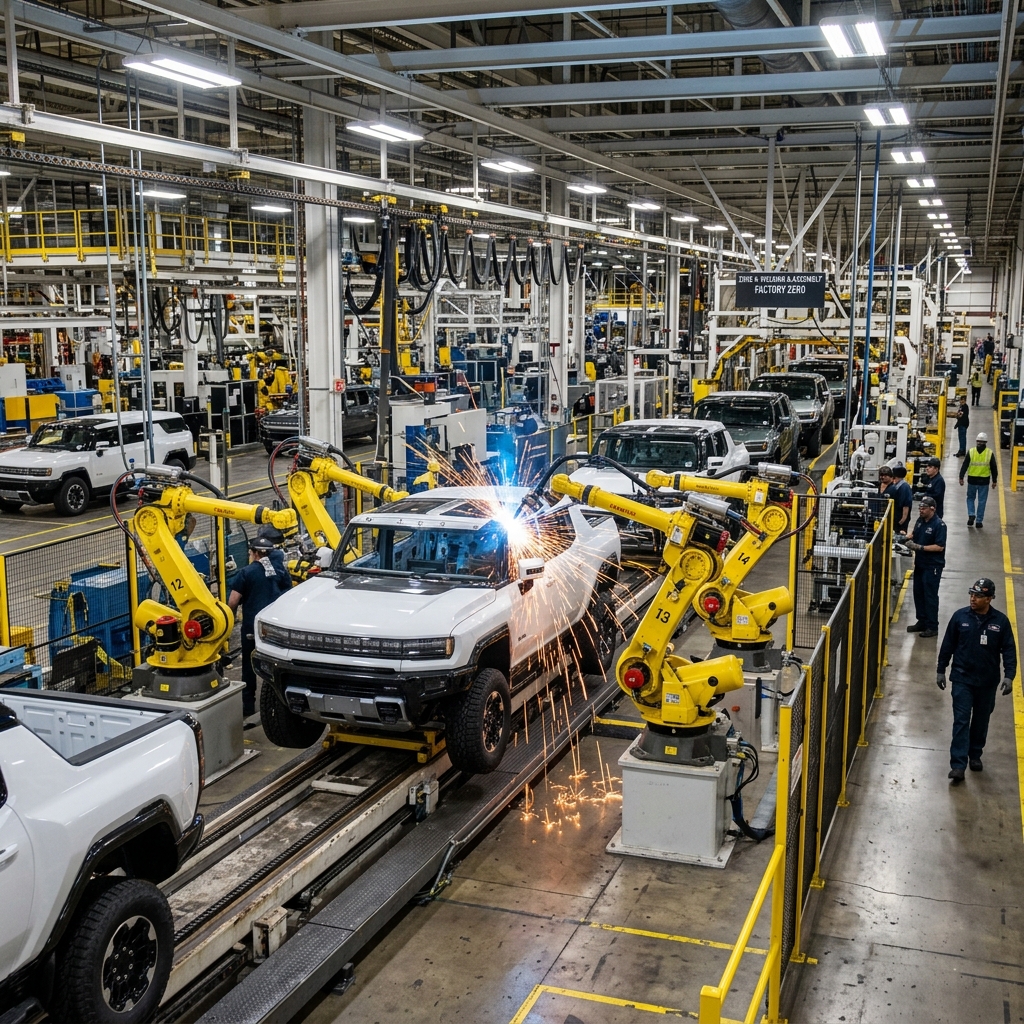
U.S. manufacturing output posted its strongest monthly expansion in 14 months this April, driven primarily by a 3.7 percent increase in motor vehicles and parts production, according to Reuters. The automotive rebound reflects concentrated industrial investment in automation and AI-powered predictive logistics, technologies designed to smooth inventory management and reduce downtime.
At the same time, the growth story comes with immediate complications. Shipping blockades in the Strait of Hormuz have disrupted energy and aluminum flows, sending raw material costs higher and slowing supplier delivery indexes. Meanwhile, hyper-scale AI data centers are absorbing unprecedented quantities of memory chips, creating a bottleneck that has left automotive manufacturers scrambling for the electronics components they need to finish vehicles. The shortage dynamic resembles the supply chain crunch of the pandemic period, when semiconductor lead times stretched beyond 52 weeks for common automotive-grade parts.
The Federal Reserve's industrial production report showed gains concentrated in durable goods, particularly in aerospace machining and heavy equipment assembly. But the same report flagged declining capacity utilization in sectors dependent on imported aluminum and rare earth elements, both of which face geopolitical supply risks tied to Middle East shipping lanes.
To understand the scope of the output growth, we can look at the Federal Reserve's report. Overall industrial production rose by 0.5 percent. This is a solid gain. However, the auto assembly lines are running into a new problem. They are leaving partially built cars in holding lots. These cars are complete except for minor electronic parts. Sourcing managers call these "shy cars." They cannot be shipped to dealers until the final microchips are installed. This ties up cash and space at the assembly plants.
Geopolitics is also playing a major role in this situation. The Strait of Hormuz is a vital shipping lane. A large portion of the world's oil passes through it. It is also an important route for aluminum shipped from massive smelters in the Middle East. When these lanes are blocked, ships must take longer routes around Africa. This adds weeks to delivery times. It also drives up shipping costs. U.S. factories that rely on this aluminum are facing delays. They must look for domestic options, which are often more expensive and have limited capacity.
Why it matters for manufacturers

Illustration: RivCut
The automotive surge is real, but it's happening on borrowed time. Motor vehicle OEMs have invested heavily in predictive logistics software to smooth out supplier variability, yet those systems can't predict geopolitical disruption or data center chip demand pulling parts out of the automotive supply chain. For machine shops and tier-two suppliers, this creates a familiar problem: orders increase, but material lead times stretch and pricing becomes unstable.
Aluminum is a useful example. Spot prices climbed 11 percent in the past six weeks as Strait of Hormuz delays reduced inbound shipments from Middle Eastern smelters. Shops that locked in fixed-price contracts months ago are now sourcing aluminum at a loss, or eating delays while they wait for domestic alternatives. The same pattern is playing out in fasteners, bearings, and specialty alloys — all products where global supply chains remain tightly coupled to chokepoints that can close overnight.
The memory chip shortage is more insidious. AI infrastructure operators are outbidding automotive buyers for DRAM and NAND flash, pushing lead times on controller chips and infotainment modules back above 30 weeks. Automotive Tier 1s are responding by designing around constrained components, but those redesigns require new CMM inspection protocols and first-article approvals that add weeks to production timelines. The result is that even shops with full order books face stop-and-start schedules as customers wait for missing electronics.
For procurement teams, this environment rewards flexibility over forecasting. Shops that can pivot between aluminum and steel, or substitute domestic suppliers for offshore ones, will keep lines moving. Those locked into rigid contracts or single-source dependencies will spend the next quarter chasing expedited freight and explaining delays.
Aluminum sourcing is a major headache for U.S. machine shops. Aluminum is used for engine blocks, suspension parts, and body panels because it is lightweight and strong. Lightweight cars burn less fuel. When raw aluminum prices spike, it hurts shops that have signed fixed-price agreements with their customers. Sourcing managers must make sure they have contracts that allow for price adjustments if material costs rise. RivCut helps protect our customers by keeping a large inventory of common aluminum grades like 6061-T6. This insulates our clients from sudden price jumps.
The microchip issue also highlights a design challenge. Modern cars are rolling computers. They contain dozens of small microcontrollers to run everything from the engine to the window lifts. When a single chip is unavailable, the entire module cannot be built. Some car makers are redesigning their electronic boards to use more common chips. This is an expensive process, but it makes the supply chain more stable. Shops that perform contract assembly must be ready to adapt to these design changes quickly.
What to watch next
Illustration: RivCut
The Strait of Hormuz situation remains fluid. If shipping normalizes within the next 60 days, aluminum and energy prices should stabilize, removing one variable from the supply chain equation. If blockades persist or escalate, expect domestic aluminum producers to ramp capacity, but with a three-to-six-month lag before new smelter output reaches distribution.
On the chip side, the timeline is longer. AI data center construction is projected to continue at current rates through at least 2027, meaning memory chip competition won't ease until either new fabrication capacity comes online or automotive OEMs redesign vehicles to use lower-spec components. Some manufacturers are already exploring that second option, stripping advanced driver-assistance features from base models to reduce chip counts per vehicle.
For machine shops, the lesson is the same one that emerged from 2021: supply chain resilience costs money, but supply chain fragility costs more. Shops that invested in domestic supplier relationships and flexible tooling are winning work right now. Those that optimized purely for cost are sitting on partial builds waiting for components that may not arrive for months. The gap between those two strategies is widening, and this latest round of disruptions will likely accelerate the shift toward localized, diversified supply networks.
We should watch if the U.S. government takes steps to boost domestic aluminum smelting. Over the years, many U.S. smelters have closed because of high electricity costs. Smelting aluminum requires massive amounts of power. If the government offers subsidies to clean energy projects that power local smelters, U.S. capacity could recover. This would make domestic manufacturers less vulnerable to shipping lane blockades, but it will take years to build this capacity.
Another trend to watch is the adoption of recycling. Recycled aluminum requires 95 percent less energy to produce than primary aluminum. Many automotive companies are trying to use more recycled metal in their castings. If job shops can establish reliable recycling partnerships, they can secure a source of raw material that is not affected by international shipping delays. Sourcing teams should prioritize shops that have built these local, green supply chains.
Frequently Asked Questions
What caused the recent surge in U.S. manufacturing output?
The surge was driven by a 3.7 percent increase in the production of motor vehicles and automotive parts. This automotive rebound was supported by heavy investments in factory automation and AI-powered logistics systems.
Why are microchip shortages affecting car makers again?
Car makers are competing with massive AI data centers for memory chips. AI infrastructure operators are buying huge quantities of DRAM and NAND flash memory, which has pushed lead times for automotive electronic parts back up to 30 weeks or more.
How are shipping issues in the Strait of Hormuz affecting raw materials?
The Strait of Hormuz is a major shipping lane for oil and aluminum. Recent blockades have disrupted these flows, causing global spot prices for aluminum to jump by 11 percent and slowing down deliveries of raw metal to U.S. factories.
What should manufacturers do to survive these supply chain disruptions?
Manufacturers should focus on supply chain flexibility. This includes building relationships with domestic suppliers, keeping buffer stock of key raw materials like aluminum, and designing products so that hard-to-find chips can be swapped out easily.
Supply chain resilience costs money, but supply chain fragility costs more — and the gap is widening.